
Someone ironing several cotton skirts
You want to smooth out several skirts or stubborn creases in one session, so suitable steam output and a good water capacity are your main priorities.


A steam generator can be useful if you regularly iron several cotton skirts or tackle stubborn creases, and have enough room for the separate base unit and storage. If you only iron one skirt occasionally or have limited space in a shared ironing area, a standard steam iron may be more practical. The Dutch Consumers’ Association warns that a generator may be too large or heavy for a standard ironing board. Before buying, check the dimensions, whether your board is suitable, and the safety information and CE marking for the specific appliance.
You want to smooth out several skirts or stubborn creases in one session, so suitable steam output and a good water capacity are your main priorities.
You need to clear the space after use, so the size of the base and board, as well as how safely the appliance can be moved and stored, are important considerations.
You want to know how to descale the generator and how to keep moisture to a minimum in the shared ironing area.
First, decide between a generator for regular, longer ironing sessions and a more compact iron for occasional use. Then check that the appliance will fit in the shared space and storage area.
| What to consider | What to look for when buying | Who it matters to |
|---|---|---|
| Cotton and creases | Compare continuous steam output and steam boost; check the temperature settings and follow the care label. | If I’m ironing several cotton skirts one after another, I want to know which steam specifications matter for a longer session. Around 33% of consumers say smoothing cotton and creases is their top priority. |
| Space and storage | Measure the available space and check the dimensions and weight capacity of the board, as well as how the appliance can be stored. | When I share an ironing space with others, I want to be able to move and store the base safely after use. Space and storage are top priorities for around 27% of consumers. |
| Safe use in a shared space | Check the CE marking and safety instructions for the exact model; never leave a hot iron unattended. | If other people use the same space, I want to be able to follow the instructions for the hot soleplate and steam. Around 20% of consumers put safe use in a shared space first. |
| Maintenance and moisture | Look up the descaling method for your specific model and check that the board and floor are dry after ironing. | I want to be able to descale the generator correctly and leave the shared space clean and tidy. Easy maintenance is the main concern for around 20% of consumers. |
Steam boost and continuous steam output are different specifications, and neither is, on its own, an independently measured result for your skirts.
Also compare continuous steam output and temperature controls, and look for available test information on smoothing cotton.
A generator may be too large or heavy for a standard ironing board. If your board is unsuitable, you may need a different one that can support the appliance.
Measure the available space and check your board’s weight capacity and stability before choosing a model.
The Tefal SV8110 and SV8111 have different stated specifications. Also check the tank capacity for the exact Philips PSG3000/20 version.
Compare the full model number and check any unclear key specifications in the documentation for the exact version.
Philips lists continuous steam output of 120 g/min, a 350 g steam boost and a ceramic soleplate for the PSG3000/20.
For the Express Power SV8111E0, Tefal lists continuous steam output of 120 g/min, a removable 1.8 l tank and a removable scale collector.
For the CareStyle 1 IS 1012 BL, Braun lists a thermostat dial, CalcClean reminder, EasyLock and a 1.5 l tank.
The Dutch Consumers’ Association describes the AEG ST7-1-4LG as having an adjustable temperature and a removable 1.0 l tank.
This Joybuy selection features steam generators for ironing cotton skirts. Compare their stated steam features and check that the base will fit in your shared ironing space and can be stored away.
 No image available
An option to compare if you iron several cotton skirts one after another.
Philips lists continuous steam output of 120 g/min and a 350 g steam boost. Check the tank capacity for the exact version.
 No image available
A model to include in your comparison if you’re looking for a steam generator to iron skirts.
Check the dimensions of the appliance and your ironing board, and read the model-specific operating and safety instructions.
 No image available
A steam generator to compare if you regularly iron cotton skirts.
For this version, check the tank capacity, descaling method and safety instructions in the product documentation.
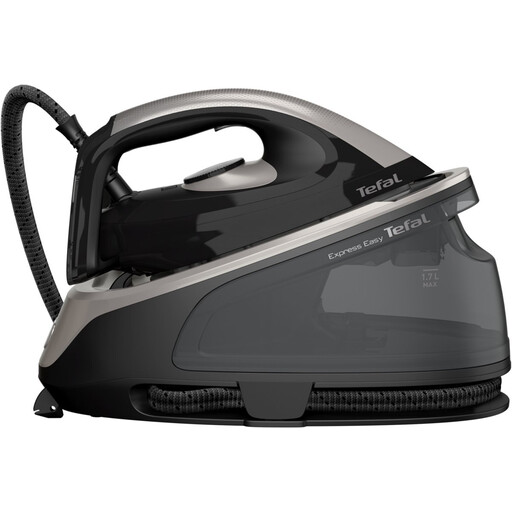 No image available
A model to compare if you’re looking for a generator for ironing sessions with cotton skirts.
Measure the available space and check the tank and maintenance information for the exact version.
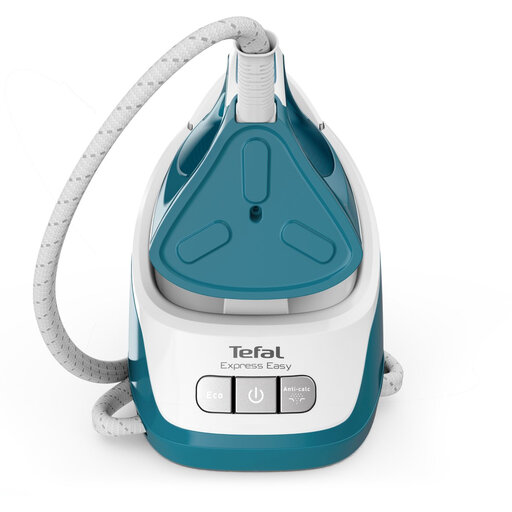 No image available
An option to compare if you’re looking for a steam generator to iron several skirts in one session.
The Joybuy product name lists 2400 W, 5.8 bar, a 350 g steam boost, a removable 1.7 l tank and a ceramic soleplate. Check these details for the exact version.
First check that the board can support the appliance and that the entire base will fit on it. The Dutch Consumers’ Association warns that a generator may be too large or heavy for a standard ironing board, so check the board’s weight capacity and stability too.
Follow the descaling procedure in the manual for the exact model. Tefal advises against using vinegar or descaling products with its steam generators, as they can damage the tank; the recommended method varies by model.
Check the board and floor after ironing, and leave the area dry. Philips describes wet patches on an ironing board cover or floor as something that can happen during use; it doesn’t mean that every generator is faulty.
For online purchases from a business, you will often have a 14-day cooling-off period, according to the Dutch government; the seller must tell you about this. You also have a legal guarantee: if there’s a problem with the product, the seller must provide a solution.
CE marking is compulsory for electrical products covered by the relevant Dutch regulations, according to the Netherlands Food and Consumer Product Safety Authority. Check the marking and safety information on the specific appliance; a listing in an online shop alone doesn’t confirm this.