A steam generator can be useful if you regularly iron several cotton shirts in one go and have room for the base unit, hose and a suitable ironing board. If you only iron occasionally and storage space is limited, a standard steam iron may be more practical. When comparing generators, look at continuous steam output, the tank and the descaling method, and measure the whole appliance: a high steam shot alone won’t tell you which option is right for you.
Who is this buying guide for?
Ironer with limited cupboard space
You want your cotton shirts to look neat, but need to store the appliance in a small cupboard or corner afterwards. The size of the complete unit and the ironing board you have available both help determine whether a generator is practical. The Consumers’ Association highlights space as a factor to consider when choosing between a steam generator and a standard steam iron.
Regular shirt ironer
You regularly iron several cotton shirts and want to tackle stubborn creases without having to refill the tank frequently. The Consumers’ Association points to the generator’s larger tank as a practical difference, but the complete appliance also takes up more space.
Buyer who wants to stay on top of maintenance
You want to know how to remove limescale and whether the appliance uses replaceable cartridges before choosing a larger steam appliance. The Consumers’ Association advises following the maintenance instructions for the specific model.
What should you look for when choosing?
Steam generator
Choose this option: if you regularly iron several shirts in one go and have room for the base unit, hose and a suitable ironing board.
Bear in mind: the complete appliance is larger and heavier to store or move; lots of steam can leave the fabric and ironing board damp.
Standard steam iron
Choose this option: if you only iron occasionally or for short periods, and limited storage space matters more to you than a large tank.
Bear in mind: you may need to refill the smaller tank more often during a longer ironing session; the iron itself may be heavier than the iron on a generator.
| Factor |
What should you check? |
Who is this important for? |
| Space and size |
Measure your storage space and check the dimensions of the complete appliance and whether your ironing board is suitable. |
If I have limited cupboard space, I want to know whether the base unit and hose will fit too; around 31% of consumers put space first. |
| Creases in cotton |
Compare continuous steam output separately from the steam shot, and check whether the steam can be adjusted. |
If I mainly want to smooth out cotton shirts, I look beyond a single peak figure; around 31% of consumers put crease-free cotton first. |
| Refilling |
Check the tank capacity, whether the tank is removable and whether you can refill it while ironing. |
If I iron several shirts in one go, I want to minimise breaks to refill; around 23% of consumers put fewer refills first. |
| Maintenance |
Look up the descaling instructions for the exact model and check whether it needs replaceable cartridges. |
If I want to know in advance how to remove limescale and whether the system uses consumables, maintenance is a key consideration; around 15% of consumers put easy maintenance first. |
Common pitfalls
-
Focusing only on the steam shot or pressure
A steam shot isn’t the same as the continuous steam output you get while ironing a pile of shirts. Too much steam can also make the fabric and ironing board wet.
Compare continuous steam output and the adjustment options separately. Look for a cotton test if one is available for the exact model.
-
Assuming ‘compact’ means it will fit in your cupboard
Even if the iron is compact, the base unit and hose take up space. The Consumers’ Association also points out that a generator may be too large or heavy for a standard ironing board.
Measure your storage space and check the full dimensions and weight of the appliance, not just those of the iron.
Check that your ironing board is suitable too; you may need a different one.
-
Confusing anti-scale features with maintenance-free operation
An anti-scale feature doesn’t remove the need for model-specific cleaning. Some systems use replaceable cartridges or cassettes.
Follow the manual for your chosen model and check whether it needs replaceable cartridges.
For models with replaceable cartridges or cassettes, the Consumers’ Association mentions possible recurring costs of up to €30 per year; this doesn’t automatically apply to every model.
Brands to compare
Philips
The Philips 3000 Series PSG3000/20 is a model to compare if you’re looking for a generator for regular ironing in a compact set-up. Philips quotes continuous steam output of 120 g/min and a steam shot of 350 g.
- The Consumers’ Association describes the PSG3000/20 as having a removable tank and dimensions of 35,5 × 19 × 28 cm.
- The Consumers’ Association and Philips give different tank capacities: 1,5 l and 1,4 l respectively. Check the specifications for the exact version before buying. The publicly available test information does not include an accessible verdict on how well this model smooths cotton.
Tefal
The Express Essential SV6115E0 is an option to consider if you want a refillable tank and have taken your available storage space into account. Tefal quotes a 1,4 l tank and continuous steam output of 120 g/min.
- Tefal says the tank can be refilled while ironing.
- The description ‘compact’ and claims about time saved come from Tefal itself. Check the full dimensions and the Calc Clear maintenance instructions for the exact model.
Braun
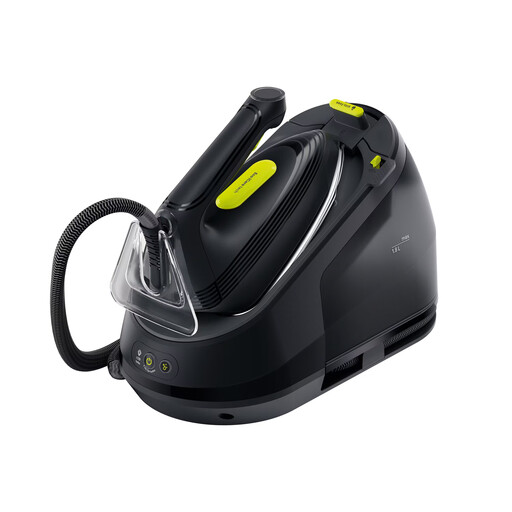
The CareStyle 3 IS 3132 WH is a model to consider if you iron several shirts in one session. Braun quotes a 2-litre tank and continuous steam output of 120 g/min.
- Braun lists Easy CalcClean as a maintenance feature.
- The time-saving claim from Braun is based on an in-house comparison with a Braun steam iron and doesn’t prove an advantage over other generators. Measure your available storage space.
Products on Joybuy
This selection includes steam generators for longer ironing sessions and standard steam irons for those with less storage space.
 No image available
Philips 3000 Series PSG3000/20
A generator to compare if you’re looking for a removable tank and continuous steam output for cotton shirts.
2400 W; 120 g/min continuous steam; 350 g steam shot; 1,4 l tank; dimensions 35,5 × 19,2 × 27,5 cm.
Joybuy
 No image available
Braun CareStyle 3 IS3257
An ironing system to consider if you value a removable tank and an iron lock for longer ironing sessions.
Removable 1,8 l tank; iron lock.
Joybuy
 No image available
Morphy Richards EasySteam+ MUH-ISE4B
A generator to compare if you’re looking for a removable tank and a choice of steam settings.
2400 W; 1,8 l tank; 70 g steam output in ECO mode; up to 120 g steam; 6 bar.
Joybuy
 No image available
Xiaomi BHR9034EU handheld steam iron
A handheld steam iron to compare if you have limited storage space and want a smaller appliance than a generator.
0,15 l tank; the product name mentions Dual Voltage.
The tank capacity means you may need to refill sooner during a longer ironing session.
Joybuy
 No image available
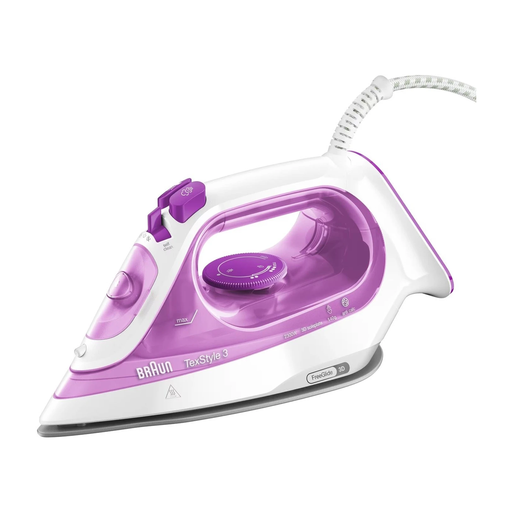
Braun TexStyle 3 SI3030
A standard steam iron to compare if you want to use less storage space than you would with a generator.
270 ml tank; the product information mentions a precision tip for collars and seams, and a self-cleaning system.
Joybuy
Frequently asked questions
Do I need a steam generator if I only iron a few shirts at a time?
Not necessarily. The Consumers’ Association also recommends considering a standard steam iron if you do little ironing or have limited storage space. A generator may suit you better if you often iron several shirts in one go and have room for the base unit.
How can I stop a cotton shirt from staying damp?
The Consumers’ Association advises ironing with steam first, then without steam until the fabric is dry. Too much steam can also make the ironing board wet.
Can I use tap water, and how do I descale the generator?
The Consumers’ Association says steam irons and steam generators are designed for tap water. Follow the manual for the exact model when descaling, and check the manufacturer’s instructions if your water or circumstances differ from its recommendations.
Who can help if my steam generator breaks too soon during normal use?
According to ACM ConsuWijzer, the retailer is responsible for the statutory guarantee in the Netherlands. If the product doesn’t perform as you could reasonably expect during normal use, the retailer must offer an appropriate solution at no cost; a manufacturer’s guarantee does not replace this right.
Is CE marking mandatory for an electric iron sold in the Netherlands?
For electrical products covered by the Dutch Electrical Equipment Decree, the Netherlands Food and Consumer Product Safety Authority states that CE marking is mandatory. This legal product requirement does not in itself confirm that an individual item has been checked.


