
People who often iron cotton shirts
If you regularly iron a pile of shirts, a steam generator is one option worth comparing. The Consumers' Association cites a large amount of ironing as a reason to consider this type of appliance.


If you regularly iron several cotton shirts or they often have stubborn creases, a steam generator is worth considering. If you only iron occasionally or have limited space, a conventional steam iron may be more practical. The Consumers' Association cites the amount of ironing and stubborn creases as reasons to consider a steam generator. Compare the tank, controls and descaling method, and check that the base fits securely on your ironing board and that the care label allows steaming.
If you regularly iron a pile of shirts, a steam generator is one option worth comparing. The Consumers' Association cites a large amount of ironing as a reason to consider this type of appliance.
The separate base needs to fit securely and conveniently on your ironing board, and be easy to put away afterwards. Measure the available space before choosing a model.
Compare the descaling method and any replacement parts required. Limescale may mean extra maintenance, even when an appliance has an anti-scale function.
Choose this option if: you often iron several shirts in a row or regularly deal with stubborn creases.
Bear in mind: the separate base needs a suitable spot and takes up space both during use and when stored.
Choose this option if: you only iron a shirt now and then or have little room for a separate base. The Consumers' Association says this is often the more practical choice if you have little ironing to do.
Bear in mind: if you have a lot of ironing or stubborn creases, a steam generator may be worth considering instead.
Use steam figures as model specifications, not as proof that a shirt will come out smoother. Always follow the care label too.
| What to consider | What to look for | Who should prioritise this? |
|---|---|---|
| Creases | Compare continuous steam output and the steam boost separately; also check the controls for the collar and buttons. | If my main aim is to get collars, cuffs and stubborn creases looking neat, I look at the settings and the right steam level for the garment. Around 33% of consumers put the results on creases first. |
| Several shirts | Check the tank capacity and whether the tank is removable and easy to refill. | For a longer ironing session, I don't want to keep stopping to refill the water. Around 27% of consumers prioritise being able to iron several shirts in a row. |
| Space and stability | Compare the base dimensions with the space available and check that your ironing board is suitable. | If the utility room is cramped, the base needs to stand securely and fit away in storage too. Around 20% of consumers give the most weight to the workspace and storage space available. |
| Descaling | Check the type of descaling system and whether that model requires replacement parts. | I want to know what maintenance my model needs and whether any parts have to be replaced. Around 20% of consumers give maintenance and possible ongoing costs top priority. |
A steam boost is a separate specification and doesn't tell you how much steam remains available during a longer ironing session.
Compare continuous steam output and the steam boost separately. If you can't find independent results for cotton for the exact model, don't treat the manufacturer's figures as an ironing test.
A steam generator has a separate base that may be too large or heavy for the space available.
Measure the supporting surface and check that your ironing board is suitable, as well as checking the dimensions of the model you've chosen.
Limescale can build up and reduce steam output; the maintenance required varies by model.
Check the manual for the right type of water and descaling procedure. Also check whether the system needs replacement parts.
Models with replaceable cartridges may involve ongoing costs; these depend on the system used.
The care label determines how that particular garment can be treated.
Check the ironing symbol before you start, even if the shirt is made of cotton.
The 3000 Series PSG3000/20 and PerfectCare 7000 PSG7300/70 have different controls and steam specifications. They are not interchangeable variants.
According to Tefal, the Pro Express Ultimate II GV9720E0 offers three manually selectable settings and a removable scale collector.
The CareStyle 7 IS7262GY has controls on the handle and a soleplate that, according to Braun, can glide backwards past obstacles such as buttons.
These product picks are steam generators to compare for ironing cotton shirts. Before buying, check that the base fits your workspace. According to the Netherlands Food and Consumer Product Safety Authority (NVWA), CE marking is mandatory for electrical products placed on the market in the Netherlands; check the marking on the specific appliance.
 No image available
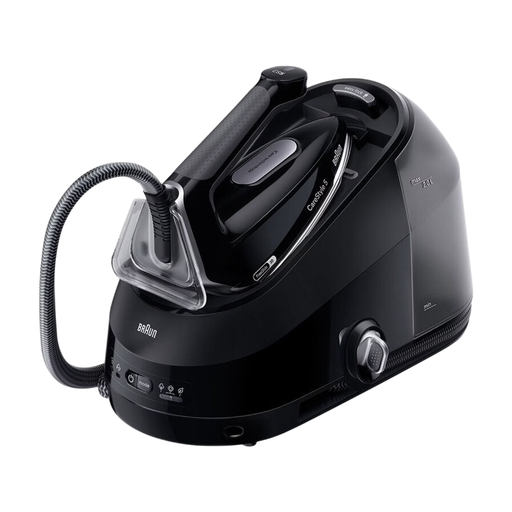
An option to compare if you regularly iron several cotton shirts.
The product name lists 2400 W, a 350 g steam boost and a 1.4 l water tank.
 No image available
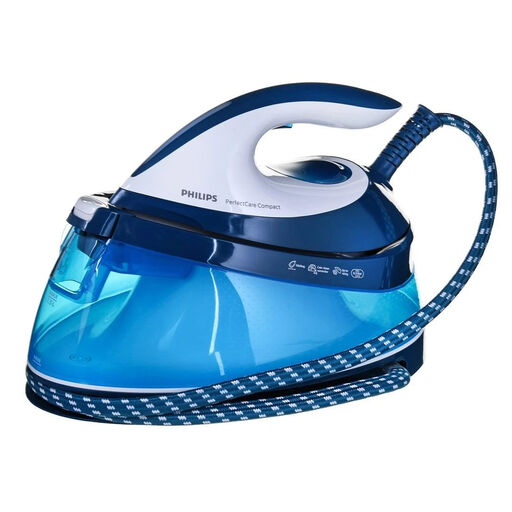
An option to compare if you're looking for a steam generator for cotton shirts.
Before deciding, check the tank capacity, controls and descaling method for this model.
 No image available
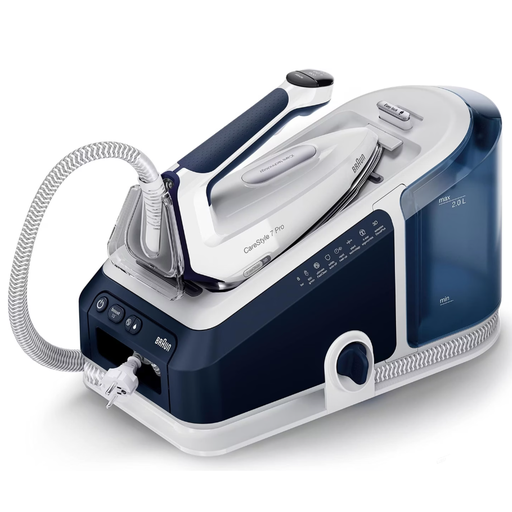
An option to compare for longer ironing sessions with cotton shirts.
The product name lists 2400 W, a 400 g steam boost and a 1.5 l water tank.
 No image available
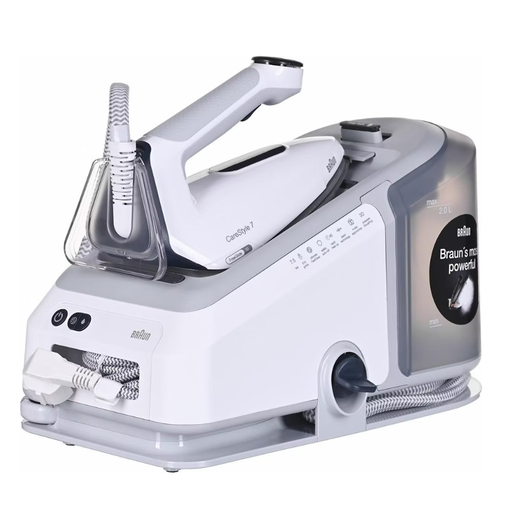
An option to compare if you're considering a steam generator for shirts.
Check the tank capacity, controls and workspace required for this model.
 No image available
An option to compare if you regularly iron shirts with buttons.
Check the controls and descaling method for this model, and whether the base fits your ironing board.
Not necessarily. The Consumers' Association says a conventional steam iron is often more practical if you have little ironing to do or limited storage space. If you have a lot of ironing or stubborn creases, a steam generator is worth considering.
No. Follow the ironing symbol on the specific shirt. GINETEX symbols indicate, among other things, the maximum soleplate temperature and distinguish between ironing with and without steam.
Follow your model's manual for the type of water to use and how often to descale. The Consumers' Association advises against using water with perfume or other additives; an anti-scale system doesn't mean maintenance is unnecessary.
An extra warranty package isn't compulsory. According to the Dutch government, statutory warranty entitles you to a product that works properly, with no fixed statutory warranty period in the Netherlands. An additional warranty you buy is extra cover; if a product is faulty, contact the seller.
Yes. According to the NVWA, CE marking is mandatory for electrical products placed on the market in the Netherlands. Check the marking on the specific appliance; CE marking is not an independent quality assessment.