
For occasional patch application
You mainly use the appliance for patches and would rather not have a large unit at home. Follow the instructions for the specific patch and fabric; Prym provides guidance for different types of patch.


Start by checking the instructions for the specific patch and fabric: extra steam power doesn’t prove that an iron is suitable for applying it. A steam generator is worth considering mainly if your housemates also regularly iron larger loads of washing, and there’s enough space for the unit and a suitable ironing board. Check the CE marking and EU Declaration of Conformity for the exact model. Business.gov.nl and the Netherlands Food and Consumer Product Safety Authority describe these requirements for appliances covered by the relevant European rules.
You mainly use the appliance for patches and would rather not have a large unit at home. Follow the instructions for the specific patch and fabric; Prym provides guidance for different types of patch.
You also want to use the appliance regularly for larger loads of washing. The Consumers’ Association recommends considering the tank capacity and how much ironing you do.
You’ll need to let the appliance cool after use and put it away without taking up the shared space for too long. Having a designated place for it and agreeing how to maintain it can help.
First, check how the patch and fabric should be treated. Then compare a compact iron with a steam generator, taking into account how much regular ironing you do, the space available and the controls you need for patch application.
A good fit if: you only apply patches occasionally, do little ironing or have limited storage space.
Bear in mind: it has a smaller tank and produces less steam if your housemates also iron lots of washing. The Consumers’ Association considers it a suitable choice for light ironing and limited storage space.
A good fit if: the appliance will also be used frequently for larger loads of washing with stubborn creases, and there’s room for the unit.
Bear in mind: the larger set-up, higher cost and extra storage space required. Check separately that the controls and settings suit the instructions for your patch.
| What to consider | What should you check? | Who does this matter to? |
|---|---|---|
| Patch instructions | Read the patch instructions and the garment care label. Check that the temperature, steam and control options on the exact appliance are compatible. | When applying a patch, I want to be able to follow the instructions for both the patch and the fabric. Consumers who prioritise the patch instructions account for around 33% of those making this choice. |
| Space and storage | Measure the space for the unit and check that your ironing board can support the appliance securely. | In a small shared home, I want to be able to put the appliance away after use without occupying the ironing space for too long. Available space is the top priority for around 27% of consumers. |
| Regular ironing | Compare the tank capacity and stated continuous steam output for each exact model; these figures alone say nothing about how well a patch will stick. | If we also use the appliance frequently for washing, refilling and ironing performance matter. Around 20% of consumers prioritise being able to iron larger loads. |
| Use and maintenance | Check the manual for the exact model for its settings, switching off, cooling and descaling instructions; agree who will maintain it. | When sharing an appliance, I want to know how my housemates will use and maintain it. Consumers who prioritise agreeing these arrangements account for around 20% of the group. |
The stated steam output describes a feature for ironing, but it doesn’t determine the right method for a specific patch and fabric.
First, choose how to apply the patch by following its instructions and the garment care label. Compare steam power only for your other ironing needs.
Applying a patch incorrectly could mean extra work or having to replace the patch or fabric.
A steam generator also has a unit that takes up space and may not fit properly on a standard ironing board. The Consumers’ Association highlights the size and weight of these appliances.
Measure your shared ironing and storage space, and check that your ironing board is suitable for the appliance you choose.
An automatic combination of temperature and steam for regular ironing doesn’t confirm that the setting is suitable for the method required by a specific patch.
Compare the manual for the exact model with the patch instructions and check that you can follow the recommended method.
The examples below refer to specific product ranges and models. Manufacturer information isn’t independent testing and doesn’t, by itself, tell you whether an appliance is suitable for your patch.
The Philips 3000 Series PSG3000/20 is an example of a steam generator for regular ironing.
According to Tefal, the Express Airglide SV8026E0 has a removable tank and an automatic combination of temperature and steam.
The CareStyle 3 IS3132WH is an example of a steam generator with a 2-litre tank.
This selection features steam generators to compare for patch application and regular ironing in a shared household. Always follow the instructions for both the patch and the fabric.
 No image available
An option to compare if your housemates also regularly iron washing as well as applying patches. Follow the instructions for the specific fabric when applying a patch.
Listed tank capacity: 1.4 litres. Continuous steam output: 120 g/min. Power: 2400 W. Steam boost: 350 g.
 No image available
A model to compare if you’re looking for a steam generator for shared ironing. Check the patch instructions before choosing a setting.
Listed tank capacity: 1.3 litres. Continuous steam output: 120 g/min.
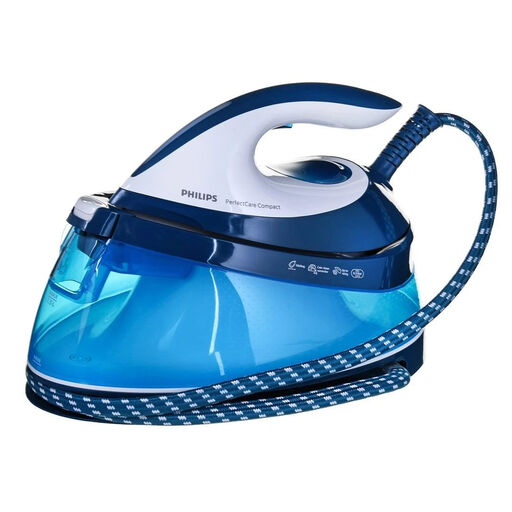 No image available
An option to compare for regular ironing. Automatic temperature and steam selection isn’t the same as manually choosing the settings required by a specific patch method.
Listed tank capacity: 1.5 litres. Continuous steam output: 120 g/min. Steam boost: 400 g. Automatic temperature and steam selection.
 No image available
A model to compare if the appliance will also be used for regular shared ironing. Follow the patch and fabric instructions when applying patches.
Power: 2400 W. Listed tank capacity: 1.8 litres, removable. Continuous steam output in ECO mode: 70 g. Steam boost: 120 g. Listed pressure: 6 bar.
Follow the instructions for the specific patch and check the fabric’s care label. Information about one type of patch isn’t a general steam setting, temperature or pressing time for all patches.
Check the dimensions and weight of the exact appliance, and whether your ironing board can support it securely. The Consumers’ Association warns that a steam generator may be too large or heavy for a standard ironing board.
Use the descaling procedure in the manual for the exact model and agree who will carry it out. Philips provides model-specific procedures; also follow the safety steps in the relevant manual.
Check the information for the exact model, including the CE marking and EU Declaration of Conformity. Business.gov.nl and the Netherlands Food and Consumer Product Safety Authority describe these requirements for electrical appliances covered by the relevant European rules. A general product listing doesn’t establish whether an individual model complies.