
Vandaag of morgen in huis

Kwaliteit gegarandeerd

Welkomstaanbiedingen ontgrendelen: GRATIS bezorging | Tot 80% korting | Gratis 30 dagen JoyPlus-proefperiode
Download de app
A steam cleaner can be useful for tackling stubborn dirt, grease and stains without using standard cleaning products. However, not every machine is suitable for every task. A small handheld steam cleaner for grout works differently from a steam mop for floors or a carpet cleaner with a suction function.
Most disappointing purchases come down to three common misconceptions:
Steam pressure in bar indicates how forcefully steam comes out of the nozzle. Higher pressure can be useful for grout, hobs and baked-on dirt. For a steam cleaner for floors, an even flow of steam and a suitable floor cloth are particularly important.
The temperature indicates how hot the steam can get, according to the product information. This doesn’t guarantee that every surface will be cleaned safely or hygienically. According to its own information, BLACK+DECKER’s FSM13E1 reaches up to 85 °C and, according to the brand, can remove 99.9% of common household bacteria. Treat this as a brand claim, not a general guarantee for every situation.
A short heat-up time is handy for quick cleaning jobs. A machine that’s ready in seconds is well suited to everyday use; a larger model with a longer heat-up time may be a better choice when cleaning several rooms in one go.
A 250 to 400 ml tank keeps a machine compact, but you’ll need to refill it more often. This works well for a handheld steam cleaner, kitchen worktop or a few bathroom tiles. A 1.5 to 1.6 litre tank is more practical for a whole floor, several hard floors or a more thorough clean.
Also check how to refill the tank. See whether the manual specifies that you should use only clean water. Some manufacturers recommend distilled or purified water to help prevent limescale build-up. Don’t add detergent, fragrance or alcohol unless expressly permitted.
A multifunction steam cleaner is only versatile if its accessories suit the way you plan to use it. Look for:
Check in advance whether your floor, sofa or carpet can withstand steam. Test the cleaner on an inconspicuous area first. For thick carpets or pet stains, a steam cleaner for sofas and carpets isn’t always the best choice. A machine with separate clean- and dirty-water tanks and a suction function, such as a spot cleaner, may be more practical.
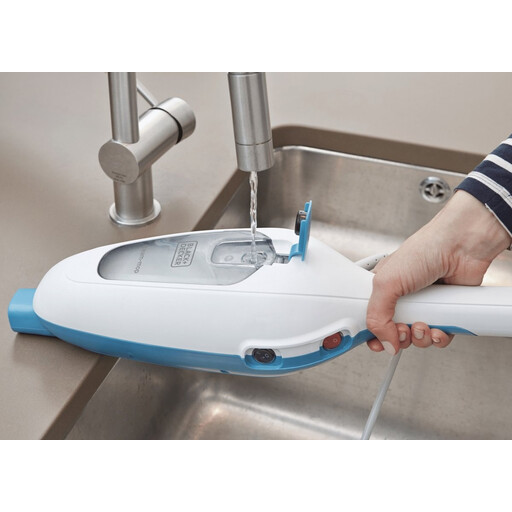
Why it suits this profile: This steam mop is designed for sealed hard floors and everyday cleaning in the kitchen, bathroom and living room. At 1.8 kg, it remains relatively lightweight.
The product specifications clearly state a maximum run time of 11 minutes and a 0.38 litre tank. This means you know in advance that it’s mainly for short cleaning sessions, rather than cleaning an entire home.
1300 W of power, a heat-up time of around 30 seconds and a 4-metre cord, according to the product information.
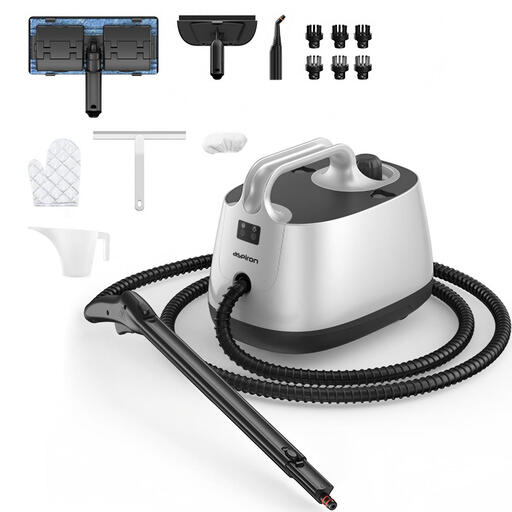
Why it suits this profile: This model is designed for a range of jobs around the home and in the car, from cleaning floors and windows to grout, kitchen surfaces and interiors.
The specifications list 21 accessories, a 1.5 litre tank and wheels. This clearly sets it apart from a compact handheld steam cleaner.
1500 W, pressure of up to 4 bar and a temperature of up to 145 °C, according to the product description. The stated heat-up time is around 5 minutes.
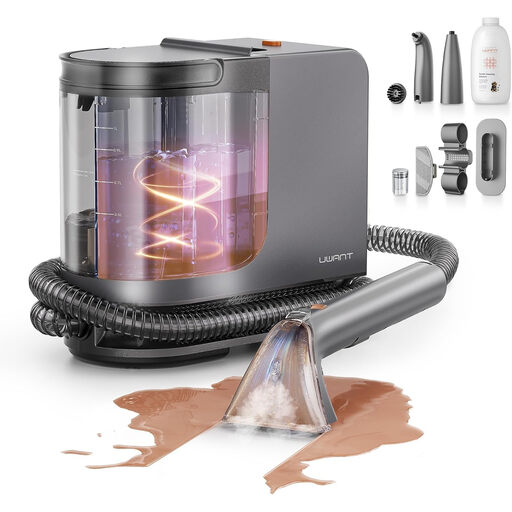
Why it suits this profile: For families, pet owners and car owners who mainly want to spot-clean sofas, carpets, beds or car seats.
This isn’t an ordinary steam mop. The product specifications list a suction function and separate clean- and dirty-water systems, so loosened dirt can be removed.
600 W of power, suction of up to 18,000 Pa according to the product information, and a 14 cm-wide brush.
We’ve put together a full, up-to-date list of products that meet these strict selection criteria and the applicable European safety requirements.
A steam cleaner uses heat and pressure, so bear the following points in mind:
When buying, also check for the CE marking, safety information in Dutch, warranty terms and details of the responsible party in the EU. A CE marking isn’t a quality rating; it indicates that the manufacturer declares the product meets applicable EU requirements.
No. Steam is generally intended for sealed hard floors. Laminate, glued parquet, untreated wood and some vinyl floors can be sensitive to moisture and heat. Check with the flooring manufacturer and use as little steam as possible.
It can be, as many product manuals recommend using water only. Running costs depend mainly on water consumption, heat-up time, power and how often you use the machine. Descaling and replacing cloths or filters can also be ongoing costs.
A steam cleaner loosens dirt, but doesn’t always remove it. For fabrics, pet stains and spills, a spot cleaner with a spray and suction function is often a better choice. Test any cleaning product or machine on a hidden area first, and let the material dry thoroughly.
