
Vandaag of morgen in huis

Kwaliteit gegarandeerd

Welkomstaanbiedingen ontgrendelen: GRATIS bezorging | Tot 80% korting | Gratis 30 dagen JoyPlus-proefperiode
Download de app
A steam cleaner can be useful for floors, grout, kitchen surfaces, windows and car interiors. However, simply buying a multifunctional appliance does not automatically give every household the right solution. A steam mop works differently from a carpet cleaner, and a high wattage says little about the actual cleaning results.
For households in the Netherlands, three pitfalls are particularly important:
Steam pressure is measured in bar. Higher pressure can help loosen grease, limescale and dirt from grout, but correct handling remains important. An adjustable low setting is useful for light everyday cleaning. A higher setting may be more practical in kitchens and on tiled grout.
Also consider the heat-up time. A compact handheld steam cleaner is often ready within a few dozen seconds, while a model with a larger tank may take longer. The BLACK+DECKER FSM13E1, for example, states a heat-up time of around 30 seconds and a maximum steam temperature of up to 85 °C, according to the product description. The ROUNY Steamo X states approximately 25 seconds and an adjustable steam temperature of 98 to 135 °C.
Do not use steam on wood, painted furniture, untreated grout, silk, velvet or heat-sensitive plastic without first checking that it is suitable. Always test on an inconspicuous area first.
A small water tank keeps an appliance lightweight, but it can run empty quickly during a larger cleaning session. A tank of 250 to 400 ml is better suited to short tasks, such as cleaning a kitchen worktop or a small bathroom. For several rooms, 1 to 1.6 litres is more practical.
The stated operating duration depends on the selected steam setting. According to the product specifications, the ROUNY has a 250 ml tank and around 10 to 14 minutes of steam time. The ASPIRON AS-CA019 has a 1.5-litre tank and a heat-up time of approximately five minutes. MONSGA states a 1.6-litre tank and up to 48 minutes of operation, although this duration depends on the setting and usage conditions.
It is also worth choosing a model with a clear fill marker, a safe cap and an easy-to-empty reservoir. Only use the liquid permitted in the instruction manual. Several models specify clean water only.
If you want to clean carpets, mattresses, car seats or a sofa, focus primarily on suction power, separate water tanks and brush width. A steam mop is generally designed for sealed hard floors and does not collect dirty water.
According to the product information, the UWANT B400 Multi Spot Cleaner combines 600 W of power with suction of up to 18,000 Pa and a 14 cm brush. The appliance has a combined design for clean and dirty water. The Deerma BY700 S states a 1.7-litre clean-water tank, a 1.4-litre dirty-water tank and suction power of 13 kPa. Models like these are better suited to spot-cleaning and upholstery than a traditional floor cleaner.
Claims about bacteria, mites or “sterilisation” are statements made by the brand. According to BLACK+DECKER’s product description, the FSM13E1 can remove up to 99.9% of common household bacteria; this is a manufacturer’s claim and is not a general guarantee for every surface or usage situation.
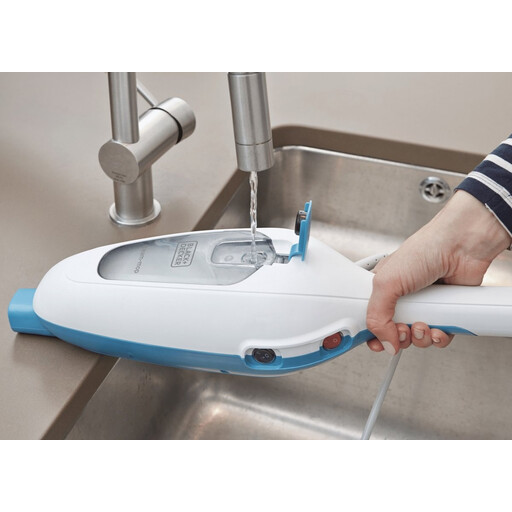
Why it suits this profile: This steam mop is designed for quickly cleaning sealed hard floors in the kitchen, hallway and bathroom.
The heat-up time of around 30 seconds and straightforward design reduce waiting time and unnecessary accessories.
1300 W power, 0.38-litre tank, approximately 11 minutes of steam and a 4-metre cord.
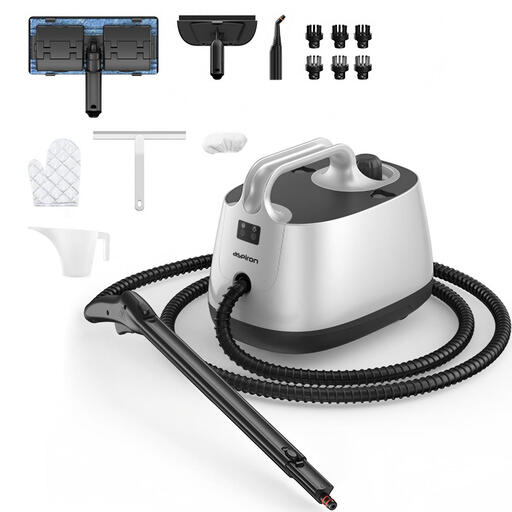
Why it suits this profile: A generous tank and multiple attachments are practical for households tackling different rooms and surfaces.
The product description lists 21 accessories, making its functions clearer in advance than those of a vague “all-in-one” product.
1500 W, up to 4 bar, a stated maximum temperature of 145 °C and a 1.5-litre tank.
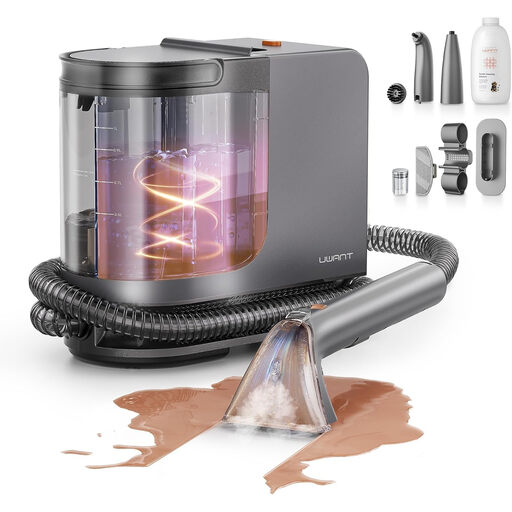
Why it suits this profile: This model is designed more for tackling stains in carpets, sofas, beds and car interiors than for cleaning large hard-floor areas.
The stated suction power of 18,000 Pa makes it clear that this is a wet cleaner for textiles, not simply a steam mop.
600 W power, a 14 cm-wide brush and a 2-in-1 design for clean and dirty water.
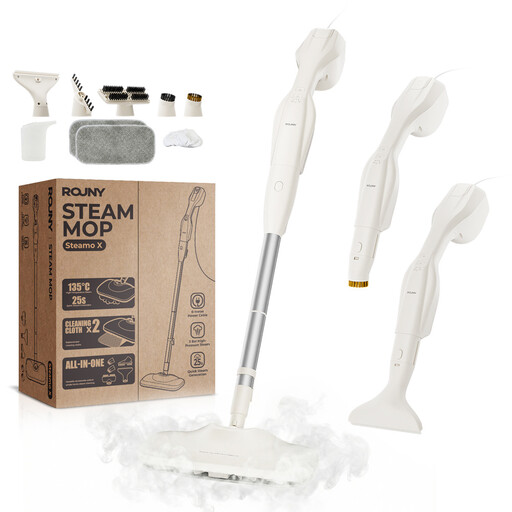
Why it suits this profile: The combination of upright and handheld modes is suitable for floors, windows, kitchen surfaces and corners.
The two steam settings offer more control than an appliance with just one fixed intensity.
1200 W, 2.5–3 bar, a 6-metre cord and five listed cleaning attachments.
We have put together a complete, up-to-date list of products that fully meet these strict selection criteria and the applicable European safety regulations.
Cleaning without chemicals can be convenient, but steam does not always replace manual scrubbing or drying afterwards. Keep the following points in mind:
Higher power can increase energy consumption. Usage depends mainly on the operating duration and the number of heating cycles. A short cleaning session with a quick handheld steam cleaner may therefore use less energy than a large model that takes a long time to heat up, while a large tank means fewer interruptions.
No. A floor steam cleaner is mainly suitable for sealed hard floors, such as certain types of tile and treated stone. For laminate, parquet, untreated wood and PVC, always check the flooring manufacturer’s instructions. Use a small amount of steam and test on a hidden area first if suitability is unclear.
No. A steam mop uses hot steam and a cloth to loosen dirt on hard floors. A carpet or upholstery cleaner generally uses water and a cleaning brush, then sucks up the moisture. For a sofa, rug or car seat, a spot cleaner with separate clean- and dirty-water tanks is usually the more logical choice.
Its lifespan depends on water quality, maintenance, descaling, storage and frequency of use. Do not leave residual water in the tank for extended periods, clean the cloths and brushes, and store the appliance in a dry place. Also check the availability of replacement parts, warranty terms and the instruction manual before placing your order.
