
Vandaag of morgen in huis

Kwaliteit gegarandeerd

Welkomstaanbiedingen ontgrendelen: GRATIS bezorging | Tot 80% korting | Gratis 30 dagen JoyPlus-proefperiode
Download de app
A steam cleaner can be useful for floors, grout, kitchen surfaces, windows, upholstery and car interiors. However, not every appliance is suitable for every task. A model that works well as a steam mop, for example, may be less practical for small corners. A handheld steam cleaner is manoeuvrable, but often has a smaller water tank.
If you only look at wattage or the number of accessories, you may overlook several common pitfalls.
Higher power may indicate a powerful heating system, but it is not the only factor that determines how effectively an appliance cleans. Steam pressure, steam output, heat-up time and the shape of the nozzle also play a part. So check several specifications rather than focusing solely on a high wattage figure on the packaging.
A steam cleaner with accessories sounds versatile, but check which attachments are actually included. A floor cloth, window squeegee, detail brush and extension hose are more useful for different applications than several almost identical brushes. Also check whether replacement cloths or brushes are available.
Steam is not suitable for every floor or material. Untreated wood, delicate plastics, silk, velvet and some glued seams can be damaged by heat or moisture. Always test on an inconspicuous area first and follow the instructions. Only use a steam cleaner for floors on surfaces that the manufacturer confirms are suitable, usually sealed hard surfaces.
Power is measured in watts and mainly indicates the performance of the heating system. Steam pressure is usually stated in bar. Higher pressure can help loosen baked-on dirt or grease, but an adjustable steam setting is at least as useful. It allows you to adapt the steam more effectively to tiles, grout, glass or upholstery.
Also consider the heat-up time. Some models are ready in around 15 to 30 seconds, while a larger cylinder steam cleaner may need several minutes. A fast handheld steam cleaner is suitable for short cleaning jobs; a larger model is better suited to several rooms.
A small tank keeps the appliance compact, but requires more frequent refilling. This is not always practical when you want to clean an entire home, car or several floors. A tank of around 250 to 400 ml is suitable for shorter tasks. For longer cleaning sessions, models with a 1 to 1.6-litre tank are more convenient.
Check whether the tank can be refilled during use. With many appliances, you must first switch them off, unplug them and allow them to cool down. This affects the total cleaning time.
For a steam cleaner for the bathroom and kitchen, small nylon brushes, a narrow nozzle and a window attachment are useful. For a steam cleaner for carpets and upholstery, you need a suitable fabric brush. If you want to clean a car interior, also look for a long hose and small detail attachments.
A six-metre cable provides greater freedom of movement in British homes, where sockets are not always close to the floor or bathroom. Also consider the weight, hose length and how the accessories are stored.
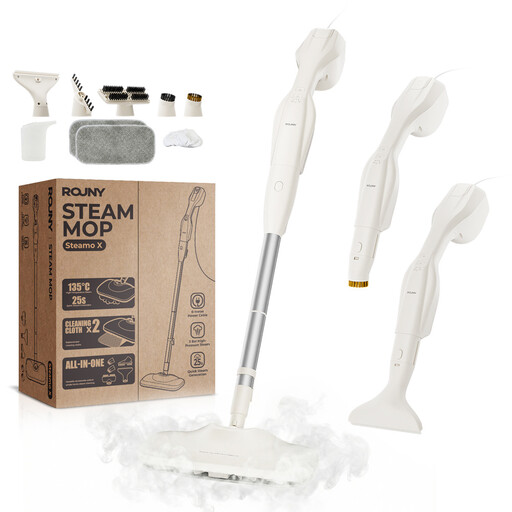
Why it suits this profile: This model combines a steam mop for floors with a handheld unit for kitchens, windows, walls and corners. That makes one appliance useful for everyday cleaning tasks.
The product description lists two steam levels, so you do not have to use one fixed setting on every surface. The 6-metre cable reduces the need to switch sockets.
According to the product information: approximately 25 seconds’ heat-up time, 2.5–3 bar steam pressure, a 250 ml tank and five listed accessories.
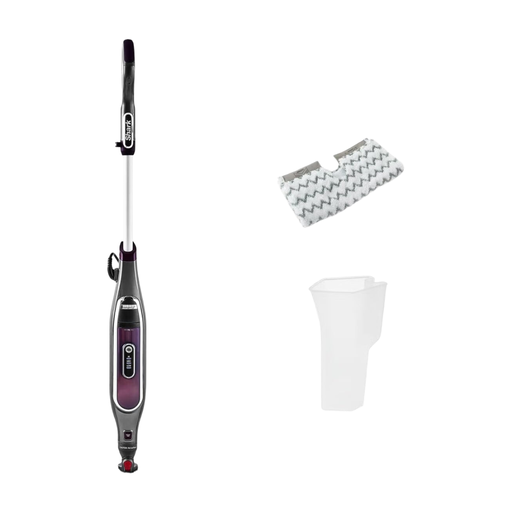
Why it suits this profile: Designed for households that mainly clean sealed hard floors and value straightforward controls with washable pads.
This is not a universal handheld steam cleaner: the product information explicitly states that it is intended for sealed hard floors. This clear limitation helps prevent incorrect use on delicate surfaces.
1200 watts, a 380 ml tank, a 6-metre cable, two washable Dirt Grip pads and a steam control system listed in the product information.
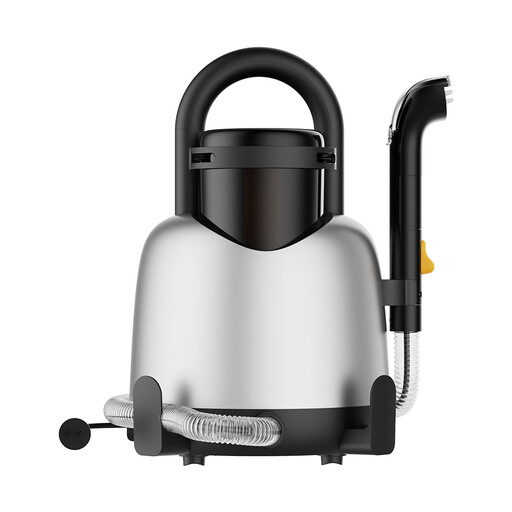
Why it suits this profile: This appliance is mainly designed for carpets, upholstered furniture, car seats and other textile surfaces. It is a good match for households with lots of upholstery or recurring localised stains.
The product description specifies three modes: steam washing, hot-water washing and washing with room-temperature water. This makes its intended uses clearer than those of a general accessory kit.
According to the product information: 1700 watts, 13 kPa suction power, a 1.7-litre clean-water tank, a 1.4-litre dirty-water tank and five brush attachments.
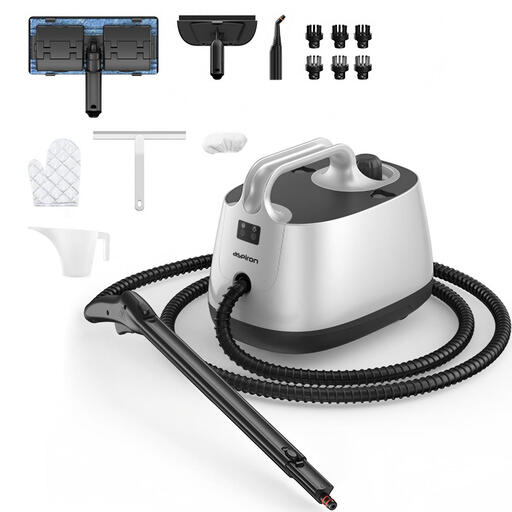
Why it suits this profile: The large tank and extensive accessory kit are ideal for anyone who wants to tackle several rooms, grout, windows, kitchen surfaces and car interiors in a single cleaning session.
The specifications clearly list 21 accessories, a 1.5-litre tank and a heat-up time of around five minutes. This makes it easier to compare the contents with your own requirements in advance.
According to the product description: 1500 watts, up to 4 bar pressure, a 1.5-litre tank, integrated wheels and a child lock on the handle.
We have put together a complete, up-to-date list of products that fully meet these strict selection criteria and the applicable European safety regulations.
With many steam cleaners, you only use water. This can help you avoid cleaning products for certain tasks, but it does not mean that every surface or stain will be clean without further treatment. Grease and baked-on dirt often need to be loosened first and then wiped away with a cloth.
Do not add detergent, perfume, oil, alcohol or vinegar to the water tank unless the instructions expressly permit it. Such additives may damage the heating element or produce unwanted vapours. If you live in a hard-water area, you may be able to use demineralised water if recommended by the manufacturer.
Take extra care with windows where there are temperature differences. According to the product information for some models, hot steam on cold glass can cause cracking. Start from a distance and gradually increase the temperature. Never direct steam at sockets, electrical appliances, people or animals.
That depends on the floor and the manufacturer’s instructions. Only use steam on a well-sealed surface that is suitable for this purpose. Excessive moisture or prolonged heat can damage joints, top layers or adhesive bonds. Test it on an inconspicuous area first and do not leave the steam mop standing still.
Its lifespan depends on how often it is used, water quality, maintenance and storage. Empty the tank after use, descale the appliance according to the instructions and regularly check the cloths, hoses and attachments. Allow the appliance to cool down completely before changing accessories or storing it.
When cleaning without chemicals, you generally only use water and electricity. The total cost depends on the power rating, usage time, electricity tariff and the purchase of replacement pads or filters. A larger model is not automatically more cost-effective: choose the tank capacity and accessories based on how often you use the appliance and what you use it for.
