
Livraison le jour même et le lendemain

Qualité garantie

Débloquez vos offres de bienvenue: Livraison GRATUITE | Jusqu'à -80 % | 30 jours d'essai gratuits à JoyPlus
Téléchargez l'application
A steam cleaner can be useful for tile grout, hard floors, windows and awkward-to-reach areas. However, you will not automatically buy the right appliance just because the packaging uses terms such as “extra powerful” or “multi-functional”. The real differences often lie in the tank capacity, accessories, temperature and how the appliance is used.
This guide will help UK households choose a suitable steam cleaner for home use and avoid common purchasing mistakes.
A high wattage may sound appealing, but it does not tell you everything about the appliance’s actual steam performance. Also consider the steam pressure, heat-up time and continuous steam output. An appliance with plenty of power but a small water tank can still be inconvenient during a longer cleaning session.
“Multi-functional” does not always mean that all the necessary attachments are included. For a steam cleaner for bathrooms and kitchens, for example, a detail nozzle, brush and floor attachment are useful. If you want to clean windows, you will need a window squeegee. Always check the number and type of accessories listed in the product information.
Steam is not suitable for every type of flooring, upholstery or wall finish. Untreated wood, some laminates, delicate plastics and heat-sensitive materials can be damaged. Test the appliance on an inconspicuous area first and always follow the manufacturer’s instructions.
Steam loosens dirt, but it does not replace suitable preparation. Grease, limescale and ingrained dirt may still require a cloth or appropriate cleaning product.
Steam pressure, usually measured in bar, indicates how powerfully steam is released from the appliance. A handheld steam cleaner may be sufficient for light tasks. For several rooms, grout and more stubborn dirt, a model with higher pressure is more practical.
A temperature rating, such as 145 °C, generally describes the maximum temperature of the steam or heating system. This does not mean that every surface can safely withstand that temperature. Do not automatically use the highest setting on delicate materials.
A compact handheld steam cleaner often has a smaller tank. This makes the appliance lightweight and easy to store, but it means more frequent refilling when cleaning larger surfaces. A model with a tank of around 1.5 litres is better suited to cleaning several rooms one after another.
The heat-up time determines how quickly you can get started. An appliance that is ready in around five minutes is suitable for planned cleaning. For quickly treating a single item of clothing or a small stain, a handheld model may be more practical.
Pay particular attention to:
Never use a steam cleaner on people, animals, electrical appliances or flammable liquids. Unplug the appliance before filling, emptying or carrying out maintenance. Allow it to cool completely before putting it away.
A handheld steam cleaner is suitable for small surfaces, cars, kitchen edges and difficult-to-reach areas. A larger multi-functional steam cleaner for floors and windows offers greater capacity and more accessories, but it also takes up more storage space.
For clothing, a standard steam cleaner is not always the most practical solution. A steam generator, steam iron or clothes steamer is specifically designed to smooth clothing. With a steam generator, pump pressure, steam output and tank capacity are important considerations. A stable ironing board with a metal or steel base can also help.
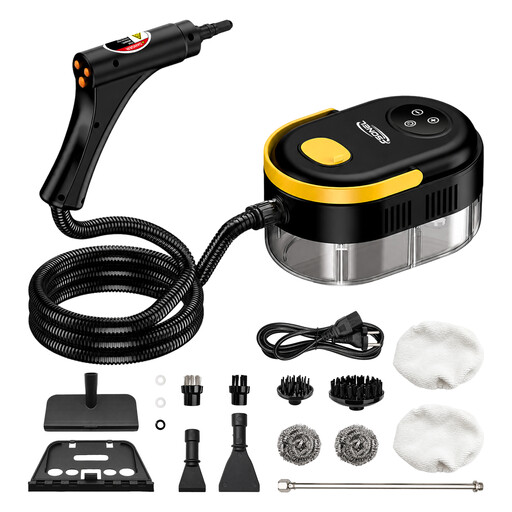
Why it suits this profile: This handheld model is designed for smaller cleaning tasks in the kitchen and bathroom, around windows and near the barbecue. It is a sensible choice if you want to try steam cleaning without having to make room for a larger appliance.
The product name mentions adjustable steam settings and an extensive range of accessories. Before buying, however, check exactly which attachments are included in the package.
Compact design, adjustable steam setting and suitability for a range of household applications.
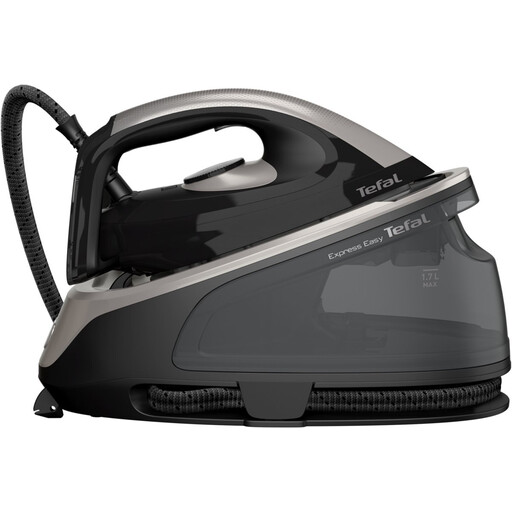
Why it suits this profile: This steam generator is well suited to households that regularly iron large amounts of clothing and want to use steam both horizontally and vertically.
The specifications state that it has a removable 1.7-litre tank and a locking system. This makes refilling, moving and storing it more straightforward than with a small fixed reservoir.
5.8 bar pump pressure, 120 g/min continuous steam, a steam boost of 350 g/min according to the product information, and Calc Clear technology.
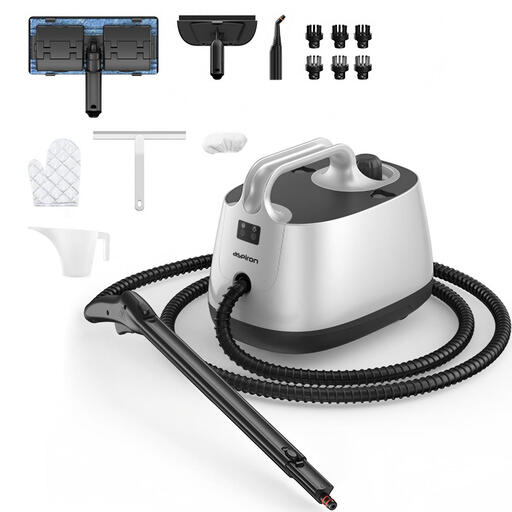
Why it suits this profile: This model is designed for multiple rooms and materials, including floors, bathrooms, kitchens, windows, furniture, carpets and car interiors. The wheels and flexible hose are practical for larger cleaning tasks.
The listed specifications include 21 accessories, a 1.5-litre tank and a child lock. Before use, still check that your chosen surface is suitable for steam.
1500 W, up to 4 bar, a stated maximum steam temperature of 145 °C, and accessories for detail work, windows and floors.
We have put together a complete, up-to-date list of products that fully meet these strict selection criteria and the applicable European safety regulations.
The running costs of a steam cleaner mainly consist of electricity, water and, where necessary, descaling products. A 1500 W appliance theoretically uses 1.5 kWh when it operates continuously at full power for an hour. In practice, the appliance does not heat continuously at maximum power, so actual consumption may be lower.
The lifespan depends heavily on maintenance. Do not leave water in the tank for long periods after use, descale the appliance according to the instructions and store the accessories somewhere dry. A larger tank is convenient, but it also makes the appliance heavier. So do not automatically choose greater capacity if you usually carry out short cleaning tasks.
No. Check the material and the flooring manufacturer’s instructions. Tiles and some hard, well-sealed surfaces are often suitable, but untreated wood, delicate laminate and materials with open joints can be damaged by heat and moisture.
That depends on how you use it. You will usually use little or no traditional cleaning product, but the appliance still consumes electricity and requires maintenance. Compare the tank capacity, heat-up time and wattage with how often you will actually use the appliance.
There is no fixed lifespan for every model. Regular descaling, correct storage and following the safety instructions can help limit wear and tear. Also check the statutory warranty and any additional warranty conditions before buying.
