
Vandaag of morgen in huis

Kwaliteit gegarandeerd

Welkomstaanbiedingen ontgrendelen: GRATIS bezorging | Tot 80% korting | Gratis 30 dagen JoyPlus-proefperiode
Download de app
A steam cleaner can be useful when you want one appliance for hard floors, tile grout, kitchen surfaces, windows and car interiors. However, not every model is automatically suitable for every task. For example, a high power rating on the packaging tells you little about the water tank, accessories or controls.
The following points will help you separate marketing claims from practical product specifications.
A 1500W steam cleaner sounds powerful, but wattage mainly indicates the electrical power. It does not, on its own, tell you how effectively the appliance will loosen dirt. Also check the stated steam pressure, heating time, maximum temperature and the way the steam is controlled.
A high-powered model with a small tank may need frequent interruptions during a cleaning session. That may not be a problem in a flat, while a larger home may benefit from a steam cleaner with a large water tank.
A long list of accessories is only useful if the attachments suit the way you intend to use the appliance. For a steam cleaner for floors, for example, you need a floor attachment and suitable cloths. For a bathroom steam cleaner, a detail nozzle and grout brush are more practical. If you want to clean windows, you will need a window squeegee.
Also check whether the accessories can be detached and stored easily after use. Otherwise, a multifunctional steam cleaner can quickly take up more space than expected.
Steam is not suitable for all materials. Take care with untreated wood, delicate fabrics, silk, velvet and heat-sensitive plastics. If in doubt, test the appliance on an inconspicuous area first. A sudden temperature difference can damage cold glass or mirrors. Warm the surface gradually and follow the manufacturer's instructions.
Also, do not use the steam cleaner for flammable liquids, hot ash or surfaces for which the manual advises against using it.
Steam pressure, measured in bar, indicates the pressure at which the steam is released. A higher figure may help with stubborn dirt in grout or around hobs, but the right brush attachment and distance from the surface remain important.
The temperature is usually stated as a maximum value. According to the product description, the ASPIRON AS-CA019 has a maximum steam temperature of 145 °C and steam pressure of up to 4 bar. The stated heating time is approximately five minutes. According to its own product description, the MONSGA is ready to use in 15 seconds and operates at up to 3.5 bar; the product page also states 105 °C. These are product specifications taken from the relevant product information, not a guarantee of the same results for every cleaning task.
A tank of 1.5 to 1.6 litres is practical if you want to clean several rooms one after another. However, check whether the tank can be refilled during use and whether the appliance needs to cool down first. A compact handheld steamer with a 400 ml tank is lighter, but is better suited to small, targeted jobs.
Only use the type of water specified in the manual. Some models recommend distilled or purified water to help reduce limescale. Do not add cleaning products, perfume, alcohol or descaler to the tank if the manufacturer prohibits this.
For floors and larger spaces, wheels, a flexible hose and a sufficiently long cord are practical features. A handheld model is easier to use for a kitchen steam cleaner, windows or small surfaces, but may be less suitable for cleaning an entire home.
Look for a child lock, clear status lights and a way to adjust the steam level. Never leave a plugged-in appliance unattended, and unplug it before carrying out maintenance or changing accessories.
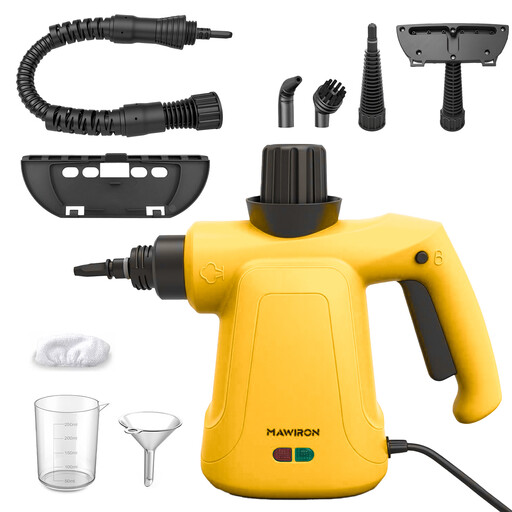
Why it suits this profile: The compact design is intended for smaller cleaning tasks, such as upholstery, car interiors and localised stains.
The limited tank makes it clear that this is not a model for cleaning several rooms without refilling. This means you do not pay for a large capacity you do not need.
1000 W power, a 400 ml tank and 9 included attachments according to the product name.
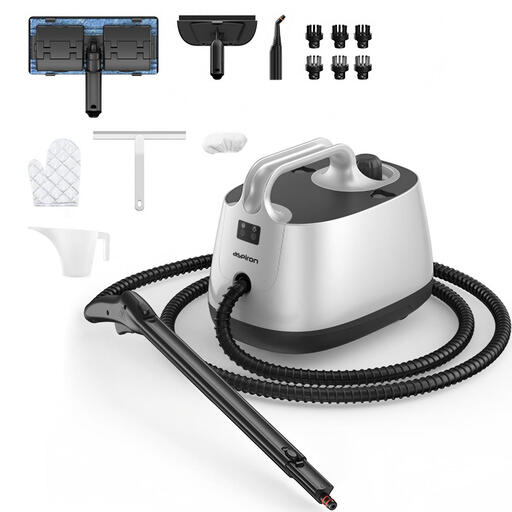
Why it suits this profile: This model combines a larger tank with several accessories for households that want to tackle floors, bathrooms, kitchens, windows and car interiors with one appliance.
The product description lists 21 accessories, a 1.5-litre tank and wheels. This means the choice is not based solely on wattage.
1500 W, up to 4 bar, maximum 145 °C, 1.5-litre tank and a child lock according to the product description.
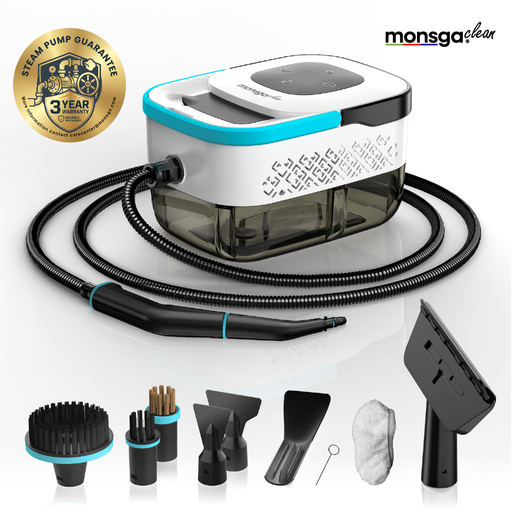
Why it suits this profile: The short heating time and adjustable steam level are practical for frequent cleaning in the kitchen, bathroom, on hard floors and in the car interior.
The product information lists 6 steam settings. This gives you more control than an appliance with only on/off operation, especially when cleaning different materials.
1500 W, 1.6-litre tank, 3.5 bar and approximately 15 seconds' heating time according to the product description.
We have put together a complete, up-to-date list of products that fully meet these strict selection criteria and the applicable European safety regulations.
A steam cleaner without chemicals generally uses only water, but always check this in the manual for your chosen model. According to MONSGA's product description, detergents, perfume, alcohol and descaling agents must not be added to the tank. The first drops of condensation may contain hot water, so direct the jet at a cloth or into a sink first.
Keep the following points in mind:
Power consumption depends on the wattage and how long the appliance is used. A 1500 W appliance theoretically uses 1.5 kWh when operating continuously at maximum power for one hour. In practice, the heating element often switches on and off, so actual consumption may vary.
No. Tiles and other suitable hard surfaces are generally the more obvious applications, but always check the flooring manufacturer's guidance and the product manual. Take extra care with untreated wood, laminate joints and materials that are sensitive to moisture or heat.
Its lifespan depends on how frequently it is used, water quality, maintenance and storage. Emptying the tank regularly, descaling as instructed and allowing accessories to cool properly can help reduce wear. Before buying, also check whether replacement cloths and attachments are available.
That depends on the purchase price, electricity consumption, water usage and the products you would otherwise buy. A model with a larger tank can save time when cleaning several rooms, while a compact handheld steamer may be more economical for occasional small jobs. Therefore, do not compare the price alone. Also consider the tank capacity, accessories, maintenance and the purpose for which you will use the appliance.
