
Vandaag of morgen in huis

Kwaliteit gegarandeerd

Welkomstaanbiedingen ontgrendelen: GRATIS bezorging | Tot 80% korting | Gratis 30 dagen JoyPlus-proefperiode
Download de app
A steam cleaner can be useful for grease, baked-on dirt and stains on suitable surfaces. However, not every model is suitable for every task. A steam mop for tiled floors works differently from a handheld steam cleaner for grout or a carpet cleaner with a suction function.
The main pitfalls are often not in the appearance, but in the details:
Pressure is usually shown in bar. A higher figure can help loosen dirt, but do not compare models based on this number alone. Also check the steam output in millilitres per minute and whether you can adjust the intensity.
A steam mop with one fixed setting is simple to use, but less flexible on different types of flooring. A multifunctional steam cleaner with several settings may be better suited to tiled grout, kitchen surfaces and stubborn deposits. Always follow the instructions and test the appliance on an inconspicuous area first.
A short heat-up time is useful for small cleaning jobs. For example, the ROUNY 2-in-1 Steam Mop states a heat-up time of approximately 25 seconds, a 250 ml tank and two steam settings. This makes it suitable for short tasks on hard floors, windows and kitchen surfaces.
A model with a larger tank makes more sense for cleaning several rooms. According to the product information, the ASPIRON AS-CA019 has a 1.5-litre tank and a heat-up time of approximately five minutes. The Monsga states that it has a 1.6-litre tank and adjustable steam control. Always check the conditions behind claims like these: maximum operating time may depend on the selected setting and the surface being cleaned.
Before buying, check what the appliance is designed for:
Also look for washable cloths, filters, descaling requirements and how the water is refilled. Only use the liquid permitted by the instructions. Several models explicitly state that only clean water may be added to the tank.
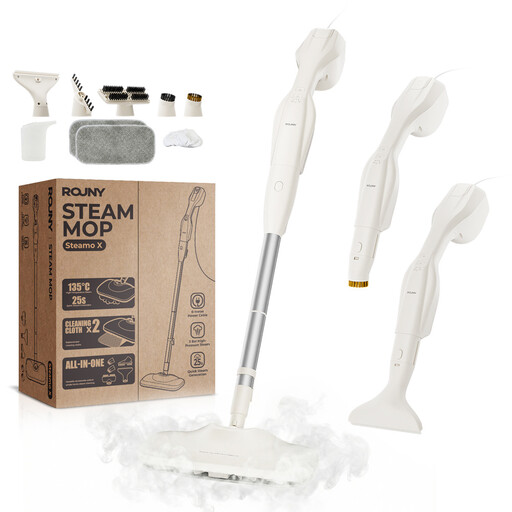
Why it suits this profile: This model combines a handle for floors with a handheld unit for windows, kitchens, walls and corners. Its approximately 25-second heat-up time and 6-metre cord are practical for everyday cleaning.
The two steam settings offer more control than an appliance with just one fixed setting. The product information also specifies the areas of use and safety restrictions.
2-in-1 design, stated steam pressure of 2.5–3 bar, 250 ml tank and five accessories included.
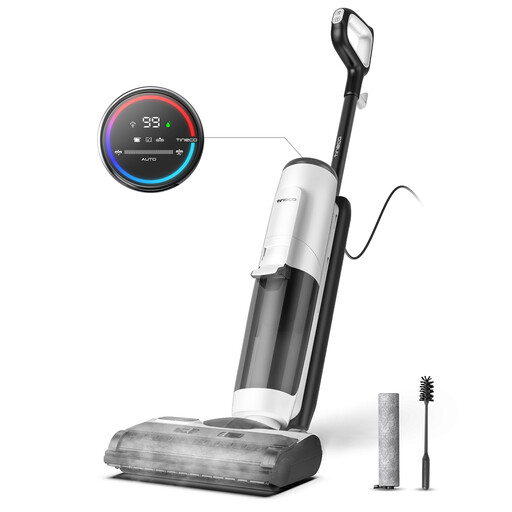
Why it suits this profile: This appliance is designed for indoor floors such as vinyl, tiles and sealed wood. According to the product information, it combines wet and dry cleaning with a digital display.
The stated flooring limitations are clear: rough or unsuitable surfaces may not be suitable. This helps prevent you from buying a floor cleaner without considering material compatibility.
Combines vacuuming, wet cleaning and steam for hard floors; weighs 6 kg and includes an additional brush roller according to the product specifications.
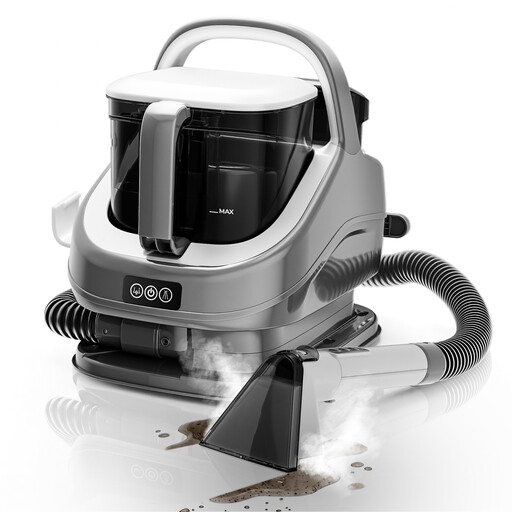
Why it suits this profile: For carpets, sofas, stairs and car interiors, a spray-and-suction function is often more useful than dry steam alone. This model has separate tanks for clean and dirty water.
The specifications distinguish between cold water, hot water and steam. This makes it clearer that this is not a standard steam mop for hard floors.
1300 W power, 13 kPa suction power, a 1400 ml clean-water tank and a 1200 ml dirty-water tank.
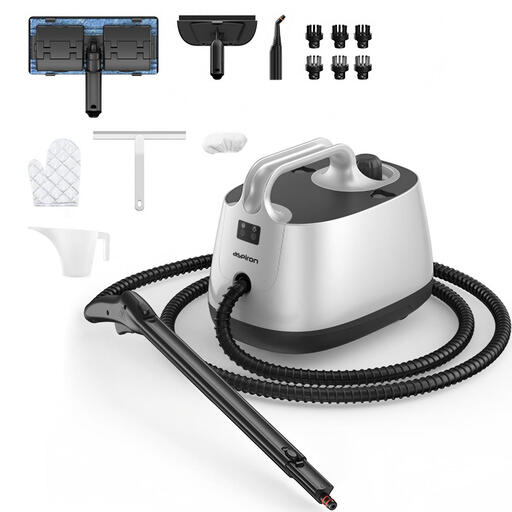
Why it suits this profile: The combination of a large tank, wheels, flexible hose and 21 accessories is designed for several rooms and a wide range of household tasks.
The accessories are linked to specific uses such as floors, windows, grout, kitchens, bathrooms and cars. However, check beforehand which surfaces are suitable.
1500 W, up to 4 bar according to the product information, 1.5-litre tank and a child safety lock on the handle.
We have put together a complete, up-to-date list of products that fully meet these strict selection criteria and the applicable European safety regulations.
Steam from an appliance can be extremely hot and cause burns. Never direct the jet at people, animals, plug sockets or electrical appliances. Allow the appliance to cool down before emptying the tank or changing an accessory.
Also bear the following points in mind:
No. Sealed tiles, vinyl and other hard floors specified by the manufacturer are often suitable. Unfinished wood, waxed surfaces and materials that are sensitive to moisture or heat can be damaged. Always check the instructions for both the floor and the appliance.
Electricity consumption depends on the power rating and how long the appliance is used. A 1500 W model theoretically uses 1.5 kWh per hour when operating continuously at full power. In practice, the heating element may switch off at times and steam is not produced continuously. You should also allow for filters, descaling and replacement cloths.
Only if the model is designed for this purpose. A standard steam mop does not remove dirty water from textiles. For carpets, sofas and car interiors, a carpet cleaner with a suction function is more suitable. Test a small area first, then allow the material to dry thoroughly.
