
Vandaag of morgen in huis

Kwaliteit gegarandeerd

Welkomstaanbiedingen ontgrendelen: GRATIS bezorging | Tot 80% korting | Gratis 30 dagen JoyPlus-proefperiode
Download de app
A steam cleaner can be useful for floors, grout, kitchen surfaces, windows, upholstery and car interiors. However, not every model is suitable for every task. A compact handheld steam cleaner works differently from a steam mop or a multifunction steam cleaner with a large tank.
If you only look at the wattage or the number of accessories, you could end up buying a machine that disappoints in practice. Instead, look out for these three common pitfalls.
Higher power can help a machine heat up quickly, but it doesn’t automatically tell you how much steam is available or how long you can keep cleaning. Check the heating time, tank capacity and running time too.
A handheld steam cleaner with a 400 ml tank is handy for spot cleaning, grout or car interiors. For several rooms, a 1.5 or 1.6 litre tank makes more sense, as you won’t need to refill it as often.
A product with 20 accessories may look versatile, but check that the set suits the cleaning jobs you have in mind. For floor cleaning, for example, you’ll need a suitable floor head and washable pads. For a bathroom, a small brush, precision nozzle and possibly a squeegee are more important.
Check whether replacement accessories are available too. An accessory kit is only practical if the parts are sturdy enough for regular use and it’s clear what each one can be used for.
A steam cleaner that uses no chemicals typically uses only water, but that doesn’t mean steam is safe for every material. Untreated wood, some plastics, delicate fabrics and cold glass surfaces can be damaged by heat or moisture.
Always test it on an inconspicuous area first. Also follow the instructions for the specific machine. When using a steam cleaner on carpets and upholstery, it’s important to ventilate the area well after cleaning and let the material dry thoroughly.
Power is measured in watts. A 1,000-watt model is often enough for smaller cleaning tasks. Models rated between 1,200 and 1,500 watts are worth considering if you want to tackle larger areas or stubborn dirt.
Steam pressure, measured in bar, indicates the pressure at which steam comes out. Higher pressure can help with grout and stuck-on dirt, but always check that the surface is suitable for it. Temperature is often listed too, but the actual results also depend on the distance from the surface, the steam setting and the attachment you use.
A small tank makes the machine lighter and quicker to use. This is a good fit for a handheld steam cleaner for the kitchen, bathroom or car. A larger tank is more convenient for cleaning your whole home, but it makes the machine heavier and may increase the heating time.
Don’t just look at the tank capacity; check how you need to refill it too. Some machines need to cool down completely before you can add more water. This can affect your pace during longer cleaning sessions.
A four-metre cord works well in smaller spaces, while a six-metre cord gives you more freedom of movement when cleaning floors and larger rooms. A flexible hose, wheels and an adjustable steam setting can also make the machine more comfortable to use.
Also check whether the machine is designed only for sealed hard floors. A steam mop is usually designed for this type of flooring and isn’t automatically suitable for carpets, furniture or windows.
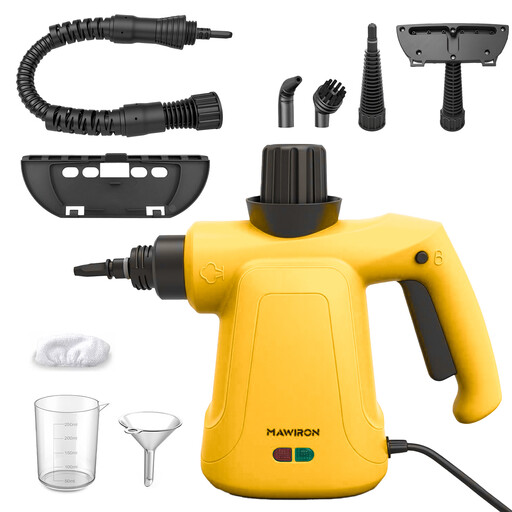
Why it suits this type of user: This compact model is a good fit for households looking to try steam cleaning for the first time and mainly tackle smaller jobs, such as grout, kitchen edges, upholstery or car interiors.
The product name specifies a 400 ml tank and nine accessories. This makes it clear from the outset that it’s better suited as an extra machine for specific tasks than as a solution for cleaning an entire home.
1000 watts, nine attachments included and a design intended for upholstery, cars and smaller surfaces.
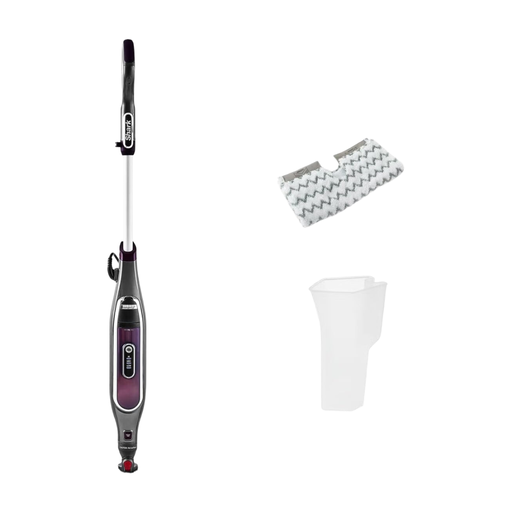
Why it suits this type of user: This model is designed for regular cleaning of sealed hard floors. Its controls and washable pads included in the box suit users who value a consistent cleaning routine.
The product information clearly lists a 380 ml capacity, a heating time of around 30 seconds and use on sealed hard floors. This helps avoid unrealistic expectations about using it on other materials.
1200 watts, a six-metre cord, intelligent steam control and two machine-washable Dirt Grip pads, according to the product details.
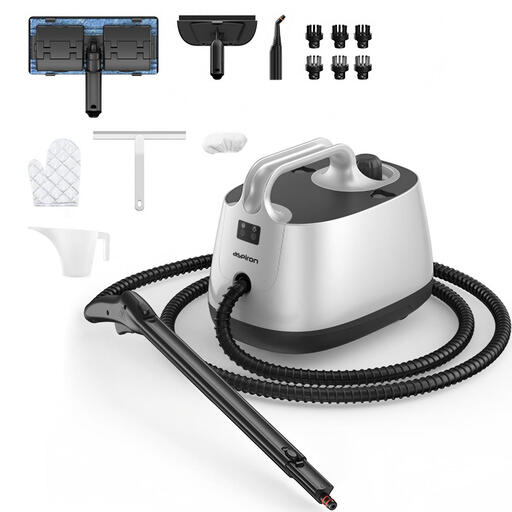
Why it suits this type of user: This is an option for anyone looking to clean floors, bathrooms, kitchens, windows, carpets, upholstery and car interiors with one machine.
The product description lists 21 accessories, a 1.5 litre tank, a heating time of around five minutes and integrated wheels. This makes it easier to judge whether its size and features suit your needs.
1500 watts, up to 4 bar according to the product information, a 1.5 litre tank and accessories for tasks including grout, windows and detailed cleaning.
We’ve put together a complete, up-to-date list of products that meet these strict selection criteria and the applicable European safety regulations.
It depends on the model and how you use it. A machine that uses only water may reduce the need to buy certain cleaning products. However, you’ll also need to consider electricity use, descaling and the possible replacement of pads or accessories. So compare more than just the purchase price: look at tank capacity, maintenance and spare parts too.
Its lifespan depends on how often you use it, water quality, maintenance and storage. Limescale can block parts or reduce steam output. Empty the tank as instructed, use the recommended water and store the machine somewhere dry. Also check whether replacement pads and accessories are available.
Some multifunction models can be used for these jobs, but don’t assume they all can. Use a suitable squeegee on windows and avoid sudden temperature changes on cold glass. For upholstery, test a small, inconspicuous area first. Always check the manufacturer’s material restrictions before you start.
