
Vandaag of morgen in huis

Kwaliteit gegarandeerd

Welkomstaanbiedingen ontgrendelen: GRATIS bezorging | Tot 80% korting | Gratis 30 dagen JoyPlus-proefperiode
Download de app
A steam cleaner can be useful for hard floors, tiled surfaces, kitchen areas and other places where grease or baked-on dirt builds up. However, not every model is suitable for every home. A lightweight steam mop works differently from a multifunctional machine with a hose, accessories and a large water tank.
If you only consider wattage or a long list of accessories, you could end up buying a machine that is too heavy, too limited or unsuitable for your flooring in practice. Below, we outline the key points to consider, along with a selection of models for different uses.
Higher power can contribute to faster heating, but it is not the only factor that determines how effectively and conveniently a machine cleans. Steam pressure, temperature control, water flow, the shape of the mop head and the cloths supplied all play a part.
For example, a powerful steam cleaner with a large body may be less practical in a small bathroom. So, as well as checking the power rating, look at the heating time and weight.
Only use a steam cleaner on surfaces approved by the manufacturer. Sealed vinyl, ceramic tiles and other hard floors are often listed as suitable surfaces. Untreated wood, poorly bonded laminate sections and unsealed surfaces can be damaged by heat and moisture.
Always test the cleaner on an inconspicuous area first. A steam cleaner for wooden floors must also be suitable for the floor’s finish. For more targeted options, see the page steam cleaner for wooden floors.
A steam cleaner without cleaning solution uses water and heat instead of a cleaning product. This can be useful if you want to use fewer different products, but its effectiveness varies depending on the surface, temperature, contact time and method of use.
Claims about removing 99.9% of bacteria are marketing claims made by the brands. For example, BLACK+DECKER states this for the FSM13E1 based on its own research. CleanKoala makes a similar claim, according to information provided by CleanKoala. Do not treat this as a general guarantee for every situation, and always follow the instructions.
A compact tank of around 350 to 380 ml is suitable for short cleaning sessions. For several rooms, a tank of 1.5 litres or more is more practical, as you will need to refill it less often.
Also consider how the tank is filled. With some models, the machine must first be switched off and allowed to cool down. This means that a larger tank is not only about capacity, but also about ease of use.
A heating time of around 30 seconds is convenient for everyday cleaning. Models with a larger boiler may take longer to heat up, but can sometimes provide a longer continuous operating time.
Adjustable steam settings are important if you want to clean different surfaces. A tiled floor may require a different approach from a window, grout line or kitchen unit front. Also check whether the manufacturer recommends the machine as a steam cleaner for hard floors, and which materials are excluded.
A steam cleaner with accessories may come with a window squeegee, grout brush, detail nozzle, floor cloth or extension hose. Don’t just look at the number of components: check whether the accessories match the cleaning tasks you have in mind.
For floors, a wide head and washable microfibre cloths are important. For grout and taps, a narrow nozzle and small brush are more useful. A 4 to 6-metre cable often provides enough reach in UK homes without requiring you to keep changing sockets. A handheld steam cleaner is more flexible on small surfaces, while a floor model works faster in larger rooms.
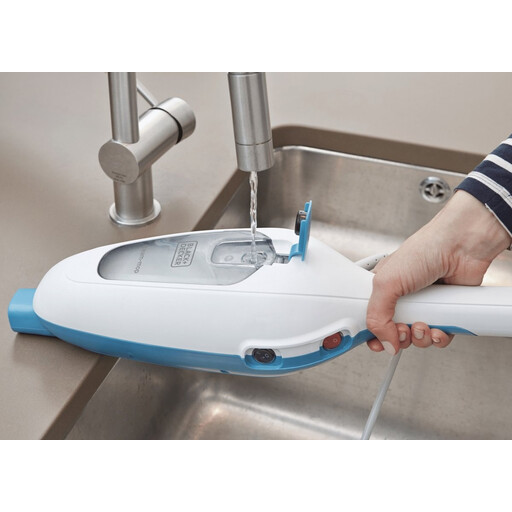
Why it suits this profile: A straightforward floor model for anyone who mainly wants to clean sealed hard floors without a large multifunctional machine.
The specifications state a heating time of 30 seconds and clearly identify sealed hard floors as the intended application. This makes it easier to establish beforehand what the machine is designed for.
1300 W power, 0.38-litre tank, around 11 minutes of continuous steam and a 4-metre cable.
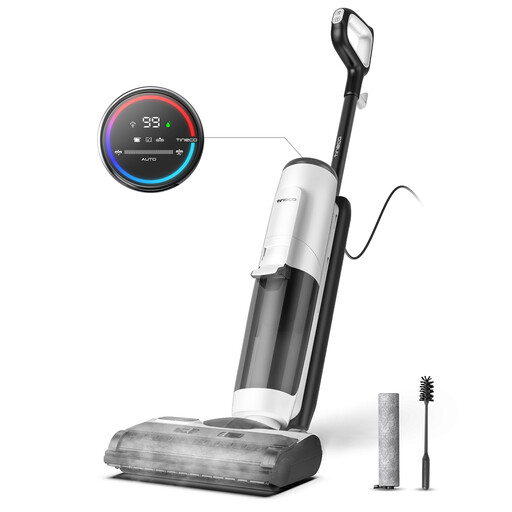
Why it suits this profile: An appealing option for households that want to vacuum and wet-clean hard floors with one cordless machine.
The product information limits use to indoor areas and hard floors such as vinyl, tiles and sealed wood. This makes the choice of materials clearer than with general claims.
Wet and dry cleaning in one machine, cordless operation, digital display and a weight of 6 kg.
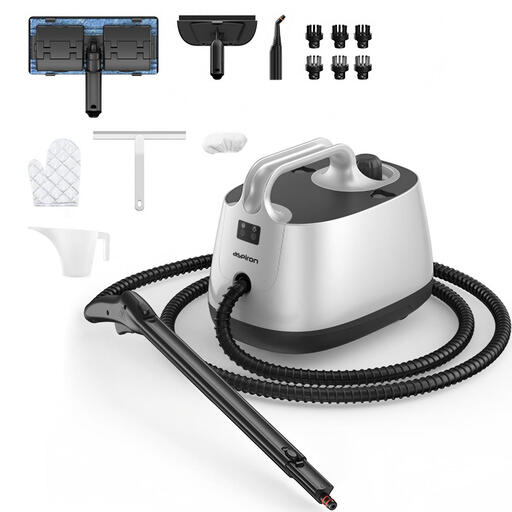
Why it suits this profile: Suitable for anyone looking to tackle multiple rooms, grout, windows, kitchen surfaces and car interiors.
The 21 accessories are linked to specific applications, including floors, windows and grout. However, check the instructions beforehand to see which surfaces are suitable.
1500 W power, up to 4 bar according to the product information, 1.5-litre tank, wheels and a child lock.
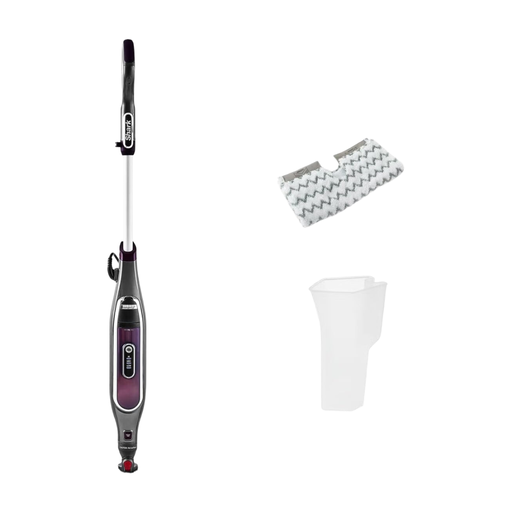
Why it suits this profile: A practical choice for sealed hard floors and regular cleaning without separate cleaning products.
The instructions clearly state that the machine must not be used on unsealed hard floors. Two washable cloths are also included.
1200 W power, heating time of around 30 seconds, 380 ml tank, 6-metre cable and steam control.
We have compiled a complete, up-to-date list of products that fully meet these strict selection criteria and the applicable European safety regulations.
That depends on the finish and the manufacturer’s instructions. Only use steam if the laminate is suitable for it and properly sealed. Test an inconspicuous area first and use short movements. If in doubt, a lightly damp cleaning method is safer.
Electricity consumption depends on the power rating and operating time. A 1300 W machine theoretically uses 1.3 kWh per hour at full power; actual consumption may be lower while heating up and adjusting the settings. Calculate the cost by multiplying consumption in kWh by your energy tariff. You may also need to factor in the cost of washable cloths, filters and descaling.
The service life varies by model and intensity of use. Regularly cleaning the filters, filling the tank correctly and replacing worn parts in good time can help keep the machine in working order. Before buying, check whether maintenance information and spare parts are available.
