
Livraison le jour même et le lendemain

Qualité garantie

Débloquez vos offres de bienvenue: Livraison GRATUITE | Jusqu'à -80 % | 30 jours d'essai gratuits à JoyPlus
Téléchargez l'application
A steam cleaner can be useful for baked-on grease, grout, floors and upholstery. However, many households buy a machine that is not suited to their home. A compact steam mop, for example, is convenient for a quick floor clean, but less suitable for carpets or a car interior. Conversely, a powerful multifunctional steam cleaner may be unnecessarily large for a small flat.
Higher wattage does not automatically mean that a machine is better suited to your needs. It mainly indicates the electrical power. You should also consider heat-up time, steam pressure, water flow rate and adjustable steam levels.
A machine that reaches a high temperature can loosen grease and dirt, but it is not suitable for every material. Untreated wood, some plastics, bonded surfaces and delicate fabrics can be damaged by heat or moisture.
A small water tank keeps the machine compact, but it can run empty quickly during a more extensive cleaning session. A steam mop with a 250 to 380 ml tank is mainly suitable for everyday cleaning of hard floors. For several rooms or intensive cleaning, a larger tank is more practical.
Also check whether the tank can be refilled during use. With many machines, you first need to switch the appliance off, unplug it and wait until it has cooled down.
Steam loosens dirt, but it does not always remove the loosened moisture and dirt. For sofas, mattresses, carpets and car seats, a carpet cleaner, upholstery cleaner or stain cleaner with a suction function may be more suitable. Pay attention to the difference between:
Steam pressure is usually stated in bar. Higher pressure can be useful for grout, hobs and stubborn dirt, but it also requires greater care. For everyday use, a machine with several settings is more flexible than a model that only offers maximum steam.
Product descriptions sometimes state a temperature at which bacteria are supposedly removed. Do not treat this as a general guarantee. According to BLACK+DECKER’s product description, the FSM13E1 removes up to 99.9% of common household bacteria; this is a claim made by the brand and is not a universal result on every surface. The same applies to terms such as “sterilisation” or “disinfection”. Follow the instructions and only use the machine on suitable surfaces.
For a quick floor clean, a tank of around 250 to 400 ml may be sufficient. A model with a tank of 1.5 to 1.7 litres is better suited to several rooms, but it is heavier and takes up more storage space.
A long cable or flexible hose makes a practical difference. Also consider the weight, wheelbase and how the accessories are stored. An appliance that is difficult to move is less likely to be used.
A wide floor pad is useful for tiles, vinyl and other sealed hard floors. Narrow brushes are designed for taps, grout and edges. A window attachment can be handy, but first check whether the surface is suitable according to the instructions.
For textiles, a suction function is more important than steam alone. Always test the machine on an inconspicuous area and check whether the material is water- and heat-resistant. Only use clean water when instructed by the manufacturer. Do not add cleaning products to the tank if the instructions do not allow this.
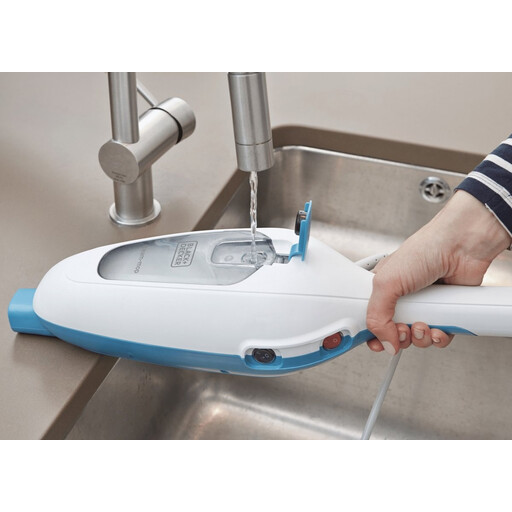
Why it suits this profile: A lightweight model for households that mainly want to clean sealed hard floors in the kitchen, hallway or bathroom.
Its intended use is clearly defined: hard, sealed floors. The 0.38-litre tank and approximately 30-second heat-up time are clearly specified.
1300 W power, a weight of 1.8 kg, a 4-metre cable and up to approximately 11 minutes of steam, according to the product information.
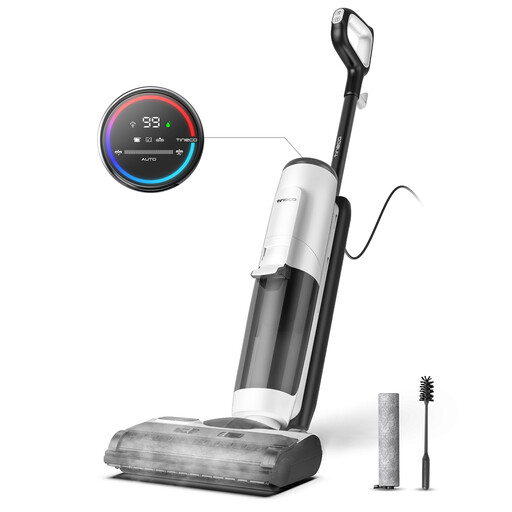
Why it suits this profile: Suitable for anyone who regularly wants to wet-clean hard floors and is looking for a combination of vacuuming and washing.
The recommended surfaces are clearly specified: vinyl, tiles and sealed wood. The instructions also warn against rough or unsuitable surfaces.
Combines floor cleaning with dirty-water collection, plus a digital display, an additional brush roller and a weight of 6 kg, according to the product information.
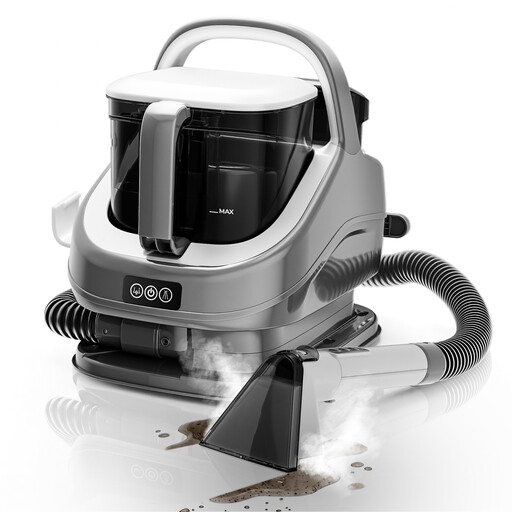
Why it suits this profile: A practical choice for families, pet owners and motorists who want to tackle stains on sofas, carpets, stair treads or car seats.
This is not an ordinary steam mop, but a stain cleaner with spray and suction functions. The manufacturer specifies separate tanks for clean and dirty water.
1300 W, 13 kPa suction power, a 1400 ml clean-water tank, a 1200 ml dirty-water tank and three modes: cold water, hot water and steam.
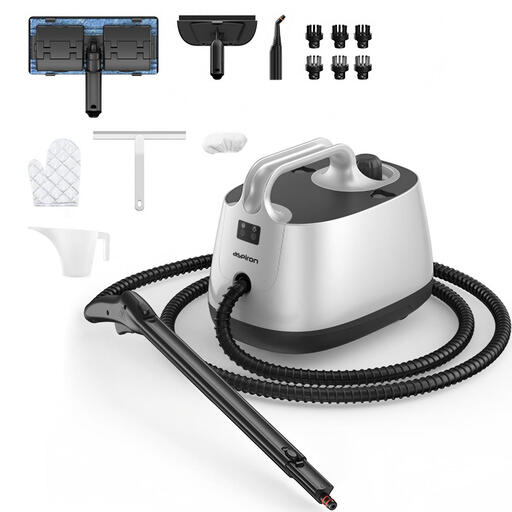
Why it suits this profile: Suitable for households that want to clean bathrooms, kitchens, windows, grout and car interiors with one multifunctional steam cleaner.
The large tank limits interruptions during longer sessions. Indicator lights, wheels and a child lock are listed as product features.
1500 W, up to 4 bar, a stated temperature of up to 145 °C, a 1.5-litre tank and 21 accessories.
Take extra care when cleaning windows and mirrors. A significant temperature difference between cold glass and hot steam can cause damage. Cleaning without chemicals also does not mean that every type of dirt will disappear automatically: sometimes pre-soaking, brushing or a suitable textile cleaner is required.
We have put together a complete, up-to-date list of products that fully meet these strict selection criteria and the applicable European safety regulations.
That depends on the floor and the manufacturer’s instructions. Only use steam on laminate flooring that is suitable for this purpose and properly sealed. Excessive moisture or heat can damage joints, top layers or glued connections. Use a low setting and test the machine on an inconspicuous area first.
Power consumption depends on the wattage and how long the machine is used. A 1300 W appliance theoretically uses 1.3 kWh when operating continuously at full power for one hour. In practice, a machine may switch off while heating up or regulating the temperature via its thermostat. Calculate the exact cost by multiplying the consumption in kWh by your current electricity tariff.
Its lifespan depends on how often it is used, limescale in the water, maintenance and the quality of the hoses, pads and accessories. Empty the tank after use, remove limescale according to the instructions and store the appliance in a dry place. Before buying, check whether replacement cloths, brushes and filters are available. This makes everyday use more practical in the long term.
