
Livraison le jour même et le lendemain

Qualité garantie

Débloquez vos offres de bienvenue: Livraison GRATUITE | Jusqu'à -80 % | 30 jours d'essai gratuits à JoyPlus
Téléchargez l'application
A steam cleaner can be useful for floors, grout, kitchen surfaces and car interiors. However, not every model is suitable for every task. A compact handheld steam cleaner is practical for quick cleaning jobs, but less suitable for a large floor area. A powerful steam cleaner with a large tank can run for longer, but takes up more space.
The most common purchasing mistakes arise from three misunderstandings:
As well as the power rating, check the stated steam output and, where available, the steam pressure. Steam output is usually expressed in grams per minute. For example, a handheld garment steamer designed for quickly removing creases works with a smaller water capacity and a lower continuous output than a multifunctional steam cleaner for tiles and grout.
The following specifications provide a more realistic picture:
Do not treat marketing claims about cleaning or refreshing as a guarantee. A brand may cite certain results based on its own research, but the outcome also depends on the surface, the level of dirt and how the appliance is used.
A tank holding 70 to 160 ml is suitable for short garment-steaming sessions. The Tefal Pure Pop DT2025, for example, has a 0.07-litre tank and a stated heat-up time of 15 seconds. The Xiaomi Handheld Garment Steamer has a 0.16-litre tank, a power rating of 1300 W and a stated heat-up time of around 26 seconds.
For floors, bathrooms or car interiors, a larger capacity is often more practical. The Monsga 1500W lists a 1.6-litre tank and up to 48 minutes of use according to the product description. Check whether this operating time depends on the selected steam setting.
Also consider:
A steam cleaner with accessories may include a brush, window squeegee, precision nozzle or textile pad. Choose accessories based on how you will actually use the appliance:
Always test steam on an inconspicuous area first. Untreated wood, delicate fabrics, painted surfaces and heat-sensitive plastics can be damaged by heat or moisture. Never direct hot steam at people, animals, sockets or other electrical components. Do not leave the appliance stationary in one place for an extended period, and allow nozzles to cool before changing accessories.
Before buying, also check the manual, CE marking, the contact details of the manufacturer or EU responsible person, and the warranty terms. Consumers in the EU are entitled to a minimum statutory guarantee of conformity; an additional manufacturer's warranty may also apply.
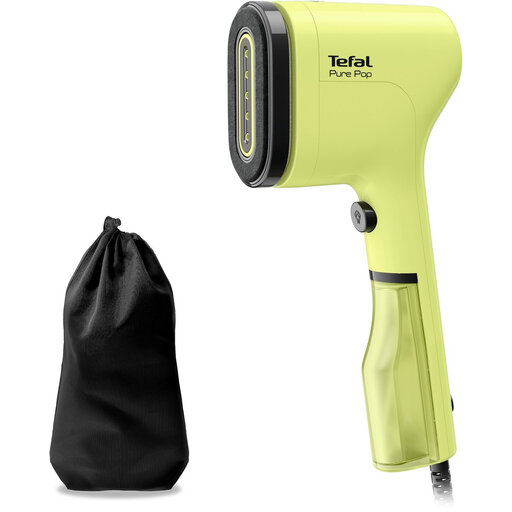
Why it suits this profile: This compact model is designed for quickly freshening clothes at home or on the go, without an ironing board.
The specifications state a 15-second heat-up time and steam output of up to 20 g/min. Its intended use is clearly defined as a garment steamer.
1300 W, a compact design and a reversible accessory for removing lint and steaming.
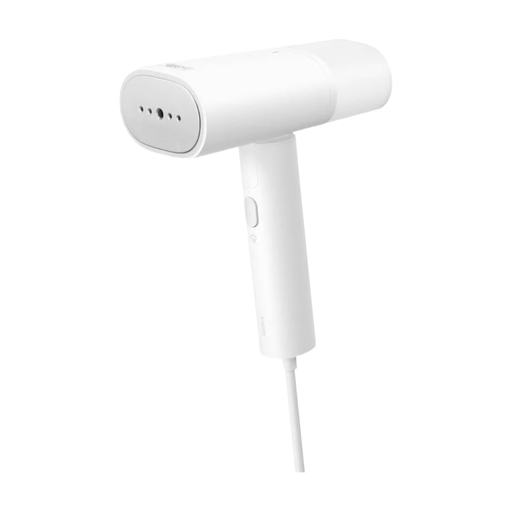
Why it suits this profile: A portable garment steamer for anyone looking for a compact appliance with clear technical specifications.
The product information lists the power, tank capacity, heat-up time and steam output separately, so you do not have to compare models based on wattage alone.
1300 W, a 0.16-litre tank, approximately 26 seconds' heat-up time and a stated maximum steam output of 22 g/min.
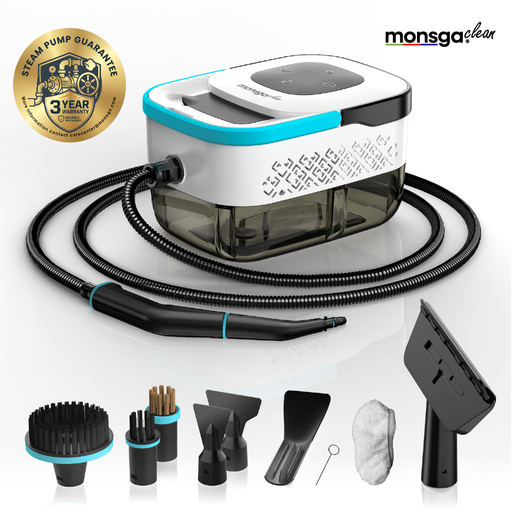
Why it suits this profile: Designed for households that want to tackle floors, kitchens, bathrooms and car interiors across multiple cleaning sessions.
The adjustable steam control prevents you from using the same intensity on every surface. Always test sensitive materials beforehand.
1500 W, six steam settings, a 1.6-litre tank and a heat-up time of 15 seconds according to the product description.
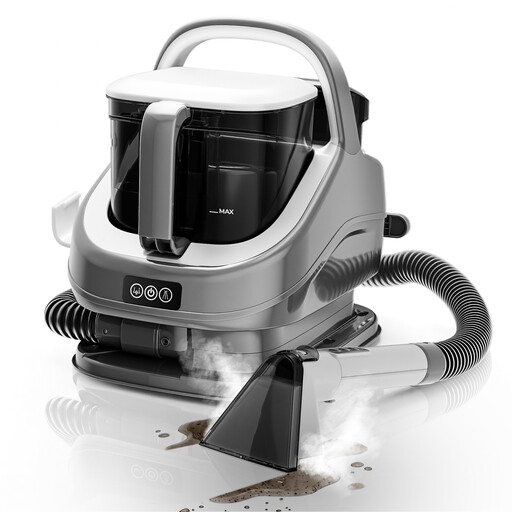
Why it suits this profile: A sensible choice for carpets, sofas, car seats and other water-resistant upholstery where dirty water needs to be extracted.
This is not a steam mop alone: the model has separate clean- and dirty-water tanks, as well as a suction function. This makes it better suited to cleaning textiles.
1300 W, 13 kPa suction power, a 1.4-litre clean-water tank and a 1.2-litre dirty-water tank according to the product specifications.
We have put together a complete, up-to-date list of products that fully meet these strict selection criteria and the applicable European safety regulations.
No. According to the manual, tiles and some sealed hard floors are often suitable, but untreated wood, certain laminates and surfaces with delicate adhesive layers can be damaged by heat and moisture. Always check the instructions and test a small, inconspicuous area first.
Consumption depends on the power rating and how long the appliance is used. A 1500 W appliance theoretically uses 1.5 kWh when running continuously at full power for one hour. In practice, consumption is often lower because of short cleaning sessions or thermostatic control. A longer heat-up time generally has less impact than prolonged use.
Its lifespan depends on maintenance, water quality and how frequently it is used. Empty the tank after use, remove limescale according to the instructions and allow the appliance to cool before storing it. Do not add cleaning products, perfume or oil to the tank if the manufacturer prohibits this. A model with clear maintenance instructions, replaceable cloths and a suitable warranty is therefore more practical for regular use.
