
Livraison le jour même et le lendemain

Qualité garantie

Débloquez vos offres de bienvenue: Livraison GRATUITE | Jusqu'à -80 % | 30 jours d'essai gratuits à JoyPlus
Téléchargez l'application
A steam cleaner can be useful for tile grout, kitchen surfaces, hard floors and car interiors. However, not every appliance is suitable for every material. A compact handheld steam cleaner is handy for small jobs, while a multifunctional steam cleaner may come with more accessories and a larger water tank. If you mainly want to freshen up clothes, a clothes steamer is usually a better choice than a heavy floor cleaner.
The main pitfalls often lie not in the appearance, but in the specifications and usage restrictions.
A higher wattage mainly means that the appliance uses more electrical power. It doesn’t automatically tell you how much steam comes out of the nozzle or how long the steam pressure stays consistent. So check the heat-up time, steam output, any stated pressure in bar, and how the manufacturer measured these figures.
A 1500 W model may be suitable for larger surfaces, but a handheld steam cleaner with a smaller tank may be more practical for grout, taps and corners.
A portable steam cleaner with a tank of a few hundred millilitres is quick to fill and easy to store. But cleaning an entire home with a small tank means stopping to refill more often. Check not only the tank capacity, but also the stated running time. This may depend on the steam setting you choose.
Also consider maintenance. Limescale from tap water can build up in the heating element. Only use the water permitted in the manual. Don’t add perfume, cleaning products or alcohol unless the manufacturer specifically instructs you to.
Steam and heat can damage untreated wood, delicate fabrics, wax coatings and heat-sensitive plastics. Cold glass can also crack if exposed to a sudden change in temperature. Always test on an inconspicuous area first and follow the product instructions.
A steam cleaner for bathrooms and kitchens isn’t automatically suitable for cleaning carpets or upholstery. For stained fabrics, a machine with a spray-and-suction function is often a more sensible choice than hot steam alone.
A short heat-up time is handy for everyday use. According to the product information, the Tefal Pure POP DT2026 is ready in 15 seconds and has a steam output of up to 20 g/min. That makes it suitable for quick clothes care and freshening up small items.
For stubborn dirt, adjustable steam settings are more practical. The Monsga 1500W Steam Cleaner lists six steam settings, a pressure of 3 bar and a heat-up time of around 15 seconds. When buying, always check that the pressure and steam output are clearly specified. Marketing claims such as “powerful steam” without a measurable figure don’t give you much to go on.
A tank of 70 to 160 ml is common for a clothes steamer. According to the specifications, the Tefal DT2026 has a 70 ml tank, while the Philips STH3020/70 has a removable 120 ml reservoir. These models are compact, but are designed for clothes and short sessions.
A larger tank is more convenient for bigger surfaces. According to the product description, the Monsga has a transparent 1.6-litre tank. However, a larger tank also makes the appliance heavier and less suitable for quick use when travelling.
Check what’s actually included. Brushes, a window squeegee, a precision nozzle and a floor cloth can make the difference between a useful appliance and a box full of unused accessories.
Also, be aware of the difference between steam cleaning and extraction:
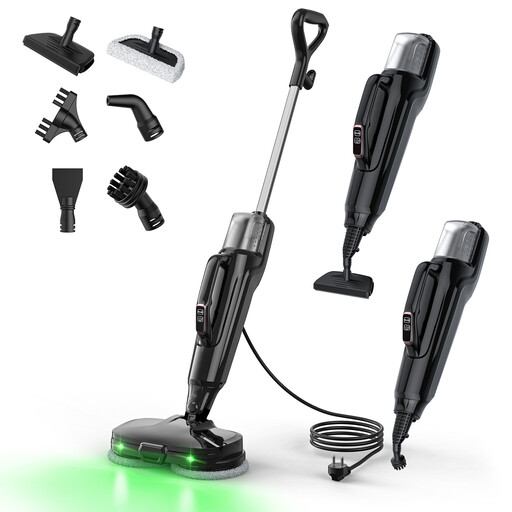
Why it suits this need: The detachable design makes this model a good option if you want to clean both floors and smaller surfaces without buying multiple appliances.
The product information clearly warns against using it on untreated wood and highlights the risks to children from hot steam. Before buying, check which accessories are included and the voltage details.
Detachable design, and can be used as a steam mop and handheld steam cleaner, according to the product description.
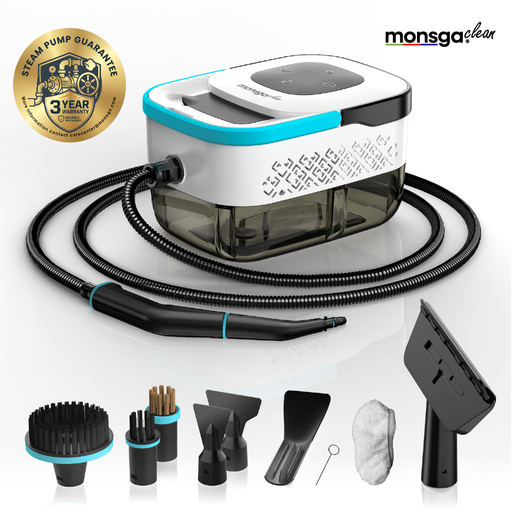
Why it suits this need: For households that want to clean larger surfaces, kitchens, bathrooms and car interiors with one multifunctional steam cleaner.
The specifications list a 1.6-litre tank, six steam settings and a pressure of 3 bar. Use clean water only and test delicate materials first.
According to the product description, it has an approximate 15-second heat-up time, a 1.6-litre tank and 10 accessories.
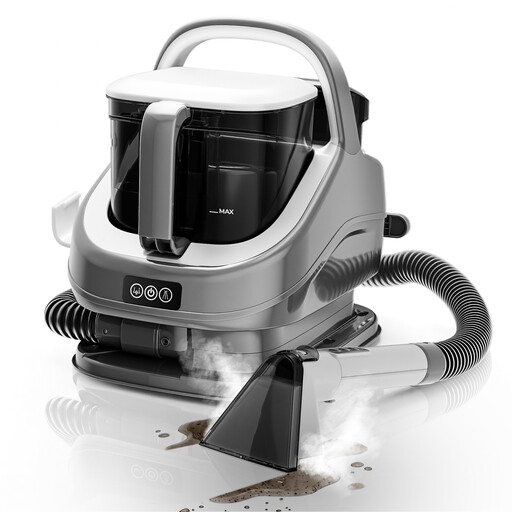
Why it suits this need: This appliance is designed for carpets, sofas, upholstery, stairs and car interiors where dirty water needs to be sucked up.
The dual tanks keep clean and dirty water separate. Use the appliance only on water-resistant fabrics and empty the dirty-water tank after use.
1300 W power, 13 kPa suction, three cleaning modes and separate 1400 and 1200 ml tanks, according to the product information.
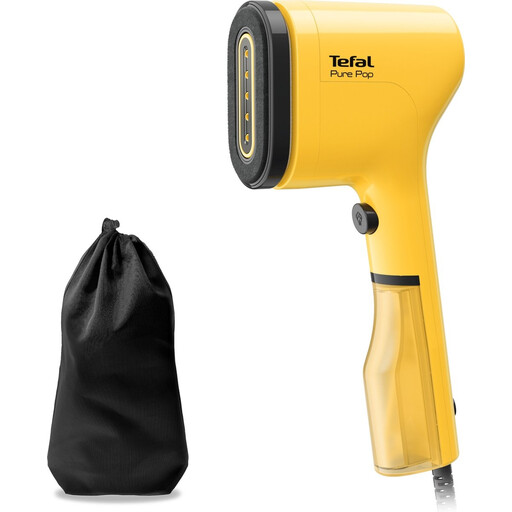
Why it suits this need: A compact option for smoothing creases, last-minute clothes care and steaming without an ironing board.
The heat-up time and steam output are clearly stated. The tank is limited to 70 ml, so this model is best suited to short sessions.
1300 W, steam output of up to 20 g/min, a 15-second heat-up time and a reversible attachment for lint or delicate fabrics.
We’ve put together a complete, up-to-date list of products that meet these strict selection criteria and current European safety requirements.
Only use the steam cleaner on surfaces listed as suitable in the manual. Don’t hold the nozzle in one place for too long, and never direct hot steam at people, animals or electrical components. Let the appliance cool down before changing accessories.
Running costs mainly include electricity, water and any maintenance. A larger tank means fewer interruptions, but it doesn’t automatically use less electricity. After use, empty the tank if the manual instructs you to, and remove any moisture from the hoses and attachments. This helps limit odours and limescale build-up.
It depends on the finish and the floor manufacturer’s instructions. Untreated wood and some wax coatings can be damaged by heat and moisture. Always test on a hidden area first and use a low setting if one is available.
A steam cleaner uses hot steam to loosen dirt. A spot cleaner usually sprays water or a cleaning solution, then sucks up the dirty water. For sofas, carpets and car upholstery with damp stains, a model with a suction function is often more practical.
Its lifespan depends on how often you use it, water quality, maintenance and storage. Check the warranty, available accessories and maintenance instructions before buying. Choosing an appliance that suits your needs and emptying and cleaning it regularly can help prevent unnecessary wear and tear.
