
当日/次日达

品质保障

开启新人专享福利: 全场免邮 | 低至 2 折 | 免费试用 30 天 JoyPlus 会员
下载 Joybuy
A steam cleaner can be useful for floors, grout, kitchen surfaces, windows, upholstery and car interiors. However, not every model is suitable for every job. A compact handheld steam cleaner works differently from a steam mop or a carpet cleaner with a suction function.
So the key question isn’t how many accessories a machine comes with, but which surfaces you want to clean, how long you’ll be using it for and how much control you need over the steam.
A higher wattage doesn’t automatically mean a machine will clean faster or more thoroughly. Performance also depends on the heat-up time, steam pressure, steam output, water supply and nozzle design.
A 1,200-watt model may be enough for a small bathroom. For several rooms or longer cleaning sessions, a larger tank and longer running time are often more important than power alone.
“13-in-1” or “21 accessories” sounds appealing, but check what’s actually included. Look for parts you’ll genuinely use, such as:
A large accessory kit doesn’t automatically make a multifunction steam cleaner suitable for carpets. For textiles, it’s also important to check whether the machine can extract moisture. A standard steam cleaner dampens a surface; a carpet cleaner or upholstery cleaner with a suction function handles dirty water differently.
Steam isn’t suitable for every surface. Unsealed wood, loose-laid flooring, some laminate floors, delicate plastics and delicate fabrics can be damaged by heat or moisture. Test an inconspicuous area first and follow the flooring or furniture manufacturer’s instructions.
Steam pressure, usually measured in bar, gives an indication of the force with which steam is released. Higher pressure can be useful for grout, grease and stubborn dirt, but it also calls for extra care on delicate surfaces.
Steam output, measured in grams or millilitres per minute, shows how much steam is available. An adjustable setting is useful: choose a lower setting for everyday cleaning and a higher one for tiles or stubborn dirt. Claims about loosening dirt come from the manufacturer’s or seller’s product information and don’t guarantee results on every surface.
A short heat-up time is handy when you want to clean a kitchen worktop or bathroom quickly. Also check the tank capacity and stated steaming time. A 250 ml tank is compact, but you may need to refill it more often during a major clean. A tank of 1.5 litres or more is better suited to cleaning several rooms.
Only refill the machine when it’s switched off, unplugged and has cooled sufficiently. Use only the type of water specified in the manual. Don’t add cleaning products, perfume, oil or vinegar unless this is expressly permitted.
For a steam cleaner designed for floors, a sturdy handle and a swivelling floor head are important. A handheld steam cleaner, on the other hand, should be light enough to use above shoulder height, around taps or in a car.
Also check:
A machine with a European plug and a 220–240 V specification will generally be more suitable for Dutch sockets, but always check the product page and the documentation supplied.
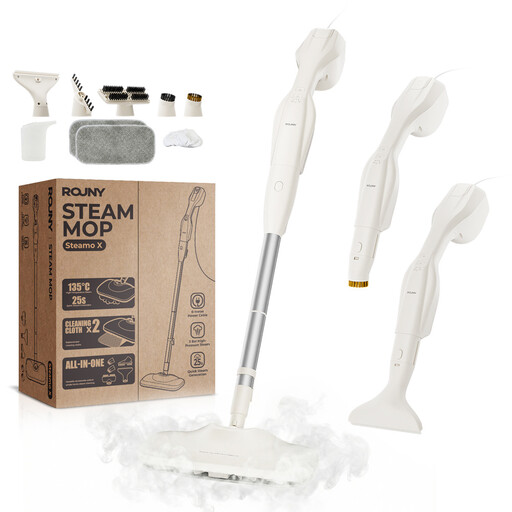
Why it suits this type of user: This model switches between a steam mop and a handheld steam cleaner. Its stated heat-up time is around 25 seconds, and the 6-metre cable makes it practical for everyday use around the home.
The specifications list two steam settings and five attachments, so you don’t have to rely on a high accessory count alone.
2-in-1 design, 6-metre cable, 250 ml tank and accessories for floors, windows, kitchens and corners.
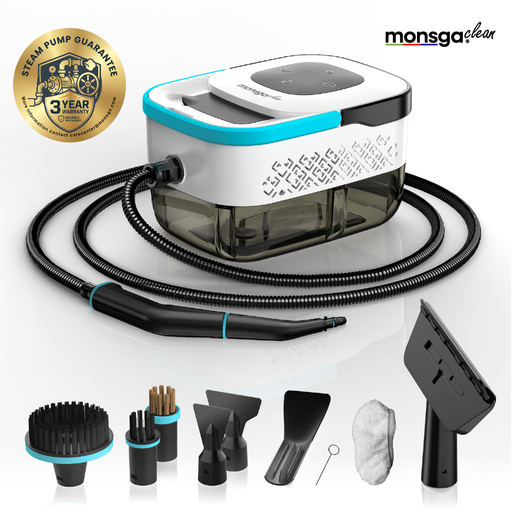
Why it suits this type of user: According to the product information, this model has a 1.6-litre tank, six steam settings and a stated heat-up time of 15 seconds. That makes it well suited to longer cleaning sessions at home or in the car.
Adjustable steam output means you don’t have to use the same intensity on every surface. Still, check first that the surface is suitable for steam.
1.6-litre tank, 3 bar according to the product information, six settings and an accessory kit.
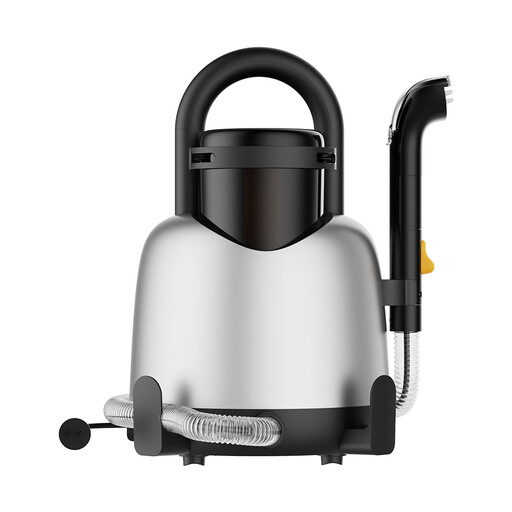
Why it suits this type of user: This is primarily a cleaner for textiles and stains on carpets, upholstered furniture and car interiors. According to the product information, it has separate clean- and dirty-water tanks and a suction function.
It’s not a standard steam mop that simply adds moisture: the stated 13 kPa suction power and dual tanks are useful features if you want to clean textiles.
1,700 ml clean-water tank, 1,400 ml dirty-water tank, 1,700 watts and three cleaning modes according to the product description.
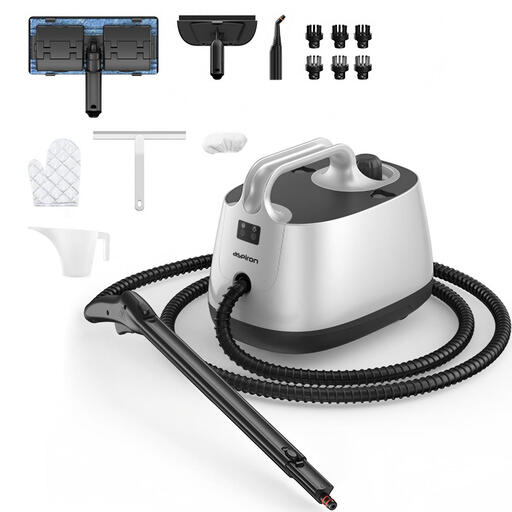
Why it suits this type of user: According to the product description, this is a multifunctional model for floors, bathrooms, kitchens, windows, sofas, carpets and cars. Its 1.5-litre tank is designed for longer cleaning sessions.
The product information gives both the tank capacity and a heat-up time of around five minutes. This makes it clear that the model is designed for capacity rather than quick, immediate use.
1.5-litre water tank, up to 4 bar and 21 listed accessories according to the product description.
We’ve put together a complete, up-to-date list of products that meet these strict selection criteria and comply with the applicable European safety regulations.
A steam cleaner lets you clean with water alone in many cases, without adding standard cleaning products to the tank. That doesn’t mean every stain or surface can be treated in the same way. Wipe away loose dirt first, keep the nozzle moving and use a cloth to pick up loosened dirt.
Never direct hot steam at people, animals, power sockets or the inside of electrical appliances. Let the machine cool down before changing attachments or emptying the tank. Take extra care with cold glass, painted surfaces and delicate upholstery.
It depends on the type of laminate, the joints and the manufacturer’s instructions. Only use a low steam setting if the floor is suitable, and don’t leave the steam mop in one place. It’s best not to clean unsealed wood or damaged joints with steam.
Energy use depends on the wattage and how long you use the machine. A 1,500-watt appliance would theoretically use 1.5 kWh if it heated continuously for one hour, although many machines switch the heating element on and off intermittently. The actual cost depends on your energy tariff and usage.
Its lifespan is affected by limescale build-up, storage, using the right type of water and maintenance. Empty the tank after use, clean the pads as instructed in the manual, and check the hose, cable and attachments regularly. Store the machine somewhere dry and replace parts when the manufacturer makes them available.
