
Livraison le jour même et le lendemain

Qualité garantie

Débloquez vos offres de bienvenue: Livraison GRATUITE | Jusqu'à -80 % | 30 jours d'essai gratuits à JoyPlus
Téléchargez l'application
A steam cleaner can be handy for grease in the kitchen, limescale in the bathroom, grout, hard floors and car interiors. However, not every appliance is suitable for all these tasks. A lightweight handheld steam cleaner works differently from a large, multi-purpose steam cleaner, while a steam mop is mainly designed for sealed hard floors.
Many people end up with the wrong product because they look only at the wattage or the number of accessories. So first, think about what you’ll actually use the appliance for.
A powerful, high-wattage steam cleaner may heat up quickly, but how well it works in practice also depends on the steam pressure, the steam settings and how much water it actually uses. A model with a small tank may need refilling after just a few minutes.
So look at the following features together:
A long list of accessories may sound appealing, but check that they suit the cleaning tasks you have in mind. For a bathroom, for example, a detail brush, grout brush and window squeegee may come in handy. For a steam cleaner for floors, a suitable mop head and washable pads are more important.
An accessory doesn’t automatically make a surface safe to clean. Untreated wood, delicate plastics, lacquered furniture and some fabrics may not withstand heat or moisture. Always test on an inconspicuous area first and follow the instructions.
A steam cleaner used without cleaning products can loosen dirt, but baked-on residue often needs treating first or wiping away with a cloth. Some brands state in their own product information that hot steam can help loosen grease and dirt. That doesn’t guarantee results on every surface or every stain.
Only use water if the manufacturer says to. Don’t add fragrance, cleaning products, vinegar or alcohol unless the instructions allow it. Doing so could cause blockages, damage or dangerous fumes.
Steam pressure is measured in bar. A higher figure may help with stubborn dirt, but always use a suitable attachment and take the surface into account. For example, some models in the range offer 2.5 to 3 bar, while the ASPIRON AS-CA019 is listed as reaching up to 4 bar in the product description.
The stated temperature is also a guide, not a universal guarantee of performance. ROUNY lists a temperature of up to 135 °C, while Monsga states 105 °C. The actual temperature at the surface may vary depending on the distance, nozzle and steaming time.
A compact tank is handy for a quick clean of the sink, hob or car interior. For several rooms, a larger tank is more convenient. A 250 ml tank is lightweight and quick to fill, but limits cleaning time. A 1.5 or 1.6 litre tank allows for longer cleaning sessions, although it makes the appliance heavier and less compact.
Also look for:
A steam mop is generally designed for sealed hard floors. Don’t use one on untreated wood, open joints or surfaces that are sensitive to moisture without checking first. Never direct hot steam at people, animals, sockets or electrical appliances.
Allow the appliance to cool before emptying the tank or changing attachments. Also check whether the model has a European plug, safety information in Dutch and a responsible party based in the EU.
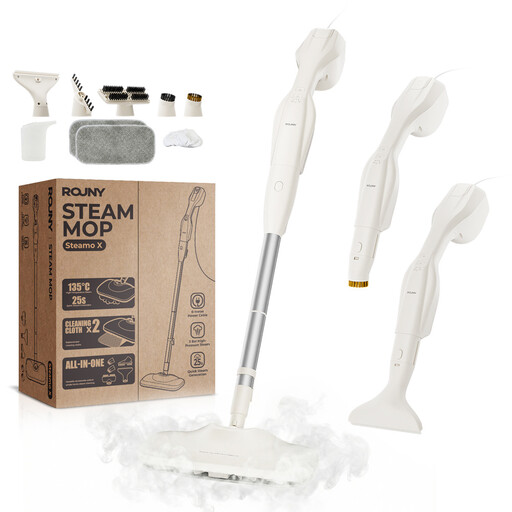
Why it suits this type of buyer: This model combines an upright mop with a handheld steam cleaner. That means you can use one appliance to clean floors, kitchen surfaces, windows and corners.
The two steam settings let you tackle light and heavier dirt differently, rather than always using maximum steam.
According to the product description: heats up in around 25 seconds, 2.5–3 bar pressure, a 6-metre cable and five attachments.
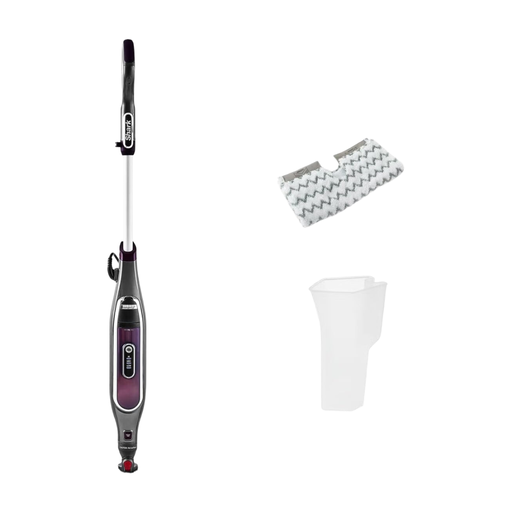
Why it suits this type of buyer: A good choice for households that mainly clean sealed hard floors and want an appliance designed specifically for floors.
The product information mentions intelligent steam control and a separate steam boost for more stubborn dirt, so every floor doesn’t get the same treatment.
According to the product details: 1200 watts, a 380 ml tank, a 6-metre cable and two machine-washable pads.
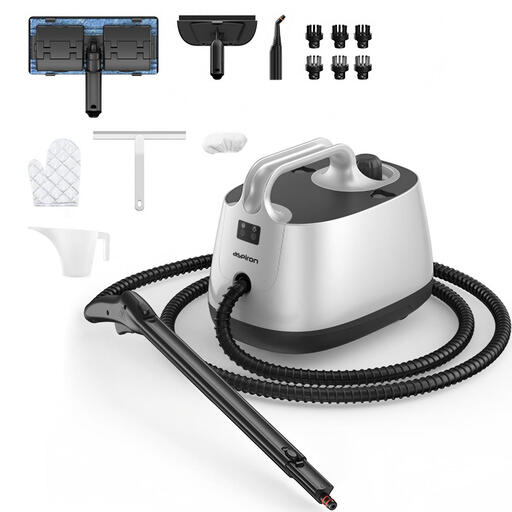
Why it suits this type of buyer: This model is designed for longer cleaning sessions across several rooms, including the kitchen, bathroom, floors, windows, furniture and car interior.
The relatively large tank means fewer interruptions during a thorough clean. Be sure to check the weight and storage space you have before ordering.
According to the product description: 1500 watts, up to 4 bar, a 1.5-litre tank and 21 accessories.
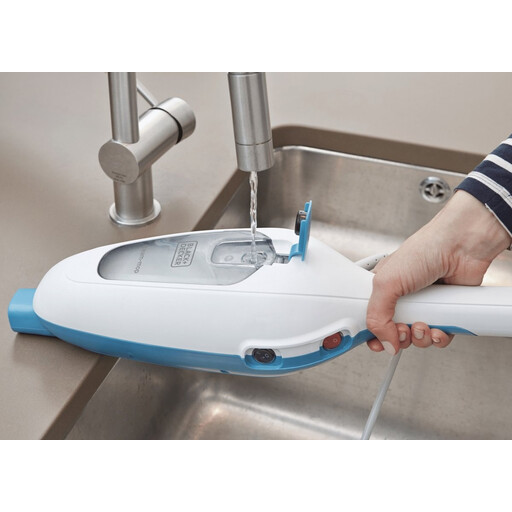
Why it suits this type of buyer: A lightweight steam mop could suit smaller households that want to clean sealed hard floors regularly without having to store a bulky appliance.
Its straightforward, floor-focused design means you don’t pay for attachments you won’t use. Just make sure your floor is suitable.
According to the product information: 1300 watts, heats up in around 30 seconds, a 0.38-litre tank and a weight of 1.8 kg.
We’ve put together a complete, up-to-date list of products that meet these strict selection criteria and the applicable European safety regulations.
A Tefal food steamer is designed for cooking and isn’t suitable for cleaning. The Tefal VC139810, for example, has a power rating of 800 watts, two bowls and a total capacity of 6 litres. According to the product information, the Tefal VC2048 has three tiers and a capacity of 9 litres. These appliances do produce steam, but they belong in the kitchen.
A steam iron or steam generator, such as the Tefal SV8055 with a stated pressure of 6.5 bar, is designed for clothes. Its high pressure doesn’t automatically make it suitable for tiles, windows or floors.
No. Only use a steam mop on floors that the manufacturer says can withstand heat and moisture, usually sealed hard floors. Take care with untreated wood, laminate with damaged joints and delicate floor finishes.
It depends on how you use and maintain it, and on limescale build-up. Empty the tank after use, let the appliance dry and only descale it according to the instructions. Don’t use harsh products unless they’re permitted. A replaceable cloth, easily accessible filters and available accessories can help extend its useful life.
Electricity costs depend on the appliance’s power and how long you use it. A 1200-watt appliance running for half an hour uses 0.6 kWh in theory. To work out the actual cost, multiply this by your current electricity tariff. Water is usually a smaller expense, although maintenance and replacement pads can add up over time.
