
Vandaag of morgen in huis

Kwaliteit gegarandeerd

Welkomstaanbiedingen ontgrendelen: GRATIS bezorging | Tot 80% korting | Gratis 30 dagen JoyPlus-proefperiode
Download de app
A stationery set might seem simple to choose, but the options vary widely in nib size, ink type, paper format and contents. A large pack isn't automatically the most practical. Someone who mainly takes notes needs different materials from someone who draws, journals or reviews documents.
So watch out for three common pitfalls:
Nib size is usually given in millimetres. A 0.5 mm nib makes relatively fine lines for diaries, forms and detailed notes. A 0.7 mm nib is a versatile middle size for everyday writing. A 1.0 mm nib gives a broader line and can be good for clear notes or colour-coding.
With mechanical pencils, the hardness of the lead also plays a role. HB is a common choice for writing and sketching. 2B is softer and generally gives a darker line, but can also smudge more easily.
Ballpoint pens typically use oil-based ink. They're practical for forms, schoolwork and office supplies. A cap helps protect the nib; with a retractable model, the nib must be retracted after use.
Gel pens often write with a smooth feel and are available in black, red and various colours. For intensive use, check whether the pen has a comfortable grip and whether the ink is suitable for the paper you're using. Product descriptions may mention features like quick-drying or water-resistant; treat this as information from the brand and test the pen yourself if smudging is a concern.
An A5 notebook offers space for extensive notes, planning and journaling. An A7 format fits more easily into a jacket pocket and is suitable for short notes or shopping lists. An A7 spiral notebook with squared paper can be handy for quick calculations, diagrams and to-do lists.
Also pay attention to:
For creative materials, a safety marking such as EN 71 is relevant when it appears on the product page. This is not a general guarantee that every writing instrument is suitable for every age. Always check the recommended minimum age and keep small parts away from children under three years old.
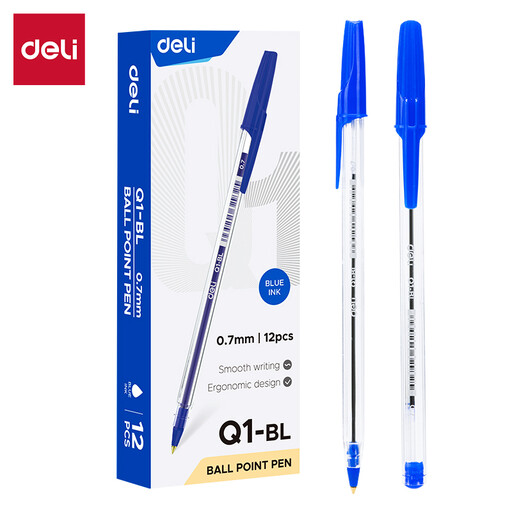
Why this fits the profile: This pack is aimed at everyday writing at school, home or the office. With twelve ballpoint pens, you have spares for a pencil case, classroom or stationery cupboard.
The 0.7 mm nib size and blue ink are clearly specified. So you're not buying an unclear mix of sizes or colours.
12 ballpoint pens, blue oil-based ink and a medium 0.7 mm bullet tip for general writing.
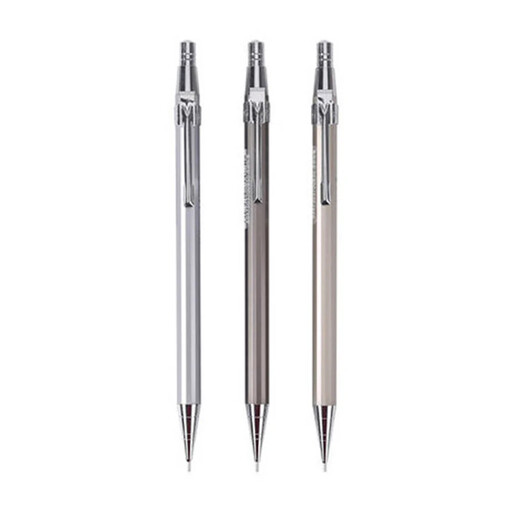
Why this fits the profile: The metal body and fine 0.5 mm lead size suit users who write precisely, do technical drawing or sketch.
The lead size, metal material and push-button mechanism are all clearly stated. You can directly compare these features with plastic models.
Three pencils with metal body, 0.5 mm black lead and automatic feed via push button.
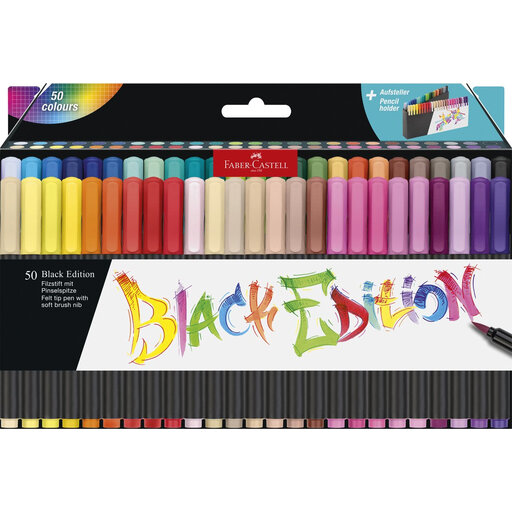
Why this fits the profile: Artists, journalers and creative hobbyists get a broad palette for small drawings and text. The brush tip supports variation in line width by adjusting the writing angle and pressure.
The product information clearly states that the pens are intended for light paper and not for black paper. 50 colours and the EN 71 marking are also specified.
50 brush pens in different colours, washable ink according to the product description and a cardboard storage box.
We've put together a full, up-to-date list of products that fully meet these strict selection criteria and current European safety regulations.
A writing set doesn't have to consist of pens alone. For different situations, these additions can be useful:
Store pens according to the product instructions. Replace caps, retract nibs and keep paper dry. This reduces the chance of dried-out ink, damaged nibs and warped notebooks.
For school, a combination of a 0.7 mm ballpoint pen, a mechanical pencil and a notebook is often practical. Add gel pens or colour pens if you want to highlight or colour-code your study material. Check in advance which materials and colours are allowed at school.
Choose paper with a suitable weight and test the pen on the last page. Gel pens, brush pens and broader nibs in particular can release more ink. An A5 notebook with 80 gsm paper can be suitable for much everyday writing, but the result varies depending on the ink type and writing pressure.
The lifespan depends on writing pressure, frequency, paper and ink volume. A multipack provides spare pens, while mechanical pencils can be refilled with matching lead. Store both dry and protected from heat. When buying refills, always check the correct size, such as 0.5 or 0.7 mm.
