
Vandaag of morgen in huis

Kwaliteit gegarandeerd

Welkomstaanbiedingen ontgrendelen: GRATIS bezorging | Tot 80% korting | Gratis 30 dagen JoyPlus-proefperiode
Download de app
Choosing a new planner, pen or set of colouring markers seems straightforward. Yet many purchases end up disappointing. A pen may write too thickly for small notes, a planner may not have enough space for appointments, or an eraser may leave marks on drawing paper. If you are looking for stationery and office supplies, it is therefore worth considering how you plan to use them and checking a few product specifications first.
This guide helps students, school pupils, homeworkers, office professionals and creative users make more informed choices. You will find key points to consider for products including an A5 notebook, an undated planner, gel pens, erasable pens, colouring markers, brush pens, erasers and other drawing materials.
An appealing cover or playful pen design says little about how a product performs day to day. Always check the size, number of pages, nib width and type of ink. For a planner, the layout and paper weight are more important than the colour of the cover alone.
Erasable gel ink often reacts to heat. According to the product description, the M&G erasable pens use heat-sensitive gel ink. This is useful for making corrections, but the text may be less suitable for documents that need to be kept for a long time or exposed to high temperatures. For official forms or archival notes, it is therefore better to use a non-erasable pen.
A set with lots of colours can be appealing for drawing and hand lettering, but it takes up more space and may contain colours you rarely use. Consider the nib shape, storage case and the surfaces the markers are designed for. Brush pens, for example, can create thin and thick lines, while acrylic markers are generally intended for non-porous surfaces. These two product types are not necessarily interchangeable.
An A5 notebook measures approximately 14.8 × 21 cm. This size usually fits in a bag and offers more writing space than A6. For detailed notes, studying or journaling, A5 is often practical. An A6 notebook is easier to carry around.
Paper weight is expressed in grams per square metre, for example 100 g/m². Heavier paper generally feels sturdier and may show less bleed-through when using certain gel pens or markers. However, the result also depends on the ink and how much is applied. If in doubt, test a pen on a back page.
With gel pens and erasable pens, nib width is a specification you can check. A 0.4 mm pen can be useful for compact weekly planners, while 0.7 mm is better suited to larger handwriting.
A hardcover protects the pages in a full bag. An elastic band stops loose papers from falling out of the book. Spiral binding allows you to lay a notebook flat, but it can take up more space next to a laptop.
When choosing an eraser, check whether it can be refilled. The Faber-Castell Precision Eraser has a push mechanism and metal tip, and comes with four replacement erasers. According to the product information, it is PVC-free and designed for accurately removing pencil and coloured-pencil marks. This makes it suitable for drawing materials where small corrections are needed.

Why it suits this profile: This set contains six black gel pens with a 0.7 mm nib. They are suitable for school notes, planners and everyday writing where corrections may be needed.
The nib width and number of pens are clearly stated. However, bear in mind that the ink is heat-sensitive: the manufacturer explains that the text can be removed by friction and may disappear when exposed to high heat.
Set of six; black ink; 0.7 mm nib; protective cap and eraser at the end, according to the product description.
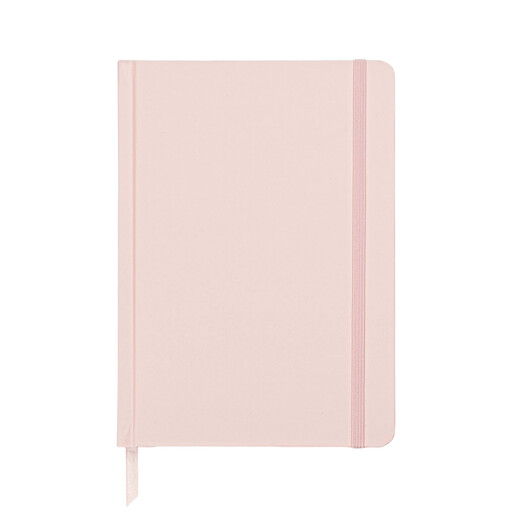
Why it suits this profile: This undated planner is suitable for users who want the flexibility to start long-term planning, set goals and create weekly overviews whenever they choose.
You do not pay for unused pre-printed dates. The layout includes a customisable start page, monthly and weekly pages, plus space for notes.
A5 format; hardcover; 112 sheets of 100 g/m² paper; elastic band and bookmark.
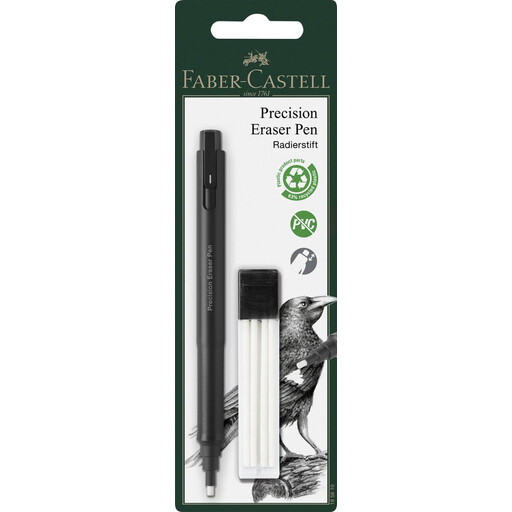
Why it suits this profile: For illustrators, architecture students, designers and hobby artists, a slim, controlled eraser is useful for detailed work.
The metal tip supports precise erasing rather than accidentally removing large areas. The eraser is refillable and comes with four replacement erasers.
Push mechanism; metal tip; four refills included; PVC-free according to the product information.
We have put together a complete, up-to-date list of products that fully meet these strict selection criteria and the applicable European safety regulations.
For journaling accessories, you can combine gel pens with a planner, stickers, stencils or brush pens. According to the product description, the Faber-Castell Brush Pen Set contains 50 colours and is designed for small drawings and lettering on light-coloured paper. The ink is described by the manufacturer as food-colour-based and washable; this claim comes from Faber-Castell’s product information and is not a guarantee for every fabric or surface.
For children, water-based colouring markers with a broad and fine tip can be practical. Check the recommended age, cap design and information about washability. When buying scrapbook materials such as metal cutting dies, you should also check whether you have a suitable die-cutting machine; the product title alone does not provide any information about compatibility.
This includes pens, pencils, erasers, notebooks, planners, paper, highlighters, colouring markers and accessories for drawing and journaling. For office professionals, writing comfort, legibility and refillability are often important. For creative adults, colour choice, nib shape and suitability for different surfaces also matter.
It can be, particularly if you are not starting at a fixed time or regularly skip pages. You use the available space when needed and avoid empty, pre-dated pages. However, compare the number of sheets, layout and paper weight before buying.
Replace capped pens immediately after use and retract click pens when storing them. Keep them at room temperature, away from direct sunlight and heat sources. If the ink flows unevenly, test the pen on a loose sheet of paper first. This helps reduce waste and keeps your creative writing supplies usable for longer.
