
Vandaag of morgen in huis

Kwaliteit gegarandeerd

Welkomstaanbiedingen ontgrendelen: GRATIS bezorging | Tot 80% korting | Gratis 30 dagen JoyPlus-proefperiode
Download de app
Buying a new set of drawing and writing supplies seems simple, until you find that the pens dry out quickly, colours bleed through the paper or the nib isn’t right for your project. When shopping online, product photos and colour names alone often aren’t enough to help you choose well.
So, look out for these three common pitfalls:
Too many colours without a clear purpose
A set of 50 or 80 colours sounds appealing, but it isn’t automatically useful for school, journalling or everyday writing. A smaller set with practical colours and a suitable nib may be a better choice.
The wrong ink for the surface
Water-based ink is suitable for many types of paper, while alcohol markers can bleed through. Acrylic markers are designed for a wider range of surfaces, but often need to be activated and tested first.
A nib that doesn’t suit your writing style
A broad brush tip is useful for hand lettering and filling in larger areas, but less suited to small notes. For precise lines, fineliners, coloured pencils or a fine gel pen are a more sensible choice.
The nib determines how much control you have. A 0.4 mm fineliner is suitable for small lettering, outlines and sketching. A brush pen creates thin and thick lines with its flexible nib, depending on how much pressure you apply. A chisel-tip highlighter can offer several line widths.
When comparing products, check:
Water-based ink is a popular choice for paper, schoolwork and office use. According to the product information, the STABILO point 88 uses odourless water-based ink. Faber-Castell brush pens are described as washable, with ink made from food colouring. This tells you something about the product’s formulation, but it is no reason to ingest the ink or use it as a personal care product.
Alcohol markers usually dry quickly and can be suitable for sketching and illustration. Bear in mind that they may bleed through paper, so it’s best to use marker paper or a protective sheet. According to the product description, acrylic markers contain opaque, pigmented, water-based ink and are designed for surfaces including paper, wood, glass, ceramic, plastic and canvas. Always test them on an inconspicuous area first.
For children, age guidance and small parts are important considerations. A CE mark indicates that the manufacturer declares the product meets relevant European requirements. EN 71 is a toy safety standard; always check whether it is actually listed for the specific product.
How long your pens last depends largely on how you use and store them. Replace the caps immediately after use, keep them out of direct sunlight and check that the caps close securely. For markers with a pump or shake mechanism, follow the activation instructions.
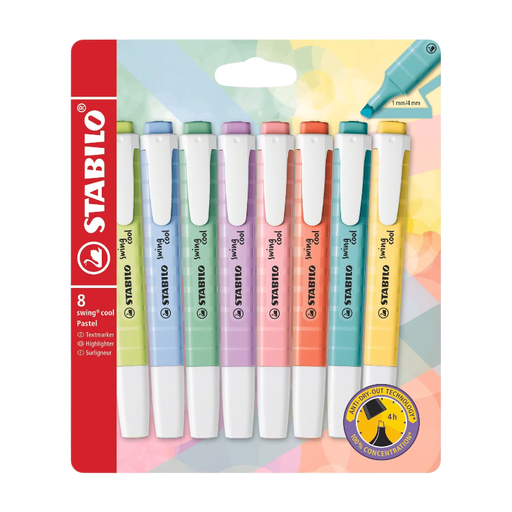
Why it suits this profile: A compact set for school pupils, students and anyone who wants to highlight text without buying a large collection straight away.
The set has six colours and a slim design, so you’re not paying for more colours than you’re likely to use. The dual line width lets you underline text or highlight broader areas.
Water-based ink, a clip and a nib with 1 mm and 4 mm line widths, according to the product information.
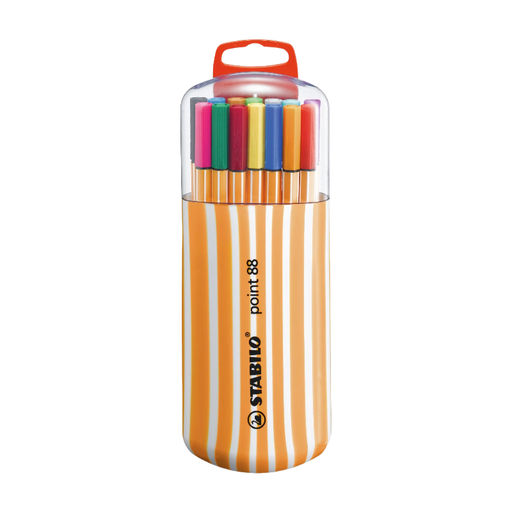
Why it suits this profile: Ideal for anyone who combines writing, sketching, colour-coding and hand lettering, and needs a precise line.
The fixed 0.4 mm nib means you won’t need to use a broad marker for detailed work. According to the product description, the cap can be posted on the end of the pen, helping to prevent it from getting lost.
20 assorted colours, odourless water-based ink and a 0.4 mm line width, according to the product details.
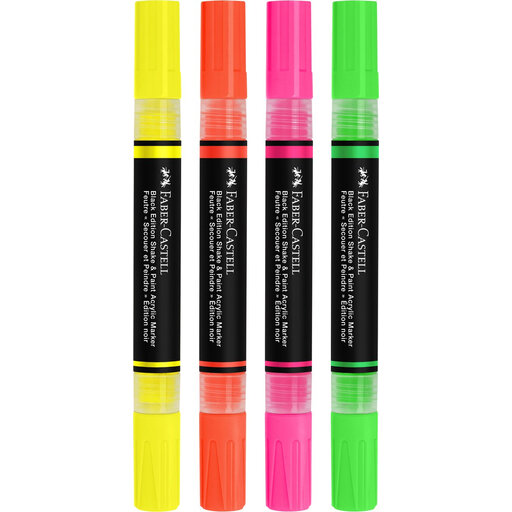
Why it suits this profile: For DIY enthusiasts and hobbyists who want to decorate more than just paper, including wood, glass, ceramic, plastic or canvas.
The product description lists several possible surfaces, so you can check in advance whether the marker is right for your project. Shake and prime it, then check the ink flow on test paper before you start.
Four neon colours and two nib sizes: 1 mm and 3 mm. According to the product information, the markers use opaque, pigmented acrylic ink that is water-based.
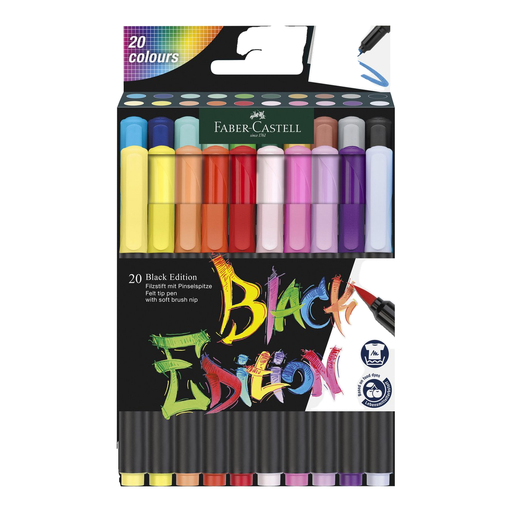
Why it suits this profile: A handy drawing set for beginners, children from the age stated and adults who want to try brush lettering or sketching.
With 20 colours, the set is easy to manage. The product information says the ink is washable and the pens are designed for light-coloured paper, helping you avoid buying the wrong set for dark surfaces.
20 colours, a flexible brush tip for varied line widths and an EN 71 reference, according to the product details.
We’ve put together a complete, up-to-date list of products that meet these strict selection criteria and the applicable European safety requirements.
For school, a writing set with blue or black gel pens, a few fineliners, coloured pencils and highlighters is often enough. Choose a compact set if you mainly take notes. You can add brush pens and felt-tip pens for presentations or creative projects.
Replace the cap straight after use and check that it’s fully closed. Keep markers out of direct sunlight and extreme heat. For acrylic markers, follow the manufacturer’s activation instructions. It’s best to store alcohol markers horizontally, or as directed on the packaging.
Alcohol markers are mainly designed for illustration and sketching on suitable surfaces; they can bleed through paper. According to the product description, acrylic markers use pigmented, paint-like ink and are designed for use on a range of materials. Always test both types on scrap material first, and ensure good ventilation if the product information recommends it.
