
Vandaag of morgen in huis

Kwaliteit gegarandeerd

Welkomstaanbiedingen ontgrendelen: GRATIS bezorging | Tot 80% korting | Gratis 30 dagen JoyPlus-proefperiode
Download de app
Buying stationery seems simple until a pen skips, ink bleeds through a notebook or a pencil develops a loose mechanism after just a few days. For school, the office, journaling and drawing, it is often the small product specifications that matter most. Attractive packaging or a large number of items does not automatically say anything about how a product will perform day to day.
So watch out for these three common pitfalls:
A good choice starts with the task. For forms and everyday writing, ballpoint pens with oil-based ink are practical. Gel pens often provide a smooth line and are popular for notes and journaling. If you make technical notes or sketches, it is better to look at mechanical pencils with a suitable lead size. For hand lettering and colouring, brush pens or highlighters are the more logical choice.
The paper also deserves attention. A compact notebook is enough for a diary or shopping list. For everyday studying or planning, an A5 notebook with a sturdy cover and enough pages may be more useful. If you work with drawing materials, check whether the paper is suitable for the ink you have chosen. Thin paper can show bleed-through with some gel pens, brush pens and liquid rollerball pens.
The nib size determines the line width and writing feel:
Also look at the closure mechanism. A retractable pen is handy for a pencil case or desk, while a cap prevents the nib from drying out. The cap is especially important for gel pens and rollerball pens. Store them properly closed and at normal room temperature, as stated in the product information.
Paper weight is expressed in grams per square metre, for example 80 g/m², 100 g/m² or 107 g/m². A higher number does not mean that every type of ink will automatically work without problems, but the paper will generally feel sturdier.
Pay attention to these points:
Also check whether the product description refers to sheets or pages. This prevents incorrect expectations about how much paper you will receive.
A metal pencil feels different from a plastic model and may offer more weight. This is useful for anyone who writes or draws a lot, but less practical if keeping your pencil case light is important. For pens, a rubberised or ridged grip and a triangular shape can provide extra support.
For children, age recommendations, ventilation holes in caps and relevant product information are important. For example, the Faber-Castell Brush Pen Set states EN 71 and a recommended minimum age of 10 years. Always check the current product page and use highlighters or ink in accordance with the relevant warnings. Ink can stain textiles and surfaces; do not allow young children to chew on caps or other components.

Why it suits this profile: Four compact A7 notebooks are useful for shopping lists, to-do lists, school notes or ideas on the go. The different colours help you keep subjects separate.
The specifications state the size, ruling, 50 sheets per notebook and top-flip spiral binding. This makes it clear what you will receive.
A7 size, ruled paper, four notebooks per pack and binding that can lie flat according to the product description.
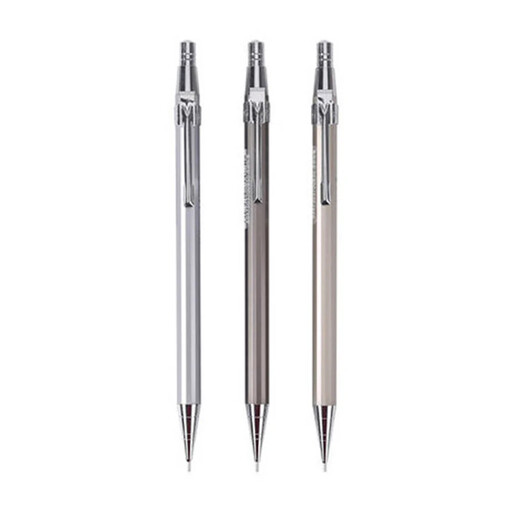
Why it suits this profile: For students, artists and office professionals who value a metal barrel and a precise line.
The 0.5 mm lead size and push-button mechanism are clearly stated. You can also use 0.5 mm refills instead of throwing away the whole pencil.
Metal barrel, 0.5 mm black lead and three finishes: black, white and gold.
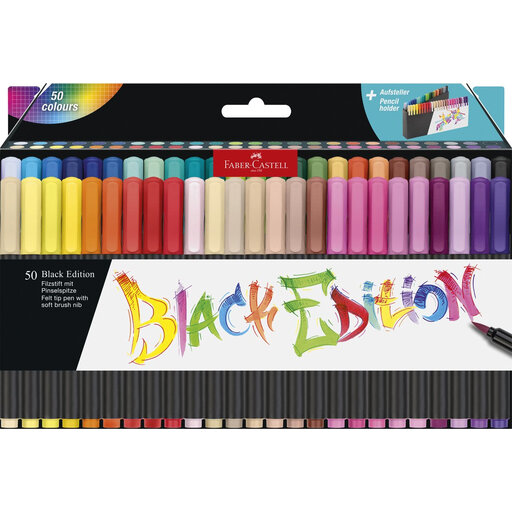
Why it suits this profile: For lettering, colouring, small drawings and creative school projects where a range of colours is wanted.
The product information states that the pens are intended for light-coloured paper. This helps you avoid buying the wrong product for black cards or dark paper.
50 colours, a brush tip for variable line widths and, according to the product description, washable food-colour-based ink.
We have put together a complete, up-to-date list of products that fully meet these strict selection criteria and the applicable European safety regulations.
For a workplace or classroom, ballpoint pens in a multipack are practical. The Deli Ballpoint Pen has a 0.7 mm tip, blue oil-based ink and comes in a set of 12. For colour-coding, sets with black, blue and red pens are suitable, such as the WRITECH Ballpoint Pen with a 1.0 mm tip and eight pieces.
If you write small, neat letters, you could consider the 0.5 mm WRITECH gel pens. Liquid rollerball pens with a 0.5 mm tip are also an option for journaling and sketching. With both types, check whether the cap needs to be replaced securely after use.
For A5 notes, the Jubiluu softcover notebooks in a set of three are practical. Each book contains 50 sheets of ruled paper and has a stitched binding. If you would prefer a sturdier cover, an elastic closure and a ribbon marker, you could look at the Jubiluu hardcover version. Do pay attention to the stated dimensions: the product information describes the model as A5, while the listed dimensions correspond to A6. So check the current product specifications before buying.
A ballpoint pen with a medium-sized tip, such as 0.7 mm, often uses less wet ink than a liquid rollerball. This can make it more practical for thin school or notebook paper. If in doubt, test it on a page at the back of the notebook first.
Lifespan depends on how the product is used, stored and capped. Keep gel pens, rollerball pens and highlighters securely closed, away from direct sunlight and at normal room temperature. A multipack is handy, but if you use the pens intensively, make a note of which colours run out most quickly.
No. Ink cartridges only fit when the size and printer compatibility match. Check the exact cartridge number, such as HP 303, and compare black, colour or combination packs with your printer model. This prevents you from ordering a cartridge that does not physically fit or is not recognised by the printer.
