
Vandaag of morgen in huis

Kwaliteit gegarandeerd

Welkomstaanbiedingen ontgrendelen: GRATIS bezorging | Tot 80% korting | Gratis 30 dagen JoyPlus-proefperiode
Download de app
A new notebook, gel pen or stationery set might seem simple to choose. Yet many people end up buying products that don’t suit the way they work. A pen might write too thickly for small notes, while a notebook is too big to carry every day. When it comes to stationery and notebooks, the right choice isn’t just about colour or appearance – it’s about size, paper and comfort in use.
This guide helps students, school pupils, professionals, home-office workers and journaling enthusiasts compare with purpose. That way, you avoid unnecessary purchases and choose office supplies or school essentials that fit your daily routine.
A nice cover or an attractive colour says little about how easy something is to use. A hardcover can be sturdy, but takes up more space than a softcover. A decorative pen might be fun as a gift, but less practical when you’re taking notes for hours.
So first, pay attention to the dimensions, paper and grip. Only then look at design and colour.
A 0.5 mm pen is suitable for fine notes, small boxes in a planner and detailed drawings. A 0.7 mm tip generally gives a fuller line and can be more comfortable for longer texts. For small notebooks, such as an A7 notebook, a fine tip can be more practical because more text fits on a page.
Gel pens with quick-drying ink can, according to the product description, help reduce smudging, but the result also depends on the paper, writing speed and the user’s hand.
A notebook with 50 sheets usually has 100 writable pages when both sides can be used. So always check whether the seller is talking about sheets or pages. This prevents you from misjudging the contents of a notebook.
The size determines how easily you carry a book and how much space you have per page.
A larger size isn’t automatically more practical. For mobile use, an A6 or A7 notebook can actually be a better fit.
Paper weight is often expressed in g/m². Paper around 80 g/m² is light and suitable for ordinary ballpoint pens. Paper of about 100 g/m² generally feels sturdier and can be more suitable for gel pens or coloured pens. However, grammage is no complete guarantee against bleed-through. The type of ink, pressure when writing and the paper’s finish also play a part.
If you work with fineliner pens, brush pens or highlighters, it’s wise to test a few lines on a less visible page first.
A spiral binding often makes it possible to lay a book flat. That’s handy when you’re writing with one hand or taking notes next to your laptop. A stitched binding can also open flat and gives a classic writing feel.
An elastic closure band prevents loose pages or a bookmark from slipping out of your notebook. A pen loop is practical when you want to keep your writing set together. Also check whether a pen has a cap or is retractable. A capped pen can dry out if you don’t close it properly; with a retractable pen, the tip must be pushed back after use.

Why this fits the profile: Four compact A7 notebooks offer a simple way to keep tasks, ideas or subjects separate.
The size and product specifications are clearly stated: A7, grid paper, 50 sheets per book and a top-flip spiral binding.
Four pieces, light A7 size and grid paper for short notes, lists and diagrams.
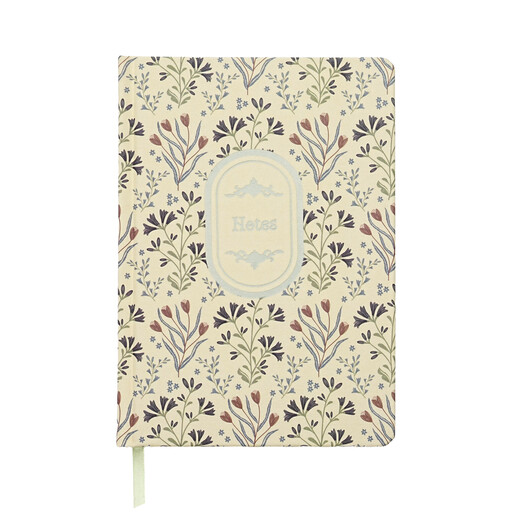
Why this fits the profile: The A5 size and hard fabric cover suit daily writing, journaling, study and office use.
The product description mentions 96 sheets, 192 pages, 100 g/m² ivory paper, a bookmark and elastic closure.
Plenty of writing space, ruled pages and a hard cover for regular use.
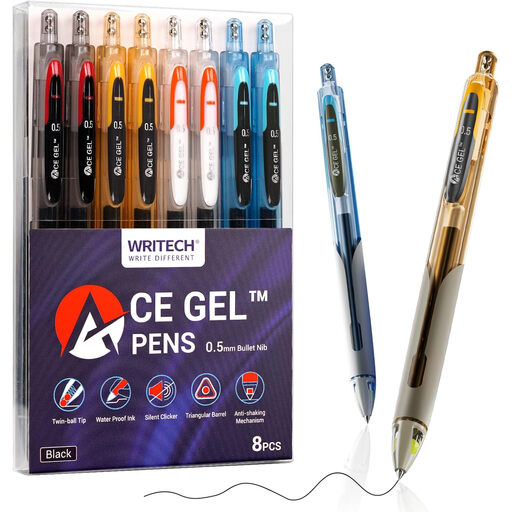
Why this fits the profile: The fine tip and black ink are aimed at precise writing, studying, note-taking and journaling.
The tip size of 0.5 mm, retractable closure and triangular soft grip are clearly stated in the product details.
Eight black gel pens, fine line control and a retractable tip you can protect during transport.
We’ve put together a full, up-to-date list of products that fully meet these strict selection criteria and comply with current European safety regulations.
For everyday writing, ballpoint pens are often a practical choice. They dry quickly and are suitable for forms, diaries and office work. Gel pens usually write more fully and are often used for school notes, journaling and cards.
Fineliner pens suit small letters, diagrams and outlines. For creative projects, coloured pens or a multicolour set are handy for organising subjects visually. If you keep a bullet journal, you can use a combination of a fine black pen, coloured pens and possibly a ruler.
With stationery sets, pay attention to the exact contents. A set with lots of colours isn’t automatically better value if you mainly use black or blue. Also check whether the pens have caps, are retractable and are suitable for the paper you already use.
A5 offers the most writing space and is suitable for school, work and journaling. A6 is easier to carry. A7 is mainly suitable for short notes, lists and quick ideas.
Where possible, choose paper around 100 g/m² and test the pen on a back page. Writing pressure and ink formula vary between products. Let the ink dry briefly before closing the page.
The lifespan depends on use, storage and closure. Store pens according to the product instructions, retract retractable tips and close caps properly. Keep notebooks dry and avoid bending the binding.
