
Vandaag of morgen in huis

Kwaliteit gegarandeerd

Welkomstaanbiedingen ontgrendelen: GRATIS bezorging | Tot 80% korting | Gratis 30 dagen JoyPlus-proefperiode
Download de app
A stand mixer can make preparing batter, dough and desserts easier. However, there are big differences between models. An inexpensive mixer with a bowl may be perfectly suitable for cake batter, but struggle with heavy bread dough. A powerful stand mixer takes up more space and often costs more, while not every user needs the extra capacity.
As Joybuy Product Recommendation Officer, I therefore focus mainly on specifications you can verify. Marketing terms such as “professional”, “quiet” or “powerful” don’t mean much on their own. Check the motor power, maximum dough capacity, bowl, accessories and safety information.
A higher wattage doesn’t automatically mean a stand mixer will perform every task better. The type of motor, the gearing and how the power is used also play a part. What’s more, brands use different measurement methods, such as rated power or peak power.
A 300-watt model may be suitable for light mixing tasks, but according to the product information for the KitchenAid Artisan 5KSM125EAC, this model isn’t designed for heavy dough. When choosing a dough mixer, always look for a stated maximum dough capacity and guidance on how to use it.
A 5-litre bowl can’t always be filled to the brim. Rising dough needs extra room, and a full bowl can splash when you’re whisking liquids. So don’t just check the capacity in litres: check the maximum quantity of dough or batter too.
For example, the Kenwood Go has a 4-litre bowl and specifies a maximum dough capacity of 1.4 kilograms. That’s more useful than judging by bowl size alone.
An electric mixer with a whisk, beater and dough hook is suitable for many baking recipes. Extra attachments for a blender, pasta roller or food processor are only useful if you’ll actually use them. Also check whether the accessories are included or need to be bought separately.
Pay attention to the cleaning instructions too. Some parts are dishwasher-safe, while the manufacturer may recommend hand-washing metal or coated parts.
A mid-range model is often enough for cakes, pancake batter and whipped cream. If you regularly make bread, pizza or brioche, a stable stand mixer with a clearly stated dough capacity and overheating protection is a better choice.
A 400-watt model, such as the AUCMA ASM1541, may seem less powerful on paper than a model with 1,000 watts of peak power. But wattage alone isn’t enough for a fair comparison. Also check the recommended operating time, speed settings and overload protection.
A stand mixer with a stainless-steel bowl is generally easy to clean and suitable for everyday use. Check the bowl’s diameter and height: a wide bowl can be more convenient for batter, while a deep bowl helps prevent splashes.
For a household that mainly makes small batches, a capacity of 3.8 to 4.8 litres may be enough. Families and keen home bakers may benefit from a 5 to 7-litre bowl, provided they have enough worktop and storage space.
A planetary mixer moves the attachment around the bowl so that it reaches ingredients in several places. This can help ensure an even mix, but it doesn’t replace using the right attachment:
A bread maker mixer isn’t the same as a stand mixer. A stand mixer mixes or kneads ingredients, but usually doesn’t bake the bread.

Why it suits this profile: According to the product details, this compact stand mixer has a 3.8-litre bowl, a 700W motor and a basic set of baking accessories. It’s a good fit for beginners who mainly make cakes, biscuits and lighter doughs.
The product information states both the bowl capacity and the maximum quantities: 1.7 kg of dough and 2.4 kg of batter. That’s more helpful than relying on a marketing claim about power alone.
3D planetary mixing action, dough hook, whisk and beater. According to the description, the accessories are dishwasher-safe.
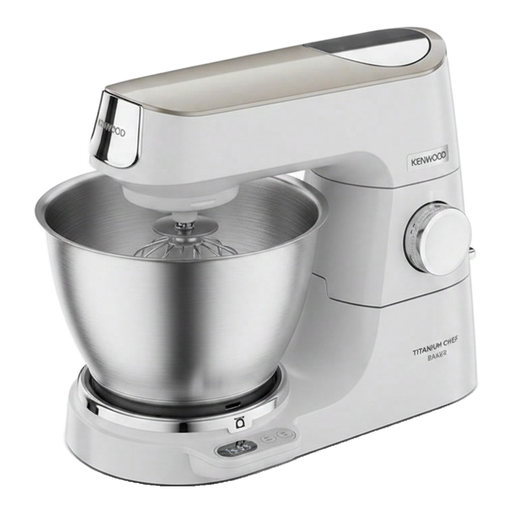
Why it suits this profile: This stand mixer combines a 5-litre stainless-steel bowl with built-in scales and a stated power rating of 1,200 W. It’s a good choice for home bakers who bake regularly and value precision.
The built-in scales mean you need fewer separate appliances and let you weigh ingredients directly into the bowl. The product description also mentions variable speed and a pulse function.
Stainless-steel bowl, dough hook, whisk and K-beater. According to Kenwood, the LightLift head makes it easier to add ingredients.
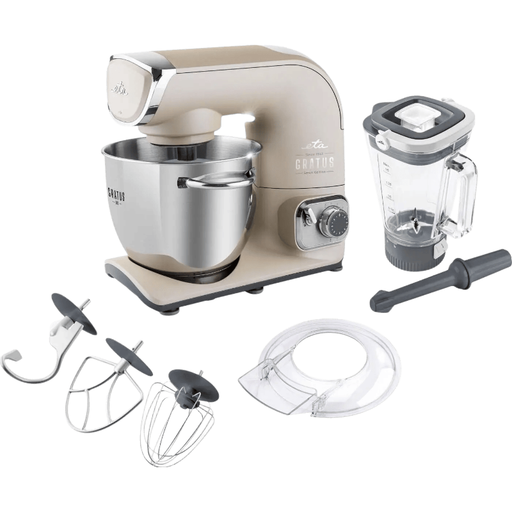
Why it suits this profile: The stated 5.5-litre stainless-steel bowl, maximum dough capacity of 2.5 kg and 1,500 W power rating make this a good fit for users who prepare larger quantities.
The specifications give a specific maximum dough capacity and mention a thermal fuse. Before buying, check that the extra features, such as the blender jug, suit the recipes you make.
Planetary mixing action, pulse function, metal housing and a 1.5-litre glass blender jug, according to the product details.

Why it suits this profile: The stated bowl capacity of 7 litres and power rating of 1,200 W are designed for larger quantities of batter and dough.
The larger bowl means you won’t have to split family-sized batches into several smaller ones straight away. Check that the dimensions of 37 × 22.5 × 40 cm will fit on your worktop.
Stainless-steel finish, automatic speed control and built-in scales, according to the product information.
We’ve put together a complete, up-to-date list of products that meet these strict selection criteria and the applicable European safety regulations.
Place the stand mixer on a flat, dry and stable worktop. When kneading dough, start at a low speed and only increase it if the recipe allows. Don’t exceed the maximum quantities, and let the motor cool down if the appliance has been working hard.
Always unplug the appliance before changing or cleaning the attachments. Never immerse the motor unit in water. Check the manual for dishwasher instructions too; “dishwasher-safe” usually doesn’t apply to every part.
Electrical appliances sold in the European Union are covered by the statutory legal guarantee of conformity. The product information for the models mentioned states a minimum statutory guarantee of two years. Keep your proof of purchase and contact the seller if there’s a problem.
That depends on the motor, dough hook, maximum dough capacity and recommended operating time. Don’t choose a model based on wattage alone. If you bake bread regularly, a stable base, overload protection and a clearly stated dough limit are important.
For smaller households, around 3.8 to 4.8 litres is often a practical size. For families or large baking sessions, 5 to 7 litres may be more convenient. Bear the usable capacity in mind: a 5-litre bowl shouldn’t automatically be filled with 5 litres of dough.
Energy consumption depends on the power rating and how long you use the appliance. A 1,000-watt appliance running for ten minutes theoretically uses around 0.17 kWh. In practice, a stand mixer doesn’t run continuously at maximum power. The main costs are therefore usually the purchase price, maintenance and any extra accessories.
