
Vandaag of morgen in huis

Kwaliteit gegarandeerd

Welkomstaanbiedingen ontgrendelen: GRATIS bezorging | Tot 80% korting | Gratis 30 dagen JoyPlus-proefperiode
Download de app
A stand mixer can take much of the effort out of making bread, pizza, cakes, pastries and whipped cream. However, a high wattage, a large bowl or a long list of accessories does not automatically make a machine the right choice for your kitchen. If you focus only on marketing claims, you could end up with an appliance that is too noisy, moves around on the worktop or struggles to process the stated amount of dough comfortably.
Pay particular attention to these three common pitfalls:
A stand mixer, kitchen mixer or food mixer with a fixed bowl is particularly useful if you bake regularly and want to keep both hands free. An electric mixer with a rotating bowl may be sufficient for cake batter and whipped cream, while a heavier stand mixer with a dough hook is better suited to frequent bread or pizza dough.
Use this guide as your first filter:
Wattage is a technical specification, but it is not a complete measure of performance. A 400- or 450-watt model may be suitable for ordinary household mixing, while heavy yeasted dough puts greater demands on the motor, gears and drive system. Some manufacturers also state peak power alongside rated power.
Always read the instructions and safety information. According to the product description, the 6-litre AUCMA mixer has a 450W motor, six speeds and a pulse function. The manufacturer also specifies a maximum continuous operating time of six minutes. For the Honinst 6.5QT stand mixer, users are warned not to knead heavy yeasted dough continuously for more than ten minutes, after which the machine should be allowed to cool.
A higher wattage therefore does not automatically mean that you can process unlimited large quantities.
A large bowl is useful for batters and multiple portions, but look beyond the number of litres. The Kenwood Go has a 4-litre bowl and a stated capacity of up to 1.4 kg of dough, based on a maximum of 800 grams of flour. The Bosch MUMS2AW00 is described as having a 3.8-litre bowl, a capacity of 1.7 kg of dough and 2.4 kg of batter.
This difference is important when choosing a stand mixer for baking. A family that makes bread every week has different requirements from someone who only occasionally whisks cake batter. Never exceed the maximum quantity stated in the instructions; overloading can put unnecessary strain on the motor.
A dough mixer should remain firmly in place when the dough becomes heavy and stiff. Look for non-slip feet, suction cups, the weight of the machine and the bowl locking mechanism. A tilt-head design makes it easier to position the bowl and accessories, but check that the head is fully locked during use.
Noise information is useful when it is provided according to a consistent measurement method. According to the product information, Honinst claims a noise level of less than 60 dB; AUCMA lists 68 to 72 dB within one metre, while Monsga states less than 75 dB. These are figures provided by the brands and may vary depending on the speed, quantity and surface.
A practical basic set consists of:
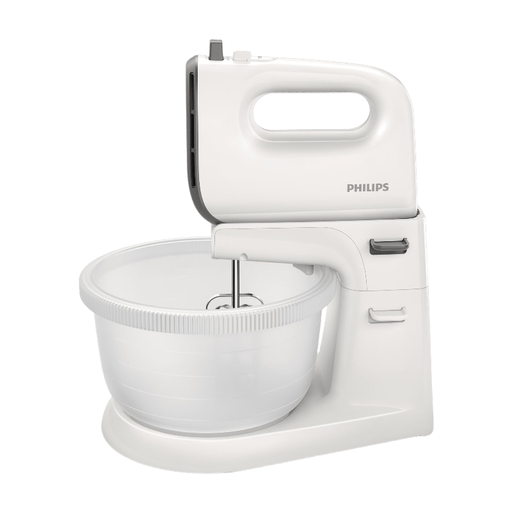
Why it suits this profile: Ideal if you mainly make cakes, whipped cream and light dough, and want a compact solution. The supplied bowl rotates automatically while mixing.
The product specifications clearly state 450 W, six speeds and a 3-litre bowl. This makes its intended use clear, without presenting it as a heavy-duty bread machine.
Automatically rotating bowl, six speeds, and supplied beaters and dough hooks.
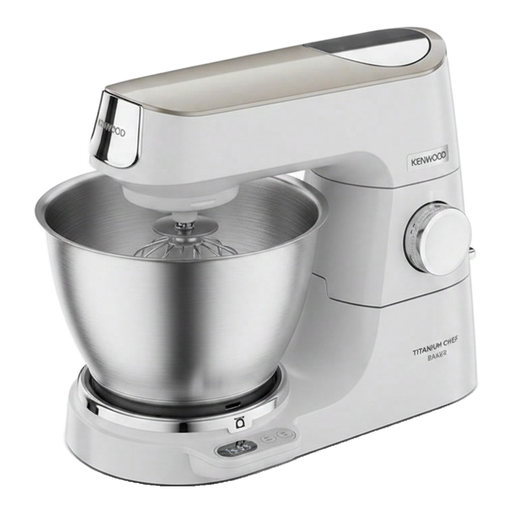
Why it suits this profile: Designed for keen home bakers who use their mixer frequently and value precise weighing and a metal construction.
The built-in scales reduce the need to weigh ingredients separately. However, check the available space beforehand: according to the product information, this model weighs 12.68 kg.
1200 W, variable speed with pulse function, 5-litre stainless-steel bowl and three basic accessories.

Why it suits this profile: For users who mainly want to knead dough and combine resting time in a programme with a family-sized 5-litre bowl.
The stated maximum dough capacity of 2.5 kg makes the model’s intended use clear. Do not exceed this limit and follow the recommended resting times.
Touch controls, automatic kneading function and a stated capacity of up to 2.5 kg of dough.

Why it suits this profile: Measuring 33.5 × 18 × 30 cm, it fits neatly on a smaller worktop while being designed for everyday baking and mixing.
The product information states both the maximum dough quantity of 1.4 kg and the compact dimensions. This makes it easier to match the capacity to your kitchen and recipes.
800 W, six speeds plus pulse function, 4-litre stainless-steel bowl and three baking accessories.
We have put together a complete, up-to-date list of products that fully meet these strict selection criteria and the applicable European safety regulations.
Yes, a stand mixer with a dough hook can knead bread and pizza dough. Always check the maximum dough capacity and permitted operating time. When working with heavy dough, start at a low speed and allow the motor to cool according to the instructions.
For a household, 4 to 6 litres is often practical. The right size depends on how much batter or dough you make. Alongside the bowl capacity, check the stated maximum quantity of flour, batter or dough.
Consumption depends on the power rating and operating time. An 800-watt machine running for ten minutes uses less energy than the same machine running for an hour. Use the lowest suitable speed and do not process larger quantities than recommended.
