
Workshop host making larger batches
You want to cater for several participants per mixing session, so you compare your recipe quantity with the stated capacity for the exact model and mixture.


Start by choosing a stand mixer with a beater suitable for biscuit dough, then decide how much dough you want to make per mixing session. For several smaller portions, a more compact model may be enough; a larger bowl is most useful when your recipe stays within the limit specified for that model. Also check which parts you can clean between workshop sessions and whether the terms of use are suitable for your workshop.
You want to cater for several participants per mixing session, so you compare your recipe quantity with the stated capacity for the exact model and mixture.
You let participants mix one after another, so you focus on choosing a suitable beater, accessing the bowl and switching between portions.
You plan several workshop sessions and want to know how to clean each bowl and attachment according to the instructions. If you’re preparing food for other people, allergen management may also be a consideration.
Start with a beater that’s suitable for biscuit dough, then decide how much you want to make per mixing session. The bowl capacity in litres isn’t the same as the permitted dough weight.
| What to consider | What to look for | Who is this important for? |
|---|---|---|
| Batch size | Compare the weight of your recipe with the permitted amount for the exact model and type of dough. Don’t assume that a limit for cake batter, bread dough or standard biscuits also applies to oat biscuit dough. | If you want to mix one larger batch for your workshop, check the recipe weight and model-specific limit first; around 36% of consumers prioritise batch size. |
| Beater | Check which beater is intended for biscuit dough and whether it’s included with the version you’ve chosen. KitchenAid recommends its flat beater for biscuits; Kenwood says the K-beater for the Chef XL range is suitable for biscuit dough. | For biscuit dough, you’ll want to know which beater is suitable and included; around 28% of consumers prioritise having the right attachment. |
| Cleaning and changing attachments | Follow the cleaning instructions for each part of the exact model. If you’re making different recipes, also check how to prevent allergens from being left behind. | If you’re cleaning or changing attachments between workshop sessions, look for accessible parts and clear instructions; around 18% of consumers prioritise cleaning and switching between portions. |
| Purchase and use | Check which bowls and attachments are included with the version you’re considering, and what terms apply to your purchase and use. | You’ll want to know in advance what you actually need and whether the terms suit your workshop; around 18% of consumers prioritise purchase and usage terms. |
Manufacturers state capacities for specific mixtures or biscuit sizes. These figures don’t automatically tell you how much of your oat biscuit dough a model can handle.
Weigh your recipe and compare it with the permitted amount for the exact model and type of dough. If necessary, divide the dough between several mixing sessions.
A lower permitted batch size may mean you need to plan extra mixing sessions.
The attachments supplied vary by version. For some models, the manufacturer specifically recommends a flat beater or a K-beater for biscuit dough.
Check the full model number, what’s included in the box and whether any separately sold attachment is compatible.
If the right attachment isn’t included with your chosen version, you may need to source a compatible part separately.
The portion size you need and the parts included can both affect whether a version is suitable for your workshop. The Consumers’ Association (Consumentenbond) notes that more expensive doesn’t automatically mean better.
Compare what’s included in the box and how you’ll divide up the batches with what you actually need, without assuming there will be additional costs that haven’t been confirmed.
More mixing sessions can mean extra time spent mixing and cleaning.
The Artisan 5KSM175PS is a mid-sized tilt-head mixer; check which attachments are included with each version.
The Serie 4 (MUM5) may suit a series of workshop portions; the scales and timer are features of specific models.
The Chef XL KVL4100S is worth considering if your planned batch calls for a larger bowl.
These Joybuy products are stand mixers and dough machines for mixing or preparing dough. Check for each model whether the right attachment for oat biscuit dough is included and whether its stated capacity suits your recipe.
 No image available
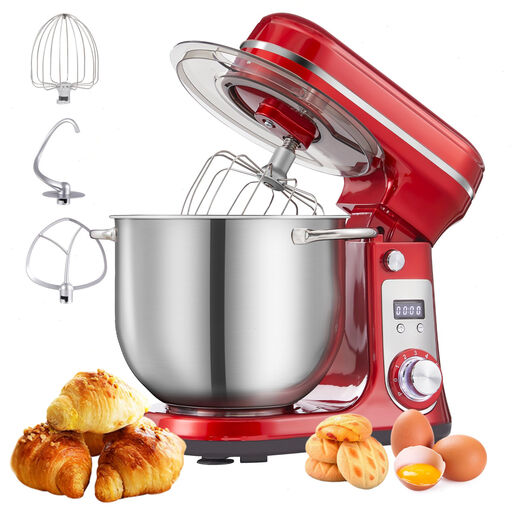
A stand mixer to consider if you’re looking for a 6 l bowl and timer controls; the product information mentions dough preparation.
The title lists 6 speeds, a pulse setting, LCD display, timer and a 1200 W motor.
The title also lists a maximum noise level of 60 dB; check the product specifications for the conditions under which this was measured.
 No image available
The product information mentions mixing batters and dough; check whether the supplied beater is suitable for your biscuit recipe.
The title lists a 5 l bowl, 10 speeds, a tilt head and a 400 W motor.
The stated attachments are a dough hook, whisk and beater. Check the model-specific instructions before choosing an attachment for oat biscuit dough.
 No image available
The product information mentions mixing dough and other ingredients. Make sure your planned batch follows the instructions for this model.
The title lists a 6 l bowl, 6 speeds, a tilt head and a 450 W motor.
The product information warns against using the appliance for more than 6 minutes continuously without a rest. The stated attachments are a dough hook, whisk and beater.
 No image available
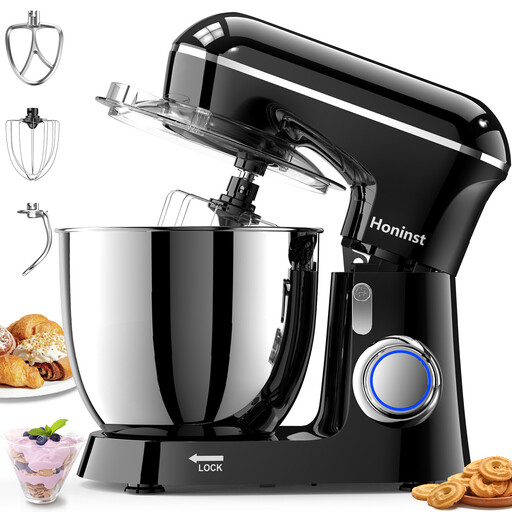
The product information mentions mixing, kneading and whisking. Check the manual to see which attachment is suitable for biscuit dough.
The title lists a 6.5 QT bowl and 10 speeds; the attachments are a dough hook, whisk and beater.
The product information states that the appliance is intended for domestic use only. Bear this in mind if you’re buying it for a workshop.
 No image available
A dough machine for mixing and kneading portions; check whether the stirring attachment is suitable for mixing your biscuit dough.
The title mentions automatic kneading and a 5 l bowl. The product description states a maximum dough capacity of 2.5 kg; don’t exceed this limit.
The product information mentions a removable bowl and stirring attachment that can be cleaned after use.
Not necessarily: the right beater depends on the model and recipe. KitchenAid recommends a flat beater for biscuit mixtures, while Kenwood says the K-beater for the Chef XL range is suitable for biscuit dough. For another model, check its instructions.
Weigh the amount of dough you’ll mix at a time and compare it with the permitted amount for the exact model. Bowl capacity in litres isn’t the same as permitted dough weight; a manufacturer’s figure for bread dough or standard biscuits, for example, doesn’t automatically apply to oat biscuit dough.
Clean the parts that come into contact with the recipe, following the product instructions. If you’re making different recipes containing allergens, take care to prevent cross-contamination. The Netherlands Food and Consumer Product Safety Authority (NVWA) states that businesses preparing, processing or selling food must follow the applicable food safety rules.
For a distance purchase covered by consumer law, the Government of the Netherlands says you’ll have 14 days to change your mind in many cases. The Netherlands Authority for Consumers and Markets (ACM) explains the legal guarantee for consumer sales and the seller’s responsibility if a product is faulty. Whether a purchase for this workshop counts as a consumer or business purchase depends on the circumstances, so don’t assume the same terms apply in every case.
If the organiser operates a business that prepares, processes or sells food, the NVWA says they must work with an HACCP food safety plan or an appropriate hygiene code. When selling food or drink to customers, the business must also provide information about any allergens present. The word ‘workshop’ alone doesn’t make it clear whether these requirements apply.