
Vandaag of morgen in huis

Kwaliteit gegarandeerd

Welkomstaanbiedingen ontgrendelen: GRATIS bezorging | Tot 80% korting | Gratis 30 dagen JoyPlus-proefperiode
Download de app
A stand mixer with a bowl can make baking bread, cakes, pizza and pastries easier. However, stand mixers vary considerably in capacity, motor power, accessories and stability. A high wattage claim or a large bowl doesn’t, on its own, tell you much about how a mixer will perform day to day.
Look out for these common pitfalls:
For cake batter, whipped cream and light mixtures, good speed control is particularly important. For bread dough, pizza dough and other heavy mixtures, torque, drive system and permitted operating time matter at least as much as wattage.
An electric mixer with several speed settings gives you more control. Always start on a low speed when mixing dough, and follow the manual’s guidance on maximum quantities and rest periods. Overheat protection is useful if you regularly work with heavy dough.
Also look out for conflicting product information. The Bosch MUMS2AW00 product title states 1000W, while the product specifications and description state 700W. For a fair comparison, we’ve used the specific product specification of 700W.
A mixer with a stainless steel bowl is easy to check at a glance, doesn’t absorb odours and is suitable for larger batches. However, check the recommended dough capacity too. For example, the Kenwood Go has a 4-litre bowl and a stated maximum dough capacity of 1.4 kg, with a maximum of 800 grams of flour.
A larger bowl is useful for families, but takes up more space. Measure the available worktop space and check the height needed when the mixer head is raised. A plastic bowl can be lighter, as with the Bosch MUMS2AW00, which has a capacity of 3.8 litres. This may be convenient for everyday use, but it’s worth weighing up against a stainless steel bowl.
A stand mixer with a dough hook, whisk and flat beater covers the most common tasks:
With planetary mixing, the attachment moves around the bowl, reaching ingredients in different areas. According to Bosch’s product description, 3D Planetary Mixing Technology moves the attachment in three directions while the bowl rotates in the opposite direction. Honinst also describes a 3D motion. Treat this as a design feature, not a guarantee that every recipe will mix evenly.
Also check for non-slip feet, suction cups, a locking head and a splash guard. These features help prevent the mixer from moving around and ingredients from splashing, but they won’t make it silent. Honinst states a noise level of less than 60 dB; Aucma lists 68–72 dB or up to 75 dB, depending on the model. Noise levels can vary between settings and situations.

Why it suits this profile: This compact stand mixer is designed for everyday baking, with a 3.8-litre bowl and a basic set of attachments for mixing, whisking and kneading.
The product specifications state 700W, a 3.8-litre bowl and capacities of 1.7 kg of dough and 2.4 kg of batter. This makes its limits clearer than a large wattage claim alone.
3D planetary mixing action, dough hook, whisk and beater; according to the description, the attachments are dishwasher-safe.
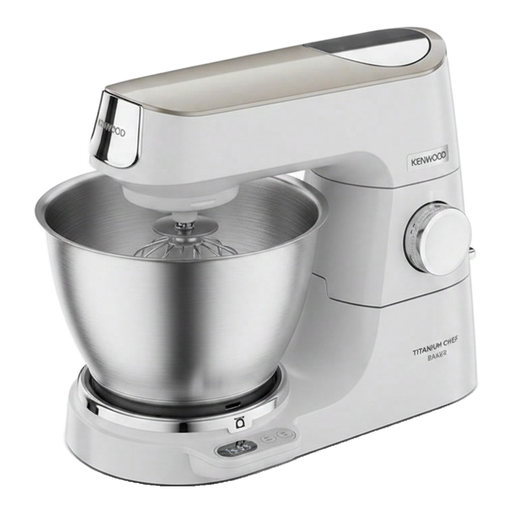
Why it suits this profile: This model combines a metal body, a 5-litre stainless steel bowl and features suited to frequent bakers.
The built-in scales let you weigh ingredients straight into the bowl. The stated specifications also include variable speed and a pulse function.
Stated power of 1200W, 5-litre stainless steel mixing bowl, dough hook, whisk and K-beater; automatic speed control is also listed.
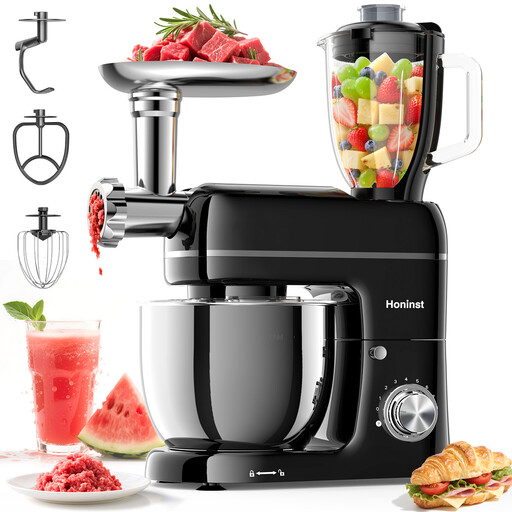
Why it suits this profile: As well as mixing, kneading and whisking, this model offers blending and mincing functions according to the product description.
According to the description, the safety switch prevents operation if the head isn’t locked into place correctly. Before buying, check which attachments are actually included.
Maximum stated motor power of 1300W, 6 QT bowl, 8 speeds plus pulse function, and multiple kitchen functions.

Why it suits this profile: Its body is compact and the controls are at the front, making it handy when kitchen space is limited.
The bowl capacity and dough limit are clearly stated: 4 litres and a maximum of 1.4 kg of dough. This helps you avoid judging capacity by bowl size alone.
800W, 6 speeds plus pulse function, stainless steel bowl, splash guard and an extra attachment outlet; additional accessories are sold separately.
A stand mixer uses electricity mainly while its motor is running. Actual consumption depends on the power drawn, how long you use it for and the speed selected. A higher wattage doesn’t automatically mean higher costs per recipe, but it may mean more power is used during operation.
To help your mixer last longer:
According to the product specifications, several of the models listed come with a statutory warranty of at least two years within the EU. Always check the current terms and seller information when buying.
We’ve put together a complete, up-to-date list of products that meet these strict selection criteria and the applicable European safety regulations.
Yes, provided the model has a dough hook and the manual says it can handle bread or yeasted dough. Pay particular attention to the maximum dough capacity and recommended operating time. A large bowl alone doesn’t tell you whether a mixer is suitable for heavy dough.
For regular baking for several people, a bowl of around 5 to 6 litres is a good choice. For smaller batches or a compact kitchen, 3.8 to 4 litres may be more practical. As well as capacity, check the minimum and maximum quantities stated by the manufacturer.
It depends on the build quality, workload, maintenance and how often you use it. Stick to the maximum quantities, avoid overloading the mixer for long periods and let the motor cool down after heavy kneading. Before buying, also check whether replacement attachments and parts are available.
