Choose a stand mixer with a flat beater or whisk that suits your recipe, and first decide how much batter you want to make in each batch. The bowl capacity won’t automatically tell you how much cake batter the mixer can handle. Manufacturers’ stated cake and batter capacities are not results from tests carried out under the same conditions, so compare the capacity listed for the exact model and also consider the controls, splash guard and cleaning.
Who is this buying guide for?
Workshop host making large batches
Plans mixing sessions around the number of participants and compares the stated cake or batter capacity of the exact model, rather than looking at bowl capacity alone. Kenwood and Ankarsrum provide capacity details for specific models.
Workshop host who lets participants mix
Wants participants to be able to use the mixer clearly and add ingredients in a controlled way. Speed settings, a timer and a splash guard vary by model; Bosch and Kenwood publish details about these features.
Workshop host running back-to-back sessions
Wants to clean mixing attachments and work surfaces between batches, and to handle raw batter and yoghurt carefully. The Voedingscentrum provides advice on clean utensils and dairy products.
What should you look for when buying?
First decide how much you want to mix in each batch, then choose a suitable flat beater or whisk. Check that the controls, workspace and cleaning requirements suit your workshop.
| What to consider |
What to look for when buying |
Who should pay particular attention? |
| Amount per batch |
Work out the quantity from your recipe and compare it with the cake or batter capacity stated for the exact model, using the same unit. |
If I want to make batter for several participants at once, I need to know how much the mixer can handle in each batch. Around 36% of consumers consider batch size their main priority. |
| Controlled mixing |
Check which flat beater or whisk is included, how you adjust the speed and whether you can add ingredients while mixing. |
When participants are mixing themselves, I want to make the mixing step and adding ingredients easy to manage. Around 29% of consumers prioritise control over mixing. |
| Cleaning between batches |
Check which parts can be removed and what cleaning instructions apply; have clean utensils ready for the next batch. |
When different groups are baking one after another, I want to be able to clean used parts and work surfaces carefully in between. Around 21% of consumers see cleaning and hygienic working as their main concern. |
| Worktop and storage space |
Measure the available space and check the dimensions and weight of the exact model if you plan to move or store the mixer. |
I want to be able to set up or store the mixer without making the workshop space awkward to use. Around 14% of consumers consider space and practicality their main priority. |
Common buying mistakes
-
Confusing bowl capacity with batter capacity
A 7 l bowl doesn’t mean you can mix 7 l of cake batter in it. Ankarsrum lists a 7 l dough bowl and a batter capacity of 1.5 l for the AKM6230; Kenwood gives the cake capacity of the KMX750AWH in kilograms.
Compare the quantity in your recipe with the specific batter or cake capacity stated for the model. Don’t convert kilograms to litres without recipe information.
A batch that’s too large for the stated capacity may mean extra mixing sessions and more cleaning.
-
Assuming every attachment is suitable for cake batter
A dough hook or whisk isn’t automatically the right choice for every step in a yoghurt cake recipe. Attachments have different purposes.
Check which flat beater or whisk is included, and follow the recipe and model instructions for the mixing step.
-
Assuming similar product titles mean the products are identical
KitchenAid lists a 4.7 l bowl for the 5KSM125EMH, while a Joybuy listing checked for that model code gives the capacity as 4.8 l.
Ask for clarification about the specific version and included bowl before choosing based on a product listing.
Brands to compare
Kenwood
The kMix KMX750AWH is worth considering if its stated cake capacity, K-beater and splash guard suit your workshop.
- Kenwood lists a 5 l bowl and a cake capacity of 2.72 kg for this model.
- The stated weight is 9.26 kg. The capacity is a manufacturer’s specification, not a measurement for every yoghurt cake recipe.
Bosch
The MUM5XW20 is an option if weighing ingredients in the bowl and having a timer would suit the way you work with participants.
- Bosch lists a 3.9 l bowl, seven speed settings, integrated scales and a timer for this model.
- Compare your batter quantity with the capacity stated for the exact model; bowl capacity isn’t automatically the usable cake capacity.
KitchenAid
The Artisan 5KSM125EMH is worth considering if you’re looking for a separate flat beater for cake batter.
- KitchenAid lists a 4.7 l bowl, a flat beater and a wire whisk for this model.
- A Joybuy listing checked for the same model code gives the bowl capacity as 4.8 l. Check the bowl and version of the product you’re considering.
Ankarsrum
The Assistent Original AKM6230 offers a different set-up for those planning to make a range of bakes as well as cake batter.
- Ankarsrum lists a 7 l dough bowl, a separate 3.5 l mixing bowl and a batter capacity of 1.5 l.
- Don’t treat the dough bowl capacity as the batter capacity: these figures refer to different bowls and uses.
Stand mixers for workshop batter
These Joybuy product picks are stand mixers to compare for mixing batter during a baking workshop. For each version, check that the batch capacity, attachments and controls suit your recipe and the way you work.
 No image available
Stand mixer with 5 l bowl, 600 W and 10 speeds
An option for workshop batter if the included flat beater and whisk suit your recipe.
The product name lists a 5 l stainless steel bowl, 10 speeds, 600 W, a dough hook, flat beater, whisk and splash guard.
Joybuy
 No image available
AUCMA stand mixer, 5 l, 10 speeds, 400 W (Black)
Compare this mixer for workshop batter if the included mixing beater suits the mixing step in your recipe.
The product name lists a 5 l bowl, 10 speeds, 400 W, a dough hook, whisk and mixing beater.
Joybuy
 No image available
Kenwood Go KZM35 (Grey)
A model to compare for workshop batter; check that the included attachments suit your recipe and the mixing step you need.
Also check the model-specific information on batch size and cleaning before making your choice.
Joybuy
 No image available
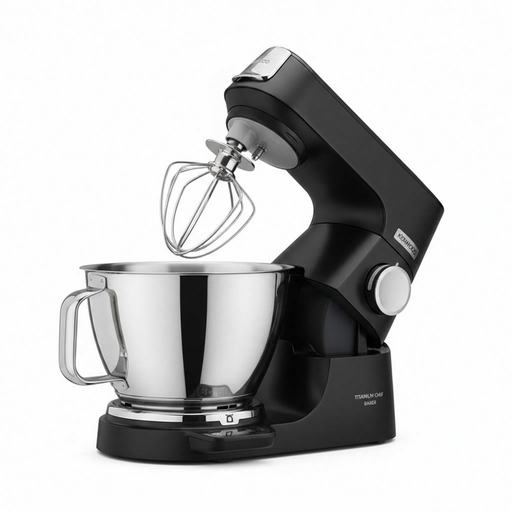
Kenwood Titanium Chef Baker KVC85 (Black)
An option to compare if you want to carefully check that the version on offer and the parts you need are right for back-to-back workshop sessions.
For the exact model, check which attachments are included and whether the cleaning instructions suit the way you work.
Joybuy
 No image available
Monsga SM100, 5.0 l, 8 speeds, 1000 W Peak Power (Black/Silver)
An option for workshop batter if a flat beater and splash guard suit your recipe and the way you work.
The product name lists a 5.0 l stainless steel bowl, 8 speeds, a flat beater, whisk and splash guard.
Joybuy
Frequently asked questions
Which attachment should I use for yoghurt cake batter?
Check your recipe and the instructions for your model. KitchenAid says the flat beater is suitable for cake batter and advises against beating for too long. A dough hook for bread dough isn’t automatically the right choice for this batter.
How can I tell if the mixer can handle enough batter in one batch?
Compare the quantity in your recipe with the cake or batter capacity stated for the exact model. Bowl capacity and batter capacity aren’t the same; Kenwood, for example, gives the cake capacity of the KMX750AWH in kilograms, while Ankarsrum lists the batter capacity of the AKM6230 in litres.
What should I clean between workshop sessions?
Make sure surfaces and utensils are clean before using yoghurt and other ingredients, and clean used parts according to the instructions for the exact model. The Voedingscentrum recommends using clean surfaces and utensils when handling dairy products.
Can participants taste raw batter?
The Voedingscentrum advises against tasting raw cake batter, as raw eggs and flour may contain harmful bacteria. Take particular care if young children, pregnant people, older people or those with reduced immunity are taking part.
Do food safety rules apply to my baking workshop?
If your activity counts as a food business and you produce, process or sell food, the NVWA requires you to follow a HACCP-based food safety plan or an approved hygiene code. Food businesses must register with the NVWA. The fact that an activity is called a baking workshop doesn’t, on its own, determine whether these business requirements apply to your particular activity.


