What should you look for when choosing?
Start with the mixing tool and the amount of dough you’re making. Then check that the dimensions and included features suit your kitchen and the other recipes you make.
The percentages below relate to choosing a stand mixer for sweet pastry dough for a family gathering. They show which of these considerations is the top priority for consumers.
| What to consider |
What to look for |
Who does this matter most to? |
| Mixing dough with control |
Check whether the exact version includes a flat beater or suitable K-beater, and whether you can stop the mixing yourself. |
I want to mix butter, sugar and flour with control, stopping as soon as the dough comes together; around 36% of consumers prioritise control over mixing. |
| Capacity for your portions |
Compare the amount of flour in your recipe with a relevant capacity specification for pastry. A maximum amount for cake batter or yeast dough is not the same as a stated maximum for pâte sablée. |
If I’m making several tarts, I want to know whether the stated capacity suits my recipe; around 29% of consumers prioritise portion size. |
| Positioning and storage |
Measure the available height and width, then compare them with the dimensions of the version you’re considering. |
I want to be able to put the mixer away after baking, so I check the available space first; around 21% of consumers prioritise storage space. |
| Bundle and extra features |
Check which mixing tools are included with the exact version and whether you’ll actually use any extra accessories for other recipes. |
I want the right tools included with the mixer and would rather avoid features I won’t use; around 14% of consumers prioritise the bundle and extra features. |
Products at Joybuy
The options below include stand mixers and a dough maker, with different bowl sizes and included tools. Check whether the operating method and accessories suit your sweet pastry dough recipe for each version.
 Image unavailable
AUCMA Stand Mixer, 5 liter, 10 speeds, black
An option if you’re looking for a stand mixer with a beater and several speed settings; check that the mixing tool suits your recipe.
5-liter bowl, 10 speeds and pulse function; includes a beater, dough hook and whisk. The product name specifies a 400 W motor.
View at Joybuy
 Image unavailable
AUCMA Stand Mixer, 6 liter, 6 speeds, black
An option if you’re looking for a larger bowl; match the amount of dough to your recipe and the specification for this version.
6-liter bowl, 6 speeds and pulse function; includes a beater, dough hook and whisk. The product name specifies a 450 W motor.
View at Joybuy
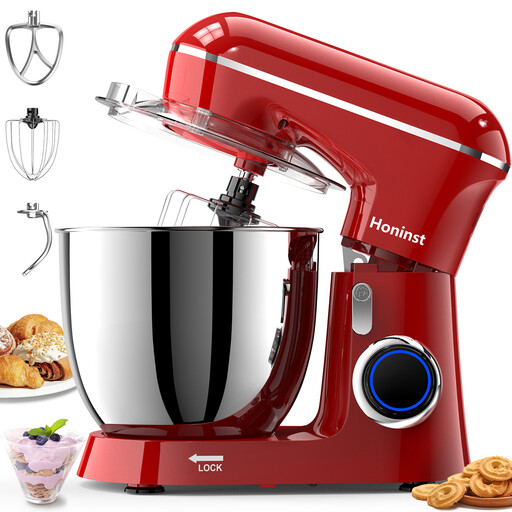 Image unavailable
Honinst Stand Mixer, 6.5 QT, 10 speeds
An option if you’re considering a stand mixer with several included mixing tools; check which tool your recipe calls for.
6.5 QT bowl and 10 speeds; the product name lists a whisk, dough hook and beater.
View at Joybuy
 Image unavailable
Bear Intelligent Dough Maker, 5 liter, maximum 2.5 kg of dough
This dough maker is an option if you’re mainly looking for a machine that kneads dough automatically; check that its operation suits your pastry dough.
The product name specifies a 5-liter capacity and a maximum of 2.5 kg of dough. The product information mentions automatic kneading.
View at Joybuy
 Image unavailable
Kenwood Go KZM35 Stand Mixer, grey
An option if you’re looking for a compact stand mixer; compare the dimensions and capacity of the exact version with your recipe and available storage space.
View at Joybuy
Frequently asked questions
Should I use the dough hook or the flat beater for sweet pastry dough?
The KitchenAid pâte sablée recipe reviewed here uses the flat beater. Follow the instructions for your recipe and machine; a setting for bread dough doesn’t prove that it’s suitable for pastry dough too.
What should I do if the beater touches the bowl?
Switch off the machine and unplug it before checking the adjustment. KitchenAid recommends this for its tilt-head mixer; if you have another model, follow its own manual.
Is CE marking relevant for a stand mixer in the Netherlands?
Yes, for electrical products covered by the applicable CE rules. The Netherlands Enterprise Agency explains that CE marking is mandatory for the relevant product groups. It’s a declaration of conformity from the manufacturer, not an independent safety certification. Check the information for the exact version.
Does an extended warranty package replace my statutory rights?
No. In the Netherlands, the seller remains responsible for providing a solution if a product is faulty. According to the Dutch government, there’s no fixed term for the statutory guarantee; compare the terms of any additional cover with your existing rights.
Do online purchases always come with exactly 14 days to change your mind?
Not always. The Dutch government says that a 14-day cooling-off period applies in many cases to distance purchases, but there are exceptions. Check whether the rules apply to your purchase and read the seller’s returns policy.


