
Small-batch baker
If you usually make one modest-sized cake, you’ll want to know whether the beater actually reaches the batter. Bowl capacity or a maximum quantity won’t answer that question.


For a single small lemon cake, the key question is whether the supplied beater reaches your amount of batter; bowl capacity and published maximum quantities don’t prove that it will. A compact model suits a smaller kitchen, while a larger bowl makes most sense if you also make larger recipes. For the exact model, check the attachments, dimensions and food-contact information too.
If you usually make one modest-sized cake, you’ll want to know whether the beater actually reaches the batter. Bowl capacity or a maximum quantity won’t answer that question.
If you want to put the mixer away after use, its dimensions and how easily you can reach the bowl are important considerations. KitchenAid describes the 5KSM3311X as a tilt-head mixer with a 3.3 L bowl.
If you make larger recipes as well as lunchbox cakes, compare the attachments supplied and the bowl capacity for each task. Bosch lists a 3.8 L bowl for the MUMS2EW00; Kenwood lists a 5 L bowl for the kMix KMX750ARD.
| What to consider | What should you check? | Who is this important for? |
|---|---|---|
| Small amounts of batter | Check whether the beater reaches the quantity in your recipe; treat maximum quantities as an upper limit only. | If I usually make one small lunchbox cake, I want to know whether the beater can reach a modest amount of batter too. Around 33% of consumers prioritise mixing small batches. |
| Attachment for cake batter | Check which attachment comes with the exact model and what the manufacturer recommends using it for. | If I’m choosing a mixer for cake batter, I want to know whether the supplied attachment is suitable for the job. Around 27% of consumers prioritise having the right attachment and mixing method. |
| Positioning and storage | Measure the available space, including the clearance needed to tilt the head and remove the bowl. | If my worktop or storage space is limited, I want to know in advance whether the mixer will fit comfortably. Around 20% of consumers say kitchen space is their main consideration. |
| Cleaning and aftercare | Check the cleaning instructions and which parts are included; also read the food-contact information for the exact model. | If I only use the mixer occasionally, I want to know what cleaning and aftercare involve in practice. Around 20% of consumers give the most weight to maintenance, purchase cost and service. |
A stated maximum doesn’t tell you whether the beater can reach a small amount of lemon cake batter.
Check this for the exact model and attachment using your recipe, or ask for a demonstration with that amount.
The attachments supplied and their compatibility vary by model.
Check the model code, box contents and compatibility information before choosing a separate part.
If the right beater for your batter isn’t included, you may need to buy one separately.
ACM ConsuWijzer explains that the Netherlands’ statutory guarantee does not have a fixed general end date of two years; the expected lifespan depends, among other things, on the product and normal use.
Keep your proof of purchase and contact the retailer if a fault occurs that you wouldn’t expect under normal use.
The features listed apply to the models and versions researched, not automatically to the entire brand.
According to Bosch, the MUMS2EW00 is a compact all-round option with a 3.8 L bowl and three listed mixing attachments.
According to KitchenAid, the 5KSM3311X model researched has a 3.3 L bowl and is a compact option for home bakers.
According to Kenwood, the kMix KMX750ARD has a 5 L bowl, making it a larger-bowl option for anyone who also makes other recipes.
The Assistent Original AKM6230 is worth comparing if you’re planning to make larger batches of dough as well as cakes.
These Joybuy products are stand mixers for home baking, available in different versions and bowl sizes. For the exact model, check whether the supplied beater can reach your amount of batter.
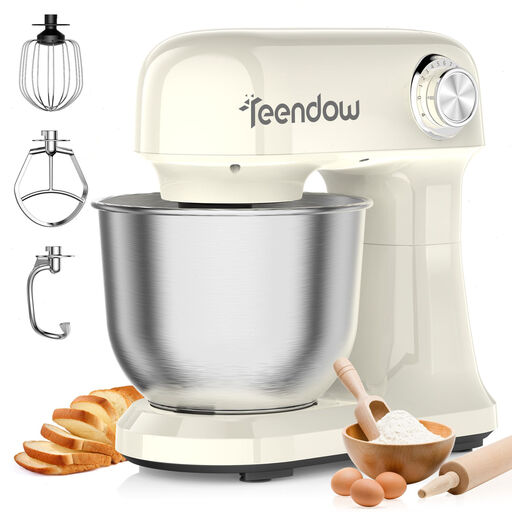 Image unavailable
The product description lists cake batter as a use; the tilt-head design gives you access to the bowl.
The product name lists a 5 qt bowl, 12 speeds and a tilt-head design.
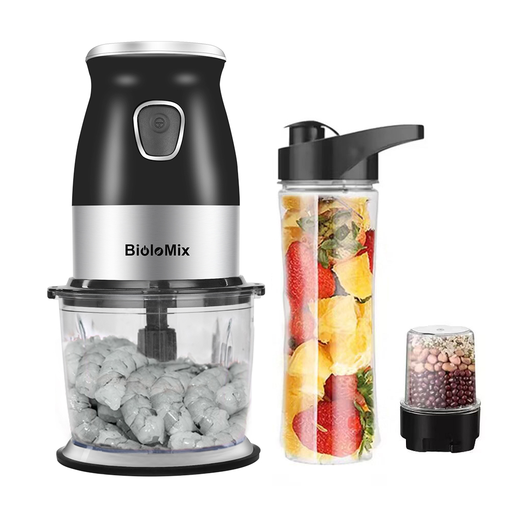 Image unavailable
The product description lists batter and cake as uses.
The product name lists a 500 W motor and stainless steel blades.
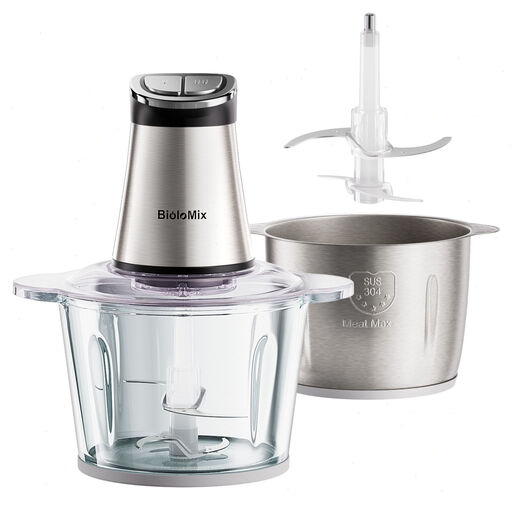 Image unavailable
The product description lists mixing and cake batter as uses; check whether the attachment can reach a small batch for your recipe.
The product name lists a 3 L capacity, two speeds and a power rating of 300 W.
 Image unavailable
The product description lists a mixing beater for batter and cake; check whether it can reach the amount in your recipe.
The product name lists a 5 L bowl, 10 speeds, a tilt-head design and three attachments: a dough hook, whisk and beater. The stated power is 400 W.
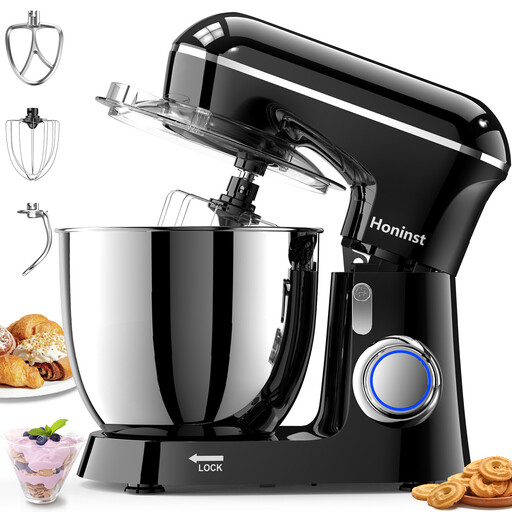 Image unavailable
The product description lists a beater for cake batter; compare the version with the amount you usually make.
The product name lists a 6.5QT bowl, a tilt-head design and three attachments: a dough hook, whisk and beater.
No. A larger bowl doesn’t guarantee that the beater can reach a small batch. Bowl capacity and published maximum quantities don’t tell you the minimum quantity, so check the exact model and attachment against your recipe.
Don’t taste raw batter: according to the Netherlands Nutrition Centre, raw eggs and flour can contain harmful bacteria. Wash your hands after handling it and follow the cleaning instructions for the bowl and attachments on the exact model.
For ordinary cake in opened packaging, the Netherlands Nutrition Centre recommends keeping it in a kitchen cupboard for up to seven days and wrapping it well to prevent it drying out. Don’t apply this advice automatically to cake with a perishable filling or topping.
No. ACM ConsuWijzer explains that there is no fixed statutory guarantee period in the Netherlands. The expected lifespan depends, among other things, on the product and normal use; the retailer is your point of contact for your statutory rights.
According to the Netherlands Food and Consumer Product Safety Authority, electrical products covered by the Dutch Commodities Act Decree on Electrical Equipment must carry a CE marking. Parts intended to come into contact with food must also comply with the applicable Dutch and European rules; a material description alone doesn’t prove that an individual product complies.