
Baker making small lunchbox portions
You usually make one cake at a time and want to know whether the mixing attachment can reach a small amount of batter. The maximum bowl capacity alone won’t tell you.


For a single small lunchbox cake, a compact stand mixer with a suitable mixing attachment is a sensible place to start. But the bowl capacity alone doesn’t prove that the attachment can reach a very small batch. Choose a larger bowl if you also regularly make bigger recipes and have room for it. Before you buy, check the attachments, dimensions and specifications of the exact appliance.
You usually make one cake at a time and want to know whether the mixing attachment can reach a small amount of batter. The maximum bowl capacity alone won’t tell you.
You want to keep the mixer out or store it without giving up too much space, so you compare the dimensions of different models.
You make larger bakes as well as small cakes, and compare bowl capacities and the attachments supplied with each version.
Start with the smallest batch you actually make and the space where the mixer will sit. Then compare the bowl and the attachments included.
| What to consider | What to look for when buying | Who should prioritise this? |
|---|---|---|
| Mixing a small batch | Ask about the minimum working quantity for the exact model and check that the right mixing attachment is included. | I usually make one small lunchbox cake and want the mixing attachment to reach my amount of batter; around 40% of consumers say mixing a small batch is their main concern. |
| Space and storage | Measure the available space and compare it with the model’s dimensions. Bosch Netherlands lists the MUMS2EW00 as 266 × 266 × 277 mm (h × w × d); Kenwood Netherlands gives the Go KZM35.000GY as 33,5 × 18 × 30 cm, in the order shown in the product specifications. | If my worktop or storage space is limited, I want to know in advance whether the machine will fit; around 30% of consumers say space is their top priority. |
| Mixing and cleaning | Check the mixing attachment supplied, the speed settings and the cleaning instructions for the bowl and attachments. Bosch Netherlands lists the MUMS2EW00’s accessories as dishwasher-safe. | I don’t want to clean more parts than necessary after baking, and I’m looking for clear instructions for the attachments; around 20% of consumers prioritise ease of use and cleaning. |
| Making other recipes | Compare the bowl capacity and attachments for the exact version. Kenwood Netherlands lists a 5-litre bowl for the kMix KMX750; KitchenAid Netherlands lists a 4,7-litre bowl for the 5KSM125. | If I also make larger or more varied recipes, I want to make good use of the extra capacity and attachments; around 10% of consumers put versatility first. |
A stated bowl capacity doesn’t automatically tell you whether the mixing attachment can reach a very small amount of batter. As a result, a machine may be less practical for your lunchbox recipe than its capacity suggests.
Ask about the minimum working quantity for the exact model and compare it with your recipe.
A dough hook isn’t the same as the mixing attachment you need for cake batter. The motor rating alone won’t tell you which attachment is right for your recipe.
Check which whisk or mixing attachment is included and follow the manufacturer’s mixing instructions.
An additional manufacturer’s guarantee doesn’t replace your legal rights against the retailer. The Dutch Government says there is no fixed statutory guarantee period in the Netherlands.
Read the terms of any additional cover separately and consider them alongside your legal rights.
The MUM Serie 2 is a compact range; Bosch Netherlands lists a 3,8-litre bowl for the MUMS2EW00.
The Go KZM35.000GY is a more compact option, while the kMix KMX750 has a larger bowl.
The Artisan 5KSM125 is worth comparing if you make other things as well as cake batter.
The SMF04BLEU is a stand mixer option with a 4,8-litre bowl.
This selection includes stand mixers for batter, from a compact version to models with larger bowls. Check the applicable CE marking and EU declaration of conformity for the specific appliance; the brand or model name alone doesn’t confirm this.
 No image available
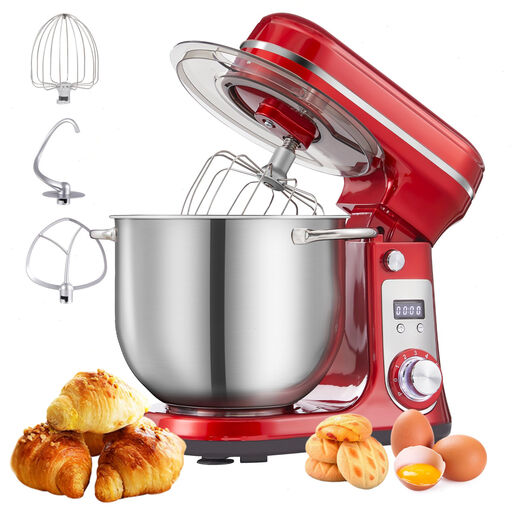
An option if you want to mix larger quantities as well as making a small cake.
The product title lists a 6 L bowl, six speed settings, a timer, an LCD display and a pulse function.
 No image available
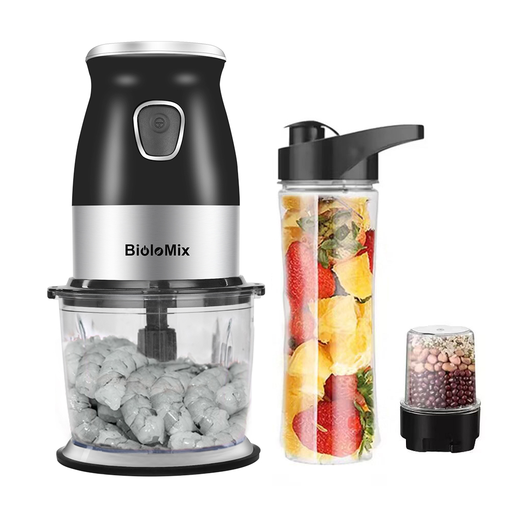
Consider this version if you want to mix batter and prefer controls operated with a single button.
The product title lists a 500 W motor, stainless steel blades and one-button operation.
 No image available
A larger bowl may suit you if you make other bakes as well as lunchbox cakes.
The product title lists a 5 L bowl, ten speed settings, a tilt-head design, a 400 W motor, and a whisk, dough hook and beater.
 No image available
A compact option to compare if you have limited worktop space and want to mix cake batter.
Kenwood Netherlands lists a 4-litre bowl for the Go KZM35.000GY, along with a K-beater, whisk and dough hook. The stated dimensions are 33,5 × 18 × 30 cm, in the order given in Kenwood’s product specifications.
 No image available
An option to compare if you have other mixing jobs as well as cake batter.
The product title lists a 5 L bowl, eight speed settings, a whisk, dough hook, beater and splash guard.
Use the mixing attachment or flat beater designed for cake batter, rather than automatically reaching for the dough hook used for bread. KitchenAid recommends starting on a low speed with its flat beater and stopping as soon as the ingredients are combined. Check the manual for your model.
No. The Netherlands Nutrition Centre (Voedingscentrum) advises against tasting raw cake batter because raw egg and flour may contain harmful bacteria. Young children are among those at greater risk, so bake the cake before putting it in a lunchbox.
For a plain cake, the Netherlands Nutrition Centre (Voedingscentrum) recommends storing it in a kitchen cupboard for seven days once opened, and wrapping it to prevent it from drying out. Don’t apply this advice automatically to cakes with perishable fillings or toppings; check the guidance for those particular ingredients.
According to the Dutch Government, there is no fixed statutory guarantee period in the Netherlands; you’re entitled to a product that works as it should. For many online purchases from a business, you have a 14-day cooling-off period, although there are exceptions. This is separate from your rights if a product is faulty, so check the terms for your specific purchase.
For electrical kitchen appliances sold in the Netherlands, Ondernemersplein outlines the applicable European safety requirements, including CE marking and an EU declaration of conformity from the manufacturer. Check the details for the specific appliance: CE marking is the manufacturer’s declaration, not an independent performance test.