
Bakers making small lunchbox cakes
You usually make one small cake or a few portions and want to know whether the beater can reach a small amount of batter.


For small batches, the key factor isn’t the bowl’s maximum capacity, but whether the beater reaches the amount of batter you usually make. KitchenAid Netherlands points out that ingredients can be left at the bottom if the beater doesn’t reach far enough down. Then compare the mixing beater, the space available and how much cleaning each model requires.
You usually make one small cake or a few portions and want to know whether the beater can reach a small amount of batter.
You want the mixer to do the hard work, but you have a small worktop or need to put the mixer away after use.
You make other bakes too and want to weigh ingredients in the bowl, or use an extra bowl or additional mixing accessories.
First, check whether the beater reaches the small amount of batter you usually make. Then compare the space required and how much cleaning is involved. Extra features are most useful if you’ll use them for other recipes too.
| What to consider | What should you look for? | Who will find this especially useful? |
|---|---|---|
| Mixing small batches | Compare the quantities in your recipe with the bowl and beater, and check while mixing whether the beater picks up the batter at the bottom. | If I’m making a small lunchbox cake, I want the beater to reach the amount of batter I usually make. Around 36% of consumers put mixing small batches first. |
| Kitchen space | Measure the available height and worktop space, including room to operate the mixer head. | If my worktop is short on space, I want to know whether the mixer will fit and be easy to put away after use. Around 29% of consumers name available kitchen space as their top consideration. |
| Cleaning | Check which bowl and attachments are dishwasher-safe for each model. | If I want to tidy up quickly after baking, I want to know which parts I’ll need to wash by hand. Around 21% of consumers put easy cleaning first. |
| Extra baking features | Check which accessories and bowls are included with the full model code, and whether you’ll use them. | If I make other recipes too, weighing ingredients in the bowl or having a second bowl could be handy. Around 14% of consumers give extra baking features top priority. |
A large bowl or high maximum capacity doesn’t tell you how little batter the mixer can mix effectively.
Compare the bowl and beater with the quantity in your usual recipe, and check whether the beater reaches the batter.
If the beater doesn’t pick up a small batch properly, you may need to scrape the bowl by hand or use a different mixing method.
Motor power alone doesn’t show how well a mixer handles a small amount of yoghurt cake batter.
For this recipe, compare the mixing beater, its reach in the bowl and the controls. Don’t treat wattage as a like-for-like test of how well the mixers handle batter.
Cleaning information applies to the specified model and parts, not automatically to every mixer or attachment.
Check the instructions for the bowl and each included attachment separately.
According to Bosch, the Serie 2 MUMS2EW00 has a 3.8 L bowl and basic accessories for mixing batter.
The Go KZM35.000GY is designed with compact dimensions, while the Titanium Chef Baker KVC65.001WH has a weighing function in the bowl.
The Artisan 5KSM175PSECA is worth comparing if you want to use a second bowl and several mixing attachments.
According to Bourgini, the Elements Kitchen Chef 4.5L has a bowl with a handle and three standard mixing attachments.
These stand mixers are options to compare for mixing batter. For small batches, pay particular attention to the beater, the space required and the accessories included.
 No image available
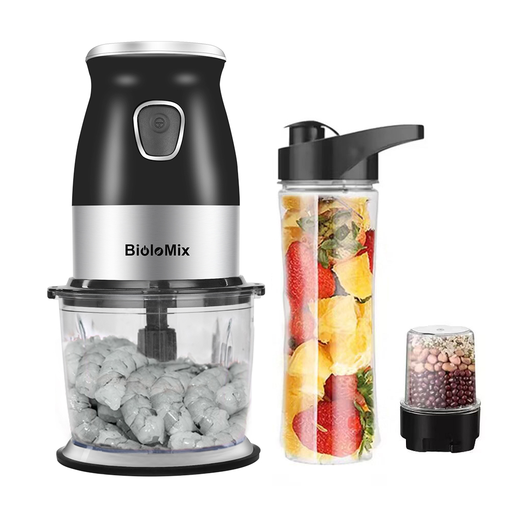
An option for mixing batter; the product name mentions stainless steel blades and one-button operation.
The product name specifies a 500 W motor and a bowl described as food-grade.
 No image available
Worth comparing if you also want to use a whisk and dough hook for mixing batter.
The product name specifies a 5 L bowl, 10 speeds, a tilt-head design, a 400 W motor, and a whisk, beater and dough hook.
 No image available
The K-beater makes this model worth comparing for cake batter. For small quantities, check whether the beater reaches your batter.
Kenwood lists the Go KZM35.000GY as 30 cm high. Check the dimensions and model code of the version you choose.
 No image available
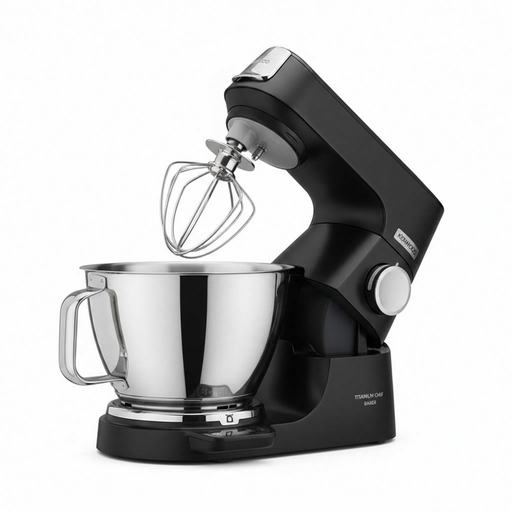
A stand mixer to compare if you make other recipes as well as small yoghurt cakes.
Check the full model code and which accessories are included with this version.
 No image available
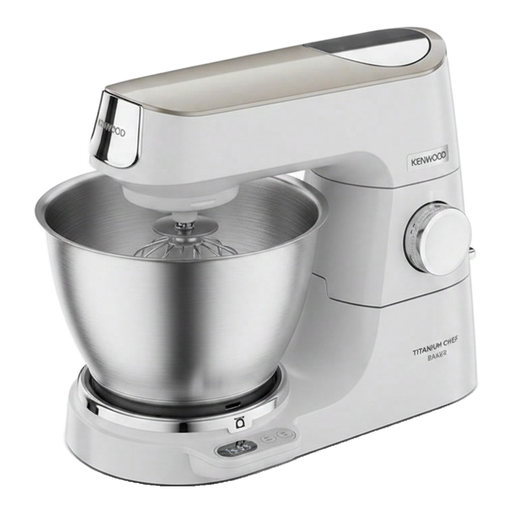
Worth comparing if you want to weigh ingredients directly into the bowl. Kenwood lists this feature for the KVC65.001WH.
Check that the full model code matches the version you choose.
For standard cake batter, KitchenAid describes the flat beater as suitable. Follow your recipe if you need to whisk eggs or egg whites until light and fluffy first; then gently fold in the dry ingredients.
Check while mixing that the beater reaches the amount of batter. KitchenAid Netherlands points out that ingredients can be left at the bottom if the beater doesn’t reach far enough down. Check the manual for your exact model before making any adjustments.
Follow the manual for your exact mixer and each of its parts. The Bourgini Elements manual warns against immersing the appliance in water and advises checking the mains voltage on the rating plate. Bosch lists dishwasher-safe accessories for the MUMS2EW00; this doesn’t automatically apply to other models.
For a standard cake, the Netherlands Nutrition Centre advises storing it in a kitchen cupboard and wrapping it well to stop it drying out. If the cake has a fresh, perishable yoghurt filling or topping, follow the storage advice appropriate for those ingredients.
According to ACM ConsuWijzer, the seller must resolve the issue free of charge if a product doesn’t do what you could reasonably expect when used normally. A separate manufacturer’s warranty doesn’t replace this right. Online purchases usually also come with a 14-day cooling-off period after delivery, subject to applicable exceptions.