
Home baker looking to make crumbly pastry
You want to choose the beater that suits your recipe and decide for yourself when to stop mixing. In its pâte sablée recipe, KitchenAid NL uses a flat beater and then rests the dough in the fridge.


Choose a stand mixer with the beater attachment that suits your shortcrust pastry recipe; a dough hook for bread dough isn’t automatically the right choice. Then check whether the bowl and controls suit the amount you’re making for lunch and how often you use the mixer. A larger bowl or higher wattage alone doesn’t prove that it will make better shortcrust pastry.
You want to choose the beater that suits your recipe and decide for yourself when to stop mixing. In its pâte sablée recipe, KitchenAid NL uses a flat beater and then rests the dough in the fridge.
You want to know whether your recipe quantity will fit in the bowl. Compare your ingredients with the guidance for the exact model; maximum quantities for cake batter or yeast dough don’t automatically tell you how much shortcrust pastry you can make.
You’re weighing up the space required, ease of use and cleaning against how often you’ll use the mixer. The Consumers’ Association describes a food processor as an alternative for tasks including slicing, grating and chopping, as well as for small amounts of dough that need only brief mixing.
Start with the beater and method specified in your recipe. Then compare the usable capacity and ease of use with how often you bake for several people.
| What to consider | What should you check? | Who is this important for? |
|---|---|---|
| Mixing the pastry | Check which beater your recipe calls for and what’s included with the full model code. Follow the recipe’s mixing instructions and resting time. | When I make shortcrust pastry, I want to use the right beater and stop mixing at the right time. Around 36% of consumers put choosing a mixer that mixes appropriately at the top of their buying priorities. |
| Portion size | Compare the ingredient quantities with the instructions for the exact model. Don’t interpret maximum quantities for cake batter or yeast dough as the mixer’s shortcrust pastry capacity. | For a shared lunch, I want to know whether my recipe will fit in the bowl in one go. Around 29% of consumers give the portion size they need the highest priority. |
| Controls and cleaning | Consider how easy it is to access the bowl and how many parts you’ll need to change, clean and store. Follow the cleaning instructions for each part. | When I’m baking just before lunch, I want the controls and washing up to fit into my preparations. Around 21% of consumers prioritise ease of use. |
| Cost and use | Decide how often you’ll use the mixer and which attachments you really need. Check whether they’re included with the version you’re considering. | I want to avoid buying more equipment than I’ll use later just for one lunch. Around 14% of consumers first consider the purchase cost in relation to future use. |
The right mixing attachment depends on the recipe. KitchenAid uses a flat beater for its pâte sablée recipe.
Check the recipe, the beater supplied and its compatibility with your model before buying an extra attachment.
A specialist beater for cutting butter into the flour may need to be bought separately.
A capacity in litres or a maximum quantity for another type of dough doesn’t automatically tell you how much of your shortcrust pastry recipe the mixer can handle.
Compare your recipe quantity with the instructions for the exact model and the mixture you plan to make.
The Dutch government explains that a manufacturer’s guarantee is in addition to your statutory rights. If there’s a fault, the retailer is your point of contact for a solution.
Check what an optional paid guarantee adds and keep your proof of purchase.
An additional guarantee may involve extra costs.
The Artisan 5KSM125 is worth considering if you’re looking for a mixer with a tilting head and a flat beater included.
The Titanium Chef Baker KVC85.004BK is worth considering if you’re looking at a K-beater and two mixing bowls.
The MUM58L20 is worth considering if you’re looking for a patisserie set and a 3.9-litre bowl.
The SMF04BLEU is worth considering if you’re comparing mixers with a flat beater and a 4.8-litre bowl.
These Joybuy product options are stand mixers for home baking. Compare the bowl and accessories listed for each version with your recipe and how you plan to use it.
 Image unavailable
An option to compare if you’re considering a stand mixer with a larger bowl; the stated capacity alone doesn’t tell you how much shortcrust pastry you can make.
The product name lists a 5.5-litre bowl, a 4.5-inch touchscreen and 11 speeds.
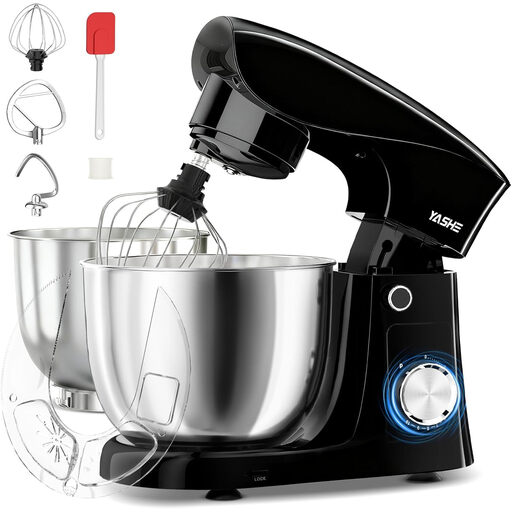 Image unavailable
An option to compare if you’re preparing different stages of a recipe and want a mixer with two bowls.
The product name lists two bowls, a tilting head and a dough hook.
 Image unavailable
An option to compare if you’re looking for a mixer with a bowl and several included beaters.
The product name lists a 5-litre stainless steel bowl, 10 speeds, 600 W, a dough hook, a beater, a whisk and a splash guard.
 Image unavailable
An option to compare if you’re looking for a mixer with a tilting head and several attachments.
The product name lists a 5-litre bowl, 10 speeds, a beater, a whisk and a dough hook. It also specifies a 400 W motor.
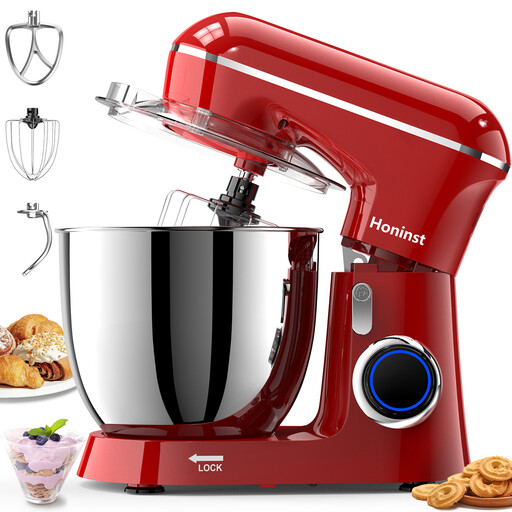 Image unavailable
An option to compare if you’re looking for a mixer with a tilting head and a range of attachments.
The product name lists a 6.5 qt bowl, 10 speeds, a dough hook, a whisk and a beater.
Follow your recipe and the instructions for your mixer. KitchenAid uses a flat beater for its pâte sablée and then rests the dough in the fridge for 30 minutes; this isn’t a universal speed or timing instruction for other mixers.
Compare the ingredient quantities with the guidance for the exact model and the type of dough you’re making. The bowl capacity or maximum quantity for cake batter or yeast dough doesn’t automatically tell you how much shortcrust pastry the mixer can handle.
The Dutch government states that electrical appliances placed on the EU market as products must meet the applicable safety requirements and carry a CE marking. Check the information for the specific model; a general product listing doesn’t establish that an individual item has been checked.
The Netherlands Nutrition Centre advises against eating raw dough, as both raw eggs and flour can contain harmful bacteria. Take extra care if young children, pregnant people, older people or anyone with a weakened immune system will be eating with you.
If you’re a consumer who has bought a product in the Netherlands, contact the retailer if it’s faulty. The Dutch government explains that the Netherlands doesn’t have a fixed statutory two-year guarantee period for every product; a manufacturer’s guarantee is in addition to your statutory rights.