Start with a flat beater that’s suitable for your exact model and shortcrust pastry recipe; a dough hook designed for bread dough isn’t automatically the right choice. Then work out how much pastry you’ll make per batch, and check the available workspace and cleaning options. A stated bowl capacity or capacity for cake or bread dough doesn’t prove how much shortcrust pastry it can handle.
Who is this buying guide for?
Workshop leader with small groups
You want to show participants the crumbly stage of pastry-making and mix a manageable portion for each group. The beater supplied and your recipe instructions are important here; for example, KitchenAid describes using a flat beater to make pâte sablée.
Organiser running back-to-back groups
You plan several batches of pastry and need to consider portion sizes, space for extra bowls and cleaning between preparations. The stated bowl capacity alone doesn’t tell you how much shortcrust pastry you can make per batch.
Workshop leader with limited workspace
You need to be able to position and store the mixer without getting in the way of other workstations or participants. Measure the space available and check that you can access the bowl while the mixer is in use.
What should you look for when choosing?
First, choose based on the mixing method and portion size per batch. Then check that the mixer will work well in your available space and can be cleaned easily between groups.
| What to consider |
What should you look for? |
Who is this most important for? |
| Pastry control |
Check that a suitable flat beater is included, and follow the mixing steps in your recipe. |
If I want to stop as soon as the pastry starts to come together, the right beater is my first priority; around 36% of consumers prioritise the mixing method for shortcrust pastry. |
| Back-to-back batches |
Work out the recipe weight and number of batches; only compare capacities for the same type of dough. |
When groups are baking one after another, I want to know how many batches my schedule will require; around 29% of consumers prioritise planning multiple portions. |
| Workspace |
Measure your worktop and check the dimensions, height and access to the bowl for the exact model. |
If my worktop is already shared with other workstations, the mixer needs to fit without getting in the way; around 21% of consumers prioritise positioning and storage. |
| Attachments and aftercare |
Compare the parts supplied and the cleaning instructions; check the warranty terms for your intended use. |
I want to know in advance which parts I’ll need to clean between preparations and what aftercare terms apply; around 14% of consumers prioritise attachments, cleaning and aftercare. |
What to watch out for when buying
-
Assuming bowl capacity or a bread dough maximum also applies to shortcrust pastry
The Bosch MUM58L20 has a stated maximum capacity for cake mixture and bread dough, but these quantities don’t confirm a maximum for shortcrust pastry. Assuming they do could mean you need to plan for more batches.
Work out portions using your own recipe and consult the instructions for the exact model.
Extra mixing rounds could take up more time during your workshop.
-
Assuming attachments from the same brand are interchangeable
Kenwood specifies particular Chef model ranges for the KAT50.000SS; Kenwood Go is a different product line.
Before buying, check the full model number and the attachment’s compatibility list.
An attachment that doesn’t fit your mixer could be a separate purchase you can’t use.
-
Relying on a product title alone for model details
A Joybuy listing for the Bosch MUMS2AW00 states 1000 W and 5.5 litres, while Bosch gives 700 W and 3.8 litres for this model. A Kenwood listing has a stand mixer in the title but describes a mixing bowl in the text.
Compare the full model number, the box contents and the manufacturer’s details. Don’t treat conflicting listings as confirmation of the specifications or product identity.
Brands to consider
KitchenAid
The Artisan 5KSM125EMH comes with a beater; KitchenAid Netherlands describes using it in a pâte sablée recipe.
- KitchenAid lists a 4.7-litre bowl and ten speeds for this model.
- The recipe doesn’t give a maximum quantity of shortcrust pastry for a workshop batch.
Kenwood
The Go KZM35.000GR is a compact model; attachments for other Kenwood product lines need to be checked separately for compatibility.
- Kenwood lists a 4-litre bowl and an included K-beater for the Go.
- The KAT50.000SS is listed for specific Chef models, but this doesn’t confirm that it’s compatible with the Go.
Bosch
The MUM58L20 comes with a patisserie set for a range of baking tasks.
- Bosch lists a 3.9-litre bowl and maximum capacities for cake mixture and bread dough.
- The maximum capacities for those types of dough don’t confirm how much shortcrust pastry it can handle.
Smeg
The SMF05PKEU comes with a flat beater and a beater with a flexible edge.
- Smeg lists a 4.8-litre bowl and ten speeds.
- The details given don’t specify a maximum quantity of shortcrust pastry for a workshop; also check that the model is available with the beater you want.
Stand mixers at Joybuy
These product options are worth considering for shortcrust pastry workshops; check the attachments, bowl details and portion sizes for each model against your recipe.
 No image available
HAUSWIRT M5 Max stand mixer, 5.5 litres
Worth comparing if you’re planning portions for each workshop batch; bowl capacity doesn’t prove how much shortcrust pastry it can handle.
The product name lists a 5.5-litre bowl and 11 speeds. The product details mention a K-beater and a dough hook.
View at Joybuy
 No image available
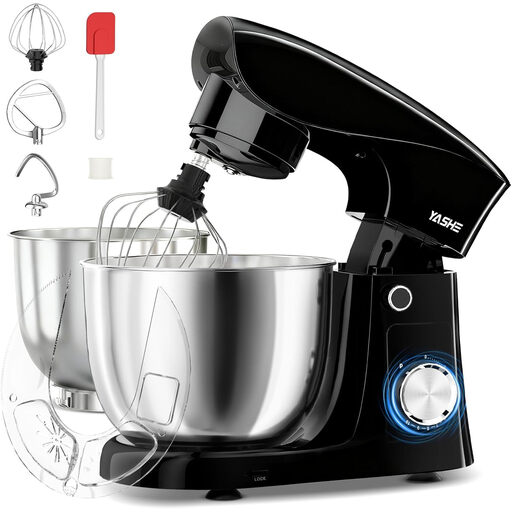
YASHE SM-2548A stand mixer with two bowls
The two bowls could come in handy if you’re planning to make different preparations one after another; tailor the portions to your recipe.
The product details list 4.5- and 5-litre bowls, a tilt-head design and a dough hook.
View at Joybuy
 No image available
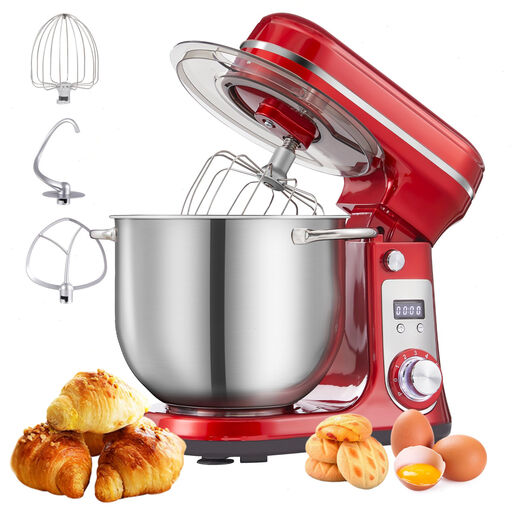
BioloMix BM601 stand mixer, 6 litres
It could be worth comparing if you’re looking for a stand mixer for making dough; check the instructions for the shortcrust pastry portion you need.
The product name lists a 6-litre bowl, a 1200 W motor and six speeds plus a pulse setting. The product details mention a tilt-head design.
View at Joybuy
 No image available
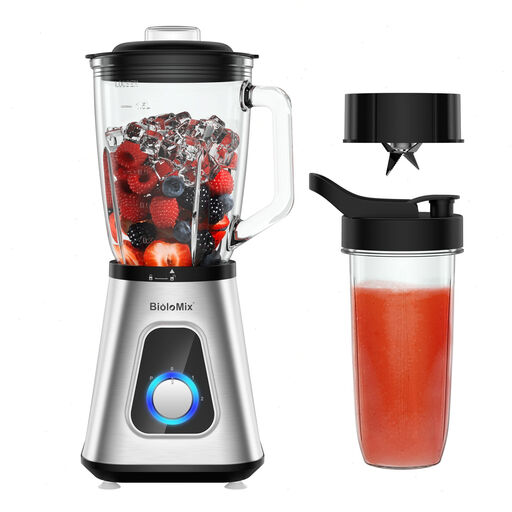
BioloMix SF701 stand mixer
A glass bowl could be useful if you want to see the ingredients as they mix; check that its capacity suits your workshop recipe.
The product name lists a 1.5-litre glass bowl and a 1300 W motor. The product details mention handling thick dough.
View at Joybuy
 No image available
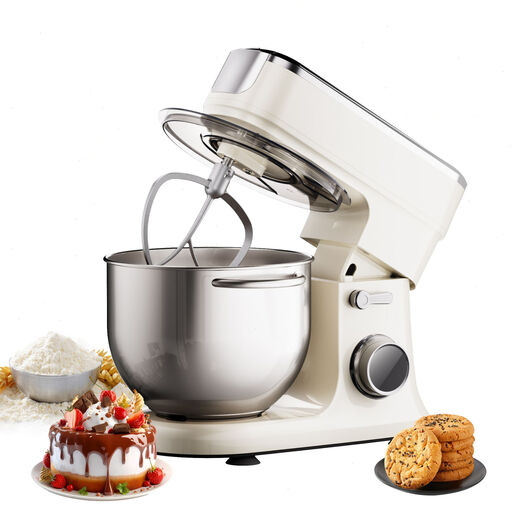
BioloMix BM606E stand mixer, 7 litres
It could be worth comparing if you’re planning larger batches; the stated bowl capacity isn’t a confirmed maximum for shortcrust pastry.
The product name lists a 7-litre bowl, a 1200 W motor and a digital OLED control panel.
View at Joybuy
Frequently asked questions
Should I use the dough hook or flat beater for shortcrust pastry?
Follow your recipe and the instructions for your mixer. KitchenAid uses the flat beater in its pâte sablée recipe and mixes after adding the flour until the dough starts to come together; Consumentenbond describes kneading bread dough for a long time with a dough hook.
How do I clean the mixer between workshop groups?
Follow the cleaning instructions for the bowl and each attachment, and clean all parts that come into contact with food between preparations. If you’re a business serving food to consumers, you also need to consider allergen information and preventing cross-contamination, as described by the NVWA.
Does the manufacturer’s warranty cover business use for workshops?
You can’t tell from the stated warranty period alone; check the terms for your intended use. For a consumer purchase, the legal guarantee provided by the seller is separate from any additional manufacturer’s warranty, as ACM ConsuWijzer explains.
What rules apply if participants eat or take home the baked goods?
If you prepare, process or sell food as a business, the NVWA explains that you must work with an HACCP food safety plan or an applicable hygiene code. If you serve food to consumers, you must also tell them about any allergens it contains. Whether this applies to your workshop depends on how it is actually run.
What should I check for electrical product safety?
Electrical appliances placed on the market in the Netherlands must comply with European product rules. The Dutch government outlines responsibilities including CE marking and the EU declaration of conformity; a product listing alone doesn’t prove that a specific item on offer complies with these rules.


