Choose a stand mixer with a flat beater that suits your recipe, and check whether it can mix small batches for a short time. A large bowl or high power rating alone tells you nothing about how well it will handle shortcrust pastry. Measure the space where you’ll use and store the mixer, and think about how the bowl and attachments will be cleaned. A compact model is more likely to suit you if you put your mixer away after use, while a larger bowl and extra features may be useful for other or bigger recipes.
Who is a stand mixer suitable for?
Bakers with limited storage space
You share your worktop and want to be able to put the mixer away after use. The Consumentenbond lists size as a factor to consider when choosing a food processor; Kenwood gives the dimensions of the Go KZM35.000GY as 33,5 × 18 × 30 cm.
Bakers who want to control the dough texture
You want to use a flat beater that suits your recipe and avoid working the dough for longer than necessary. KitchenAid uses a flat beater in its pâte sablée recipe; King Arthur Baking describes using a flat beater for pastry dough and warns against overmixing.
People sharing a mixer
Several people use the bowl and attachments, so cleaning them and putting everything back belong on your checklist. The Voedingscentrum recommends using clean equipment and washing your hands to prevent cross-contamination.
What should you look for when buying?
First, check that the attachment suits your recipe, then measure the space you have for using and storing the mixer. Finally, consider whether the cleaning requirements and any extra features will work for a shared kitchen.
| What to consider |
What to look for |
Who this matters to |
| Suitable mixing for shortcrust pastry |
Check which attachment comes with the exact model and what method your recipe recommends. |
If you want to make shortcrust pastry without mixing it for longer than your recipe requires, focus on choosing the right attachment. Around 36% of consumers prioritise suitable mixing for shortcrust pastry. |
| Worktop and cupboard space |
Measure the space for use and storage, including room to raise the head and reach the bowl. |
If you share your worktop, you’ll want to know whether the mixer will fit while you’re using it and can be put away afterwards. Space is the top priority for around 29% of consumers. |
| Cleaning when sharing |
Check the cleaning instructions and agree on who will clean the bowl, attachment and worktop after use. |
If several people use the mixer, you’ll want to leave the parts clean for the next person. Cleaning is the main priority for around 21% of consumers. |
| Capacity and other recipes |
Compare your recipe size with the limits for the exact model; bowl capacity doesn’t prove it can handle shortcrust pastry. |
If your housemates also make batters or larger recipes, a bigger bowl or another attachment may be worth considering. Around 14% of consumers prioritise versatility. |
Common buying mistakes
-
Assuming a large bowl or high power rating guarantees good shortcrust pastry
Stated capacities may apply to other types of preparation and aren’t a like-for-like test for shortcrust pastry. Overworking the dough can also affect its texture.
First, compare the attachment and method with your recipe. Then check the batch size specified in the manual for the exact model.
-
Choosing a separate beater based on the brand name alone
Kenwood lists specific Chef models as compatible with the KAT50.000SS; that doesn’t mean the beater will also fit the Go.
Compare the full model numbers of the mixer and attachment, and check which accessories are included with the version you’ve chosen.
-
Measuring only the storage height
A mixer with a tilting head also needs space for you to reach the bowl and attachment. KitchenAid describes the 5KSM3311X as a mixer with a tilting head.
Measure the storage space separately from the spot where you’ll actually use the mixer.
Brands to compare
Kenwood
The Go range may be worth considering if storage space is a factor. Kenwood lists a 4-litre bowl, a K-beater and dimensions of 33,5 × 18 × 30 cm for the KZM35.000GY.
- The stated dimensions help you compare the model with the storage space available.
- Kenwood says the KAT50.000SS is suitable for the Chef models it lists; check compatibility with your exact mixer.
Bosch
Bosch lists a 3,9-litre bowl and an integrated scale for the MUM5X720, which may suit you if you also make other baking recipes.
- An integrated scale may be useful if you want to weigh ingredients directly in the mixer.
- Bosch’s stated quantities for cake batter or yeasted dough aren’t an independent test or a guaranteed limit for shortcrust pastry. Also check which attachments come with the version you’re considering.
KitchenAid
KitchenAid describes the 5KSM3311X as a compact mixer with a tilting head and a 3,3-litre bowl. The brand uses a flat beater in its pâte sablée recipe.
- The stated capacity and recipe give you specific points to compare with your batch size and recipe method.
- The recipe doesn’t compare the 5KSM3311X with other mixers; check that the accessories fit your exact model.
Smeg
Smeg lists a 4,8-litre bowl for the SMF05RDEU, along with a flat beater and a beater with a flexible edge.
- The included attachments may be useful if you also want to use them for other recipes.
- Bowl capacity doesn’t tell you how the model handles a small batch of shortcrust pastry. Any mixing and stability benefits mentioned by Smeg are manufacturer claims.
Joybuy product picks
These Joybuy picks range from the compact Kenwood Go to mixers with larger stated bowl capacities or several attachments. Compare the version and the storage space available with your own recipe and kitchen.
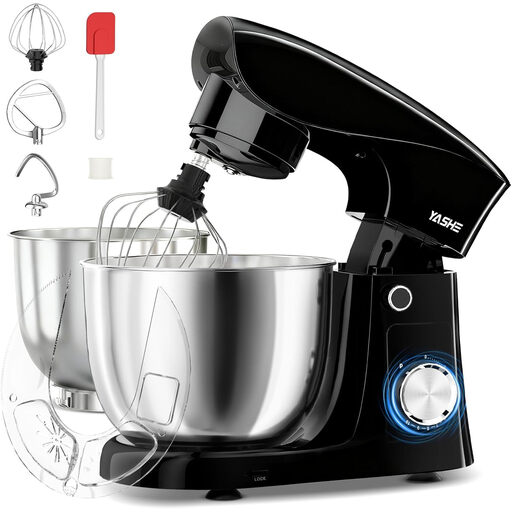 Image unavailable
YASHE SM-2548A stand mixer with two bowls
May suit you if you want to use several bowls in a shared kitchen; think about where you’ll store them, too.
The product name lists two bowls, a tilting head and a dough hook.
Joybuy
 Image unavailable
AUCMA stand mixer, 6 L, 6 speeds
May suit you if you want to compare a larger stated bowl capacity and several mixing attachments with your recipes.
The product name lists a 6 L bowl, six speeds, a tilting head, a dough hook, a whisk and a flat beater.
Joybuy
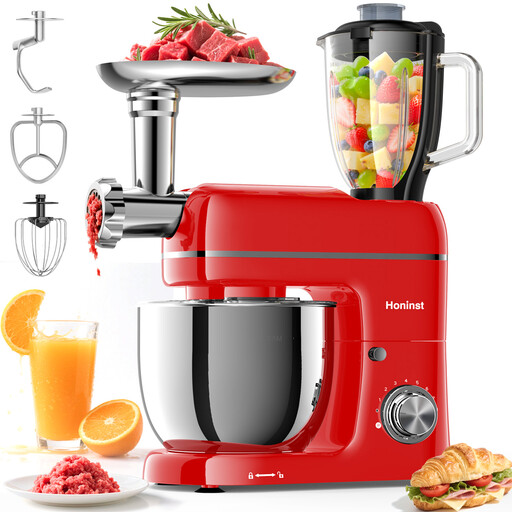 Image unavailable
Honinst 7-IN-1 stand mixer, 6.5 QT, 8 speeds
May suit you if you want to make other things as well as shortcrust pastry; allow for storage space for the mixer and its attachments.
The product name lists a 6.5 QT bowl, a tilting head, a dough hook, a flat beater and a whisk.
Joybuy
 Image unavailable
Kenwood Go KZM35.000GY
May suit you if you want to put the mixer away after use and use a K-beater for your recipe.
Kenwood lists a 4-litre bowl, a K-beater and dimensions of 33,5 × 18 × 30 cm.
Joybuy
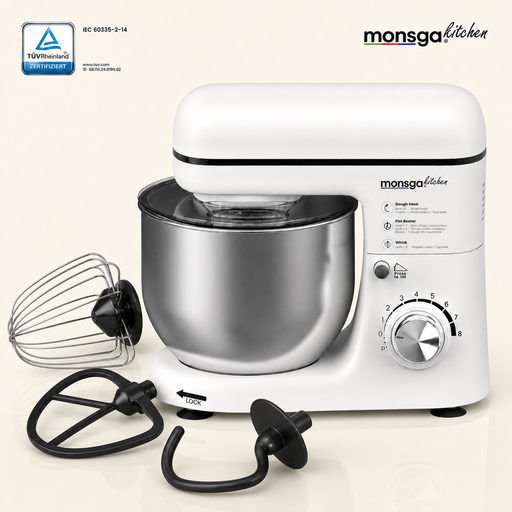 Image unavailable
MONSGA SM100, 5,0 L, 8 speeds
May suit you if you want to compare a flat beater and several speed settings with the method in your recipe.
The product name lists a 5,0 L bowl, eight speeds, a flat beater, a dough hook, a whisk and a splash guard.
Joybuy
Frequently asked questions
Should you use a dough hook or a flat beater for shortcrust pastry?
Follow the recipe for the dough you’re making. KitchenAid uses a flat beater for its pâte sablée recipe; King Arthur Baking describes using a flat beater for pastry dough and warns against overmixing. That doesn’t mean a dough hook is automatically suitable for shortcrust pastry.
What should you do after mixing in a shared kitchen?
Switch off the mixer before removing the bowl or beater, and clean the parts according to the manual for your model. Use clean equipment for the next preparation and wash your hands; the Voedingscentrum recommends this to prevent cross-contamination.
Do you need an extended warranty for a stand mixer?
Not necessarily. When you buy as a consumer, a product must conform to the sales contract; according to the Rijksoverheid, there is no fixed statutory warranty period in the Netherlands. Compare the terms of any additional warranty with exactly what it covers.
What should you check about a mixer’s electrical specifications?
Check the electrical specifications, instructions for use and applicable markings for the specific version. The European Commission explains that the Low Voltage Directive applies to equipment within its scope and stated voltage limits; according to the European Union, CE marking is required only for products covered by rules that require it. CE marking is not an assessment of mixing performance.


