
Lunch baker who wants to mix briefly
If you’re making savoury scones, you’ll want to stop as soon as the dough comes together. KitchenAid Netherlands and From Pauline’s Kitchen recommend mixing briefly and warn against over-kneading.


Choose a stand mixer that lets you start gently and stop as soon as the scone dough comes together; there’s no need to knead this dough for long. Then compare your recipe quantity with the capacity specified for the model, and take the accessories and space required into account. A larger bowl or more features don’t, on their own, mean a machine will make better scones.
If you’re making savoury scones, you’ll want to stop as soon as the dough comes together. KitchenAid Netherlands and From Pauline’s Kitchen recommend mixing briefly and warn against over-kneading.
If you’re making a recipe for a group lunch, compare the weight of the ingredients with the capacity specified for that type of dough. A recipe from Rutger Bakt makes 15–20 scones, but that number alone doesn’t tell you whether one machine can handle the whole batch.
If space is tight, compare the appliance’s dimensions and included parts with the baking you actually do. Consumentenbond highlights space and ease of use as factors to consider when choosing a kitchen machine.
First decide how you want to mix the dough and how much you make per recipe. Then compare the dimensions and attachments of the exact model with your kitchen and other baking needs.
| What to consider | What should you look for? | Who is this important for? |
|---|---|---|
| Brief, controlled mixing | Check that the exact model has a suitable mixing attachment and a manageable low speed. Follow the recipe for the method and when to stop. | If I want to stop as soon as the scone dough comes together, control over mixing is my main priority. Around 36% of consumers in this lunch scenario put mixing control first. |
| Batch size for lunch | Compare the total weight of your recipe with the capacity information for that type of dough; divide the mixture into batches if needed. | If I’m baking for several guests, I want to know whether my recipe will fit in one batch. Around 29% of consumers prioritise the quantity per recipe. |
| Space and storage | Measure the space available and check the dimensions, detachable parts and cleaning instructions for the exact version. Kenwood lists dimensions of 33,5 × 18 × 30 cm for the Go KZM35.000GR. | If there’s limited space on my worktop or in my cupboard, I want to know how much room the mixer and its parts will take up. Around 21% of consumers put space and storage first. |
| Other baking tasks | Compare which whisk, mixing attachment and dough hook are included, and which parts may be available separately. Consider any additional warranty separately from your statutory rights. | If I want to use the mixer for other baking tasks too, I’ll check which attachments I actually need. Around 14% of consumers prioritise versatility and aftercare. |
Scone recipes call for brief mixing; instructions for kneading bread dough for a long time aren’t automatically suitable for scones.
Choose the attachment recommended by your recipe and stop as soon as the dough just comes together.
Stated capacities may apply to cake batter or yeast dough, and don’t automatically tell you how much scone dough the machine can handle.
Compare the weight of your recipe with the guidance for the exact model, and make several batches if needed.
A paid-for warranty package is separate from the statutory rights consumers have in the Netherlands. ACM ConsuWijzer explains that if a product breaks sooner than expected during normal use, the seller must offer an appropriate solution.
First check which statutory rights apply, then look separately at what an additional package offers.
The Artisan 5KSM125EMH is a baking-focused model that KitchenAid Netherlands lists with a mixing attachment, whisk and dough hook.
Go and kMix are different product ranges: one may appeal if space is limited, while the other may be worth considering when comparing the included baking attachments.
The MUM5 series may be worth considering if you’re comparing other kitchen tasks and available accessories as well as making scones.
These stand mixers let you compare speed settings, stated bowl capacity and features with your recipe and requirements. Check the capacity for the type of dough you’re making, and which attachments are included with the version you choose.
 No image available
You can compare the stated speed settings and bowl capacity with how you want to mix your recipe and the quantity you’re making.
Bowl: 5,5 litres. 11 speeds. 4,5-inch LED touchscreen.
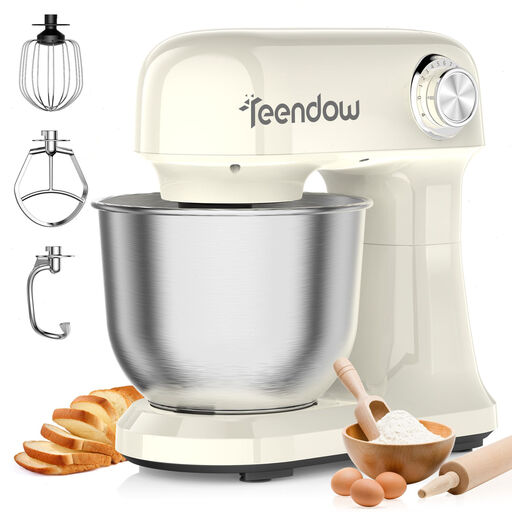 No image available
The stated speed settings and bowl capacity give you details to compare with your own recipe; they don’t, on their own, indicate how much scone dough the machine can handle.
12 speeds. Bowl: 5 qt. Tilt-head design.
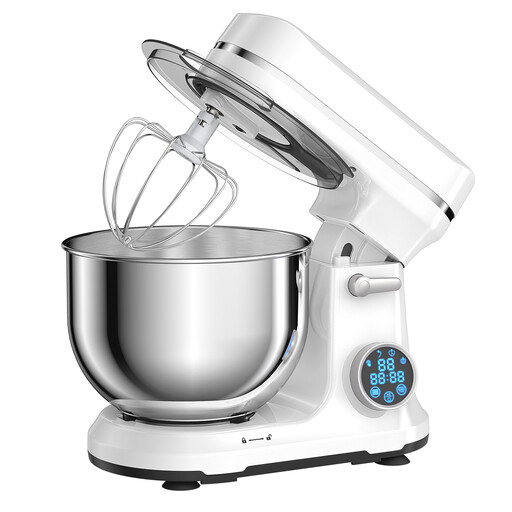 No image available
The adjustable speeds and stated bowl capacity are useful points of comparison for your recipe; check the capacity for the dough you want to make.
Bowl: 5 L. 11 adjustable speeds. Planetary mixing system. OLED touchscreen. 1200 W.
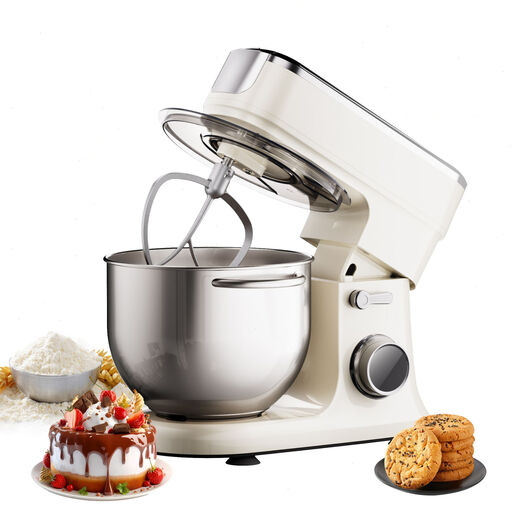 No image available
The stated bowl capacity can help you compare models, but check the guidance for the quantity of scone dough you want to make.
Bowl: 7 L. Adjustable speed settings. Digital OLED touchscreen. 1200 W.
 No image available
The stated pulse function may be useful if you want to mix in short bursts; follow the recipe to judge when to stop.
Bowl: 5 L. 10 speeds. Pulse function. Tilt-head design. Mixing beater, dough hook and whisk.
No. The scone recipes consulted stop machine mixing as soon as the dough just comes together, or warn against over-kneading. Instructions for kneading bread dough for a long time aren’t a guide to making scones.
Follow the instructions for the exact model. Switch off the machine before attaching a mixing tool, and if a mixer won’t start, check that all the parts are properly fitted. Follow the instructions for each individual part when cleaning.
No. ACM ConsuWijzer explains that statutory guarantees apply alongside any warranty offered. If a product breaks sooner than you could reasonably expect during normal use, the seller must offer an appropriate solution. Check separately what an additional package offers.
For an online purchase, there is generally a statutory cooling-off period that, according to ACM ConsuWijzer, ends 14 days after delivery. Check the terms and any exceptions that apply to your purchase.
Electrical appliances placed on the market in the Netherlands are subject to European product regulations. The Low Voltage Directive applies to household electrical equipment within the relevant voltage range. A CE mark is a declaration by the manufacturer, not an independent quality mark; check the version intended for the market and the product information for the specific product.