
Baking for a group
You want to make several batches of savoury scones and are looking for a practical balance between bowl capacity and batch planning. The Ontdek de Geit recipe is an example of the brief mixing step that matters here.


For savoury scones, a stand mixer with a suitable beater and a low speed to get you started gently is a sensible choice: the Ontdek de Geit recipe calls for cold butter and brief mixing. Plan your batch size using the guidance for the exact model and your own recipe; bowl capacity in litres or figures for cake batter and yeasted dough do not automatically set a limit for scone dough.
You want to make several batches of savoury scones and are looking for a practical balance between bowl capacity and batch planning. The Ontdek de Geit recipe is an example of the brief mixing step that matters here.
You want to briefly mix cold butter with the other ingredients and avoid overworking the dough. Arla also advises against mixing the dough for too long.
You want to weigh ingredients, change attachments and clean between different preparations without unnecessary steps.
For savoury scones, a suitable beater and control over brief mixing are important. Then decide how many batches you want to make at a time.
| What to consider | What to look for when buying | Who is this important for? |
|---|---|---|
| Brief, controlled mixing | Check whether a beater is included and whether you can start gently at a low speed. | If you want to avoid overmixing scone dough, control over mixing comes first; around 36% of consumers prioritise this concern. |
| Batches for a coffee morning | Compare the quantity in your recipe with the capacity guidance for the specific model. | If you’re baking for a group, you’ll want to estimate in advance how many batches you’ll need; around 29% of consumers prioritise batch size. |
| Weighing and cleaning up | See whether features such as built-in scales or included accessories suit your way of working and cleaning routine. | If several volunteers are making batches one after another, weighing and cleaning up can shape the workflow; around 21% of consumers prioritise practical features. |
| Purchase and aftercare | Check which bowl and attachments come with the exact model, and review the warranty terms separately. | If you don’t want unused accessories for an occasional coffee morning, what you actually need matters most; around 14% of consumers prioritise purchase and aftercare. |
Manufacturers give capacity figures for different types of preparation. These figures are not interchangeable as a limit for scone dough.
Weigh the ingredients for each batch and consult the instructions for the exact model.
A smaller, suitable capacity may mean extra mixing and cleaning.
The Ontdek de Geit savoury scone recipe calls for cold butter and brief mixing; Arla warns that overmixing can result in a firm, tough texture.
Check the texture as you mix and stop as soon as the dough just comes together, as directed by your recipe.
Overmixing can make the scones less light and fluffy, and may mean you need to bake another batch.
A different model code may refer to a different colour or version, with possible differences in capacity or included accessories.
Before buying, compare the full model code, bowl and parts included with that version.
According to Kenwood, the kMix KMX750ARD has a 5 L bowl and a K-beater.
According to Bosch, the MUM5X720 combines a 3.9 L bowl with built-in scales and a pulse setting.
According to the manufacturer, the Artisan 5KSM125EER has a 4.7 L bowl, ten speeds and a flat beater.
The Assistent Original AKM6230 has a rotating 7 L bowl.
According to Smeg, the SMF04BLEU has a 4.8 L bowl and ten speeds.
These stand mixers offer a range of bowl sizes and speed settings to consider when planning batches of savoury scones.
 No image available
Bowl capacity can help you plan batch sizes; match the actual amount of dough to your recipe and the guidance for this model.
The product title lists a 5.5 L bowl, an LED touchscreen and 11 speeds. According to the product description, the bowl and accessories are not dishwasher-safe.
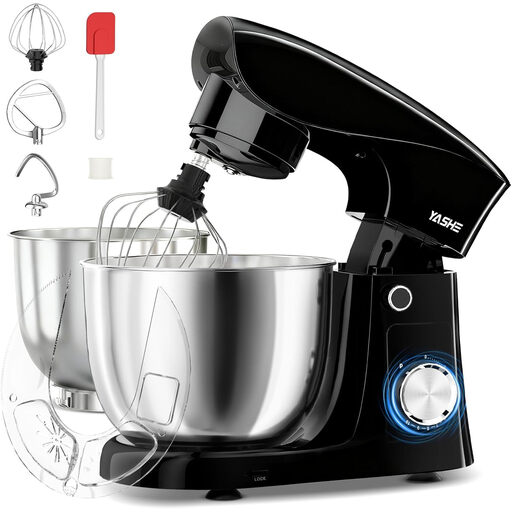 No image available
The two listed bowl sizes may be useful if you’re making different preparations one after another; check the recipe quantity for each batch.
The description lists 4.5 L and 5 L bowls, ten speeds, a pulse function, a dough hook, a beater and a mixing hook.
 No image available
The listed bowl capacity and speed settings are worth considering when planning a recipe batch; check the model instructions for use with scone dough.
The product title lists a 4.5 L stainless steel bowl, a dough hook, six speeds and a pulse function.
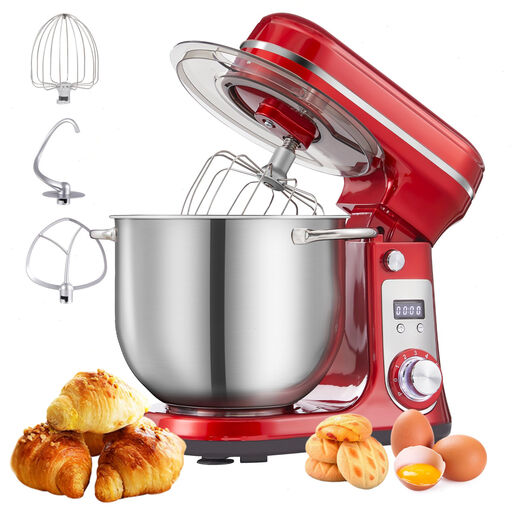 No image available
Bowl capacity can help you plan batch sizes, but it doesn’t determine on its own how much scone dough you should mix at once.
The product title lists a 6 L bowl, an LCD screen, a timer, six speeds and a pulse setting.
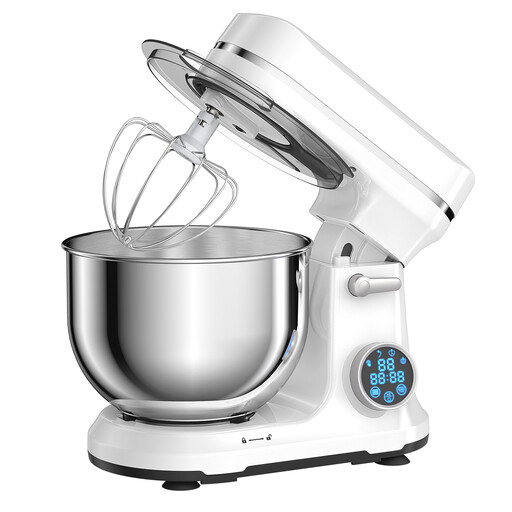 No image available
Bowl capacity and adjustable speeds are useful details to compare with your recipe and the instructions for use.
The product title lists a 5 L bowl, a planetary mixing system, an OLED touchscreen and 11 adjustable speeds.
Follow your recipe’s instructions: the Ontdek de Geit savoury scone recipe mixes cold butter with flour and only mixes briefly once the liquid has been added. That makes an included beater a relevant buying consideration; don’t knead the dough for a long time as you would bread dough.
You can’t tell from bowl capacity alone. Work out the ingredients for the number of scones you need and compare them with the instructions for the exact model; capacity figures for cake batter or yeasted dough don’t automatically apply to scone dough.
Clean the bowl, beater and work surfaces you’ve used according to the appliance instructions, especially when handling different ingredients. When food is prepared for consumers, the Netherlands Food and Consumer Product Safety Authority (NVWA) highlights the importance of working hygienically and providing information about allergens present; the exact requirements depend on how the coffee morning is organised.
When you buy as a consumer, you’re entitled to a product that works properly; according to the Dutch government, there is no fixed statutory warranty period in the Netherlands. A manufacturer’s warranty or an extended warranty is additional. If a product is faulty, contact the seller; check the terms separately if an organisation is buying the mixer for business use.
It depends on the activity. According to the NVWA, someone who sells food once a year does not need to register with the NVWA for that purpose; for more frequent sales, the NVWA refers to registration and a food safety plan. Businesses offering non-prepacked food must provide information about allergens present. Don’t automatically apply these requirements to every gathering: sales and the role of the provider are what matter.