
Baker making light, fluffy picnic scones
You want to mix the butter and flour briefly, stopping as soon as the dough comes together. The controls and the right attachment matter more than prolonged kneading.


For savoury picnic scones, choose a stand mixer that lets you mix briefly at a low speed and stop as soon as the dough comes together; prolonged kneading isn’t the aim. KitchenAid Netherlands recommends mixing briefly at a low speed, while Kenwood warns that over-kneading can make the dough tough. Choose the bowl size to suit your planned batch, and consider extra features based on the other things you bake: Bosch Netherlands lists a 3.8 l bowl for the MUMS2EW01, while Kenwood Netherlands lists a 5 l bowl for the KVC65.001WH. These capacities are not tested scone-making capacities.
You want to mix the butter and flour briefly, stopping as soon as the dough comes together. The controls and the right attachment matter more than prolonged kneading.
You may be making several batches for a picnic and want to compare the bowl capacity with the quantities in your recipe. A stated bowl capacity doesn’t automatically tell you how much scone dough it can handle.
You want to make savoury scones without giving up valuable cupboard space for features you rarely use. Think about storage and cleaning, too.
Start with the level of mixing control your recipe requires, then choose a bowl to suit your batch size. Extra features are most relevant if you’ll also use the mixer for other baking.
| What to consider | What should you check? | Who should prioritise this? |
|---|---|---|
| Controlled mixing | Check whether a suitable attachment and a low speed are available. KitchenAid Netherlands recommends mixing briefly at a low speed; Kenwood warns in its recipe that over-kneading can make the dough tough. | When I’m mixing butter and flour for scones, I want to keep an eye on the dough and stop at the right time. Around 38% of consumers rank mixing control as their top priority. |
| Batch size and bowl | Compare the quantities in your recipe with the bowl and the specifications for the exact model. Bosch Netherlands lists a 3.8 l bowl for the MUMS2EW01; Kenwood Netherlands lists 5 l for the KVC65.001WH. These capacities don’t tell you how much scone dough you can mix at once. | When I’m baking for a group, I want to know whether my planned batch will fit in the bowl or if I’ll need to make several batches. Around 23% of consumers put batch size first. |
| Space and simplicity | Compare the appliance dimensions with your storage space and check which parts are included with your chosen model. Bosch Netherlands lists dimensions of 266 × 266 × 277 mm for the MUMS2EW01. | As an occasional baker, I want a machine that’s easy to store and clean, without features I’ll hardly use. Around 23% of consumers rank space and simplicity as their top priority. |
| Extra baking features | Check which features and attachments are included with the model variant and which are available separately. Weigh them against the other recipes you plan to make with the mixer. | If I also use the mixer for other baking, extra features could influence my choice. Around 16% of consumers put these features first. |
The recipes cited focus on mixing briefly and stopping at the right moment. A power rating on its own isn’t a comparative test of scone-making performance.
First, choose a suitable attachment and a low speed. Consider the power rating only in relation to other tasks you’ll actually ask the mixer to do.
Bowl capacity and the manufacturer’s stated dough capacity are different specifications. Capacity figures for other types of dough don’t automatically tell you how much scone dough will mix well.
Compare the quantities in your recipe with the information for the exact model, and divide a large batch into smaller portions if needed.
According to the Dutch government, your right to a product that works properly is separate from a manufacturer’s warranty or an extended warranty. If there’s a problem, contact the seller.
Check what cover an additional package offers and compare it with your existing rights before you decide.
The food safety of perishable products during transport has nothing to do with your stand mixer. The Netherlands Nutrition Centre recommends carrying chilled products in a cool bag and taking them out of the fridge shortly before you leave.
According to the Netherlands Nutrition Centre, throw away products that normally need to be refrigerated if they’ve been unrefrigerated for more than two hours. Plan transport and chilling separately from your mixer purchase.
The Bosch Serie 2 MUMS2EW01 is a more compact, basic option to compare if you usually make one recipe at a time.
The Artisan 5KSM125EER is an option to compare if you also want to use your mixer for other recipes.
The Titanium Chef Baker KVC65.001WH is an option to compare if you want to weigh ingredients directly into the bowl.
These Joybuy products are stand mixers for mixing and baking. Compare the controls, included attachments and bowl specifications with your recipe, planned batch size and available space.
 Image unavailable
Compare this model if you’re looking for a tilt-head mixer with a 6 l bowl; the bowl capacity doesn’t guarantee how much scone dough it can handle.
The product name lists six speeds and a power rating of 450 W. Note the stated usage limit: don’t run it for more than 6 minutes at a time without a break.
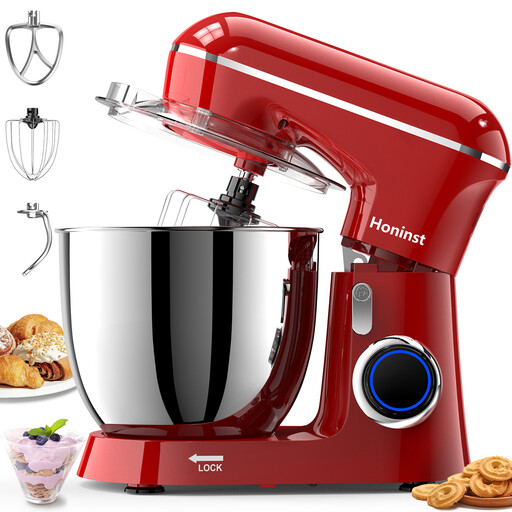 Image unavailable
Compare this model if you’re looking for a 6.5QT bowl and multiple speed settings; bowl size alone doesn’t determine how much scone dough you can mix.
The product name lists ten speeds and a tilt-head design.
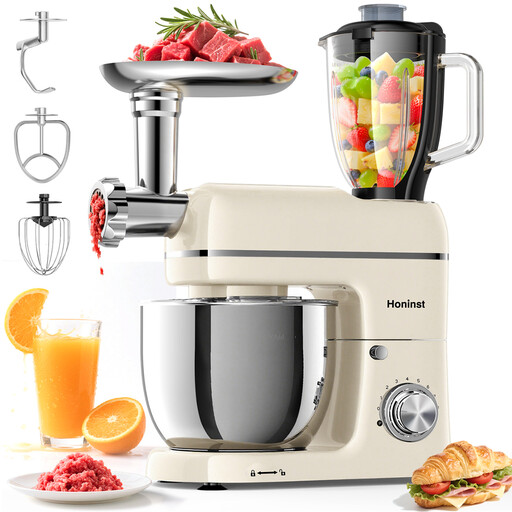 Image unavailable
Compare this model if you want to factor in other kitchen tasks as well as mixing; check which features you’ll need for your recipes.
The product name lists a 6.5 QT bowl, eight speeds, a blender and a meat grinder. The bowl capacity doesn’t guarantee how much scone dough it can handle.
 Image unavailable
Compare this model if you’re considering a Kenwood Chef XL for a variety of baking tasks. Choose one to suit your recipe and check which attachments are included with this model.
The product information states that the appliance isn’t intended for use by children under 8 years old. Children aged 8 and over may use it only under supervision and after receiving suitable instruction.
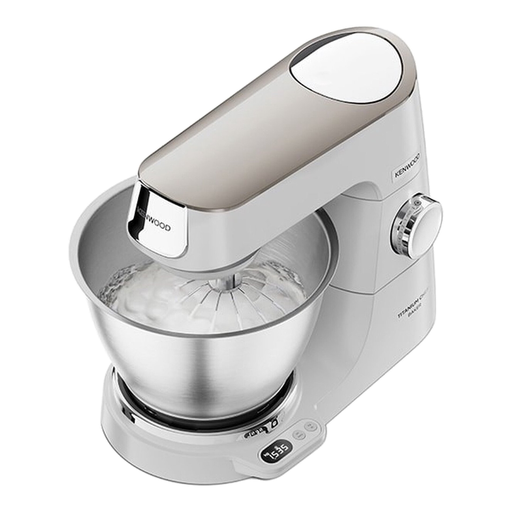 Image unavailable
Compare this XL model if you want to make other baked goods as well as savoury scones. Before choosing, check which features and attachments are included with this model.
The product information states that the appliance isn’t intended for use by children under 8 years old. Children aged 8 and over may use it only under supervision and after receiving suitable instruction.
Follow your chosen recipe and the instructions for your mixer. KitchenAid Netherlands’ savoury recipe mentions both a dough hook and a flat beater, and recommends mixing briefly at a low speed; another KitchenAid recipe uses the dough hook. Prolonged kneading isn’t a general requirement for scones.
Stop as soon as the dough comes together, as directed by the recipe, and use cold butter if the recipe specifies it. Kenwood warns that over-kneading can make the dough tough; the recipe cited uses a food processor and isn’t a test of a stand mixer.
Carry products that normally need to be chilled in a cool bag, and take them out of the fridge shortly before you leave. According to the Netherlands Nutrition Centre, you should throw away these products if they’ve been kept unrefrigerated for more than two hours. This isn’t a specific storage time for every type of scone or filling.
According to the Dutch government, when you buy as a consumer you’re entitled to a product that works properly, and the seller is your point of contact if there’s a fault; a manufacturer’s or extended warranty is additional cover. For distance purchases, you’ll often have a 14-day cancellation period. Check the applicable terms and who the seller is.
The Dutch government states that electronic appliances sold in the EU must carry a CE marking. Check the marking and product information for the specific model and seller.