
One-off bring-and-share baker
You want to make savoury scones without buying an appliance that will take up space afterwards; mixing by hand is still a practical option.


For a one-off bring-and-share, a stand mixer may not be worth buying: you can make scone dough by hand, while a mixer is most useful if you’ll use it regularly afterwards. If you do choose one, look for a low speed and mix briefly with a suitable attachment. Bowl capacity, storage space and cost all matter, but a larger capacity doesn’t mean a mixer will work better with a small batch of scone dough.
You want to make savoury scones without buying an appliance that will take up space afterwards; mixing by hand is still a practical option.
You want to keep using the mixer after the bring-and-share and are looking for control over gentle mixing, while keeping the purchase cost in mind.
You want to bake more often, but need to be able to store the stand mixer and choose a bowl size that suits the recipes you usually make.
Choose this if: you’re making one recipe and don’t want to buy or store an appliance.
Bear in mind: it takes more effort, but you can feel when the dough has just come together.
Choose this if: you bake regularly and have limited storage space.
Bear in mind: bowl capacity and the amount of dough each model can handle vary.
Choose this if: you want to use the mixer for other baking or to make several batches.
Bear in mind: the extra bowl space takes up room and comes at a cost; first, work out the quantity in your recipe.
| Factor to consider | What should you check? | Who is this most relevant to? |
|---|---|---|
| Mixing control | Check whether there’s a low-speed setting and which beater or dough hook is included. Follow the mixing time in your recipe and stop as soon as the dough has come together sufficiently. | If you want to mix the butter in briefly and keep the crumbly texture, it’s important to control when you stop mixing. Around 36% of consumers put mixing control first. |
| Purchase and future use | Think about which other recipes you’ll actually make and check which attachments are included. Also look at the warranty terms and the cost of any separate parts. | If you only need the mixer for this bring-and-share, you can also make the dough by hand. Around 29% of consumers prioritise the purchase cost. |
| Use and storage | Measure your worktop and storage space, then check the dimensions of the exact model, including the space needed for the bowl. | If you’re short on cupboard space, you’ll want to know whether the mixer is easy to put away after use. Around 21% of consumers say storage space is their main priority. |
| Batch size | Decide how many scones you’re making and how many batches of your recipe that requires. Then compare the bowl capacity with the manufacturer’s limit for that particular preparation. | If you’re making dough for several guests, you’ll want to know whether your recipe will fit in the bowl at once or needs to be split into batches. Around 14% of consumers prioritise the batch size they need. |
Motor power alone doesn’t tell you how well you can control the short mixing stages needed for scone dough.
First, compare the low-speed settings, the attachments included and the method in your recipe. Treat wattage as a model specification, not a test result for scones.
Manufacturers specify capacities for different preparations. The quantity and mixing time for your scone recipe may differ.
Use your own recipe as a guide and check the relevant manufacturer limit. If necessary, make several smaller batches.
Making several batches takes extra time.
Paying for an extended warranty doesn’t automatically replace your statutory rights if a product is faulty.
Read the terms to see what additional cover is offered, and keep your proof of purchase. The Dutch Government outlines consumers’ rights in the Netherlands and states that there is no fixed statutory warranty period.
The Elements Kitchen Chef 4.5L is a model to consider if purchase cost is a major factor.
The Kenwood Go KZM35.000GY is a compact option for anyone who wants to use their mixer regularly but has limited storage space.
The MUMS2EW00 is a Series 2 model with a 3.8-litre bowl, designed for a range of baking tasks.
The Classic 5K45SSEPL is a model to consider if you want to use your stand mixer for regular baking as well.
These Joybuy products are stand mixers for baking. Compare the listed attachments, speeds and bowl capacities with your recipe and available storage space.
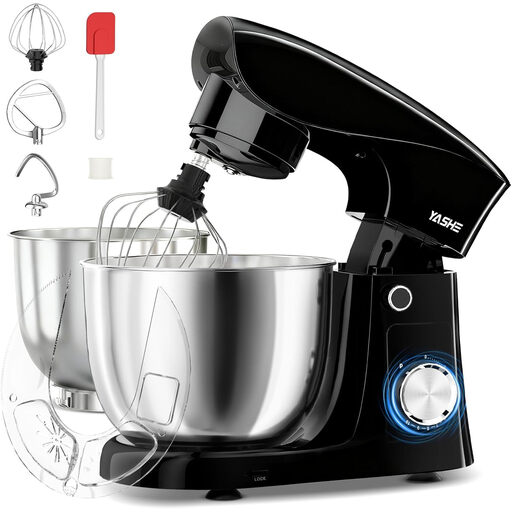 Image unavailable
An option to consider if you want to use a dough hook for baking.
The product description lists 4.5-litre and 5-litre bowls that nest inside each other for storage. The title mentions a tilt head, dough hook, ten speeds and a pulse function.
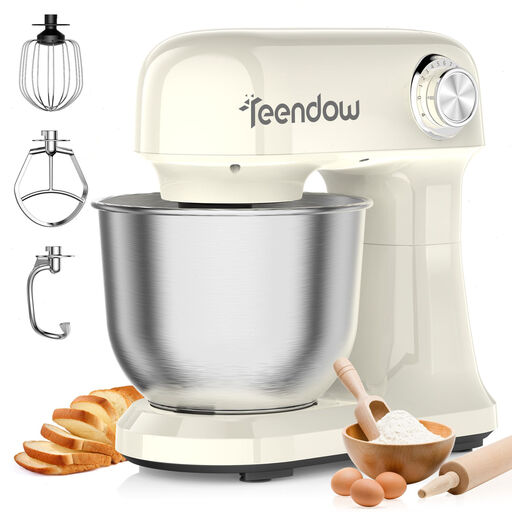 Image unavailable
The listed dough hook may suit baking tasks that call for this attachment.
The title lists a 5 qt bowl, twelve speeds and a tilt head. Check that the bowl size suits the quantity in your recipe.
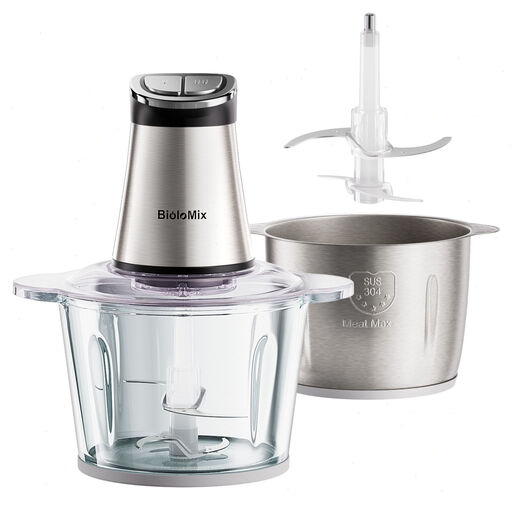 Image unavailable
The listed speeds and bowl capacity can help you compare it with the quantity you want to make.
The title lists a 3-litre bowl, two speeds and a timer display. Check which attachment is included with the product for your recipe.
 Image unavailable
The listed dough hook may be useful if you’re looking for that attachment for your baking.
The product listing mentions a whisk, beater and dough hook. Check the specifications for the exact version and the quantity the manufacturer allows for your preparation.
 Image unavailable
An option to compare if you’re looking for a dough hook and several mixing speeds.
The title lists a 5-litre bowl and a tilt head. The product description mentions ten speeds, a pulse function, and a whisk, dough hook and beater.
Not for every recipe: in its own savoury scone recipe, KitchenAid uses a dough hook or flat beater and mixes briefly on a low speed. Follow the method in your own recipe, and don’t automatically use settings intended for bread dough.
Stop when the mixture is crumbly or the dough has just come together, as directed by your recipe. Start with cold butter and handle the dough as little as possible afterwards. If you’re using a mixer, keep an eye on the mixing process.
In the Netherlands, you’re entitled to a product that works as it should, and there’s no fixed statutory warranty period, according to the Dutch Government. If there’s a fault, read about the rights that apply to your situation and check whether an extended warranty really offers additional cover.
The Netherlands Food and Consumer Product Safety Authority says that CE marking is compulsory for electrical products sold in the Netherlands as electrical consumer products under the relevant rules. The marking isn’t an independent assessment of a specific model’s mixing performance.