For savoury scone dough, a stand mixer with the attachment specified in your recipe and a low, adjustable speed is a practical starting point. KitchenAid Netherlands recommends mixing briefly at a low speed so the cold butter stays crumbly. Don’t choose a bowl based on capacity alone: figures given for cake batter or yeast dough don’t confirm how much scone dough it can handle. Use the recipe quantity per batch as your guide, and factor in any extra bowls, attachments and worktop space you’ll need if you’re actually using them during the workshop.
Who is this choice for?
Workshop baker aiming for light scones
You want to mix cold butter and savoury additions briefly, stopping as soon as the dough has come together sufficiently according to the recipe. KitchenAid Netherlands describes this approach for savoury scones.
Organiser preparing batches one after another
You may be planning several mixing sessions and comparing the recipe quantity per batch with the manual for the exact model. Bosch Netherlands and Kenwood Netherlands list capacities for other types of dough; these aren’t confirmed limits for scone dough.
Baker with limited worktop space
You want to leave room for ingredients and shaping the scones. So compare the listed external dimensions and the attachments supplied with your chosen model, as specified by Kenwood Netherlands and Bosch Netherlands.
What should you look for?
Start with the texture your recipe calls for, then decide on the quantity per batch and check that the mixer, bowl and attachments will fit in your workspace.
| What to consider |
What should you check? |
Who should pay particular attention? |
| Brief, controlled mixing |
Check which attachment the recipe specifies and whether you can mix at a low speed and stop easily. |
If I want to mix cold butter and additions briefly, I need to be able to keep an eye on the texture. Around 36% of consumers say brief, controlled mixing is their top buying priority. |
| Batch size and mixing sessions |
Work out the ingredient weight per batch and compare it with the manual for the exact model. Plan extra batches if the stated limit doesn’t apply to your recipe. |
If I’m preparing several workshop batches, I want to know how to divide them practically between mixing sessions. Around 29% of consumers prioritise their planned batch sizes and mixing sessions. |
| Workspace and handling |
Measure the space available and compare it with the model’s dimensions, allowing room to put the bowl in and take it out. |
If my worktop also needs to accommodate ingredients and space for shaping, the external dimensions matter. Around 21% of consumers give workspace top priority. |
| Cleaning and use beyond the workshop |
Compare the bowls and attachments included, and read the cleaning instructions for each part. |
If I want to use the mixer for other baking jobs too, I need to know which parts are intended for them and how to clean them. Around 14% of consumers prioritise cleaning and use beyond the workshop. |
Common buying mistakes
-
Assuming bowl capacity equals the maximum amount of scone dough
Manufacturers list bowl capacity and sometimes capacities for other types of preparation. These figures don’t automatically tell you how much of your scone recipe you can mix at a time.
Work out the recipe weight per batch, check the manual for the exact model and plan separate batches if needed.
Extra mixing sessions may take more time and require changes to your workshop schedule.
-
Kneading the scone dough in the mixer until smooth
For scones, KitchenAid Netherlands recommends brief mixing at a low speed; another recipe says to stop as soon as the dough just comes together. So longer mixing isn’t necessarily needed to achieve the right texture.
Follow your chosen recipe, check the dough’s texture as you go and stop when the recipe says to.
-
Assuming consumer returns and guarantees apply to business use
ACM ConsuWijzer distinguishes between a purchase mainly for private use and one used mainly for business. Consumer protection doesn’t automatically apply when an item is used mainly for business.
Before buying, check who will be purchasing the mixer and what it will mainly be used for. For a business purchase, check the terms that apply to it.
The applicable terms for returns and dealing with faults may differ.
Brands to consider
KitchenAid
The 5KSM175PS model reviewed comes with two bowls and several mixing attachments. These features apply to this model and not necessarily to the entire product range.
- KitchenAid Netherlands lists 4.7 and 3-litre bowls and ten speeds for the 5KSM175PS.
- This information doesn’t confirm how much of your scone recipe is suitable for one batch.
Kenwood
The models reviewed include the compact Go KZM35.000GR and the Titanium Chef Baker KVC65.001WH, which has a larger bowl and in-bowl weighing.
- Kenwood lists a 4-litre bowl and K-beater for the Go, and a 5-litre bowl and in-bowl weighing for the Chef Baker.
- The stated capacities aren’t confirmed maximums for savoury scone dough. The Kenwood scone recipe described is for a different preparation.
Bosch
The MUM58L20 model reviewed comes with a whisk, beater and dough hook.
- Bosch Netherlands lists a 3.9-litre bowl and the attachments mentioned for this model.
- Bosch’s stated maximum capacities for cake batter and yeast dough aren’t a capacity measurement for savoury scone dough.
KitchenBrothers
The KB790 manual lists several attachments for mixing, whisking and kneading.
- The manual lists a mixing beater, silicone mixing beater, whisk and dough hook.
- Check the cleaning instructions and box contents for the exact model you’re considering.
Stand mixers at Joybuy
These stand mixers are relevant to the workshop brief. Their product names mention different bowl sizes, speed settings or mixing attachments. For savoury scone dough, also check that the exact model offers a suitable low speed and the attachment specified in your recipe.
 No image available
HAUSWIRT M5 Max stand mixer
Worth considering if you want to compare the listed speed settings with the controls your recipe requires.
The product name lists a 5.5-litre bowl, a 4.5-inch LED touchscreen and 11 speeds.
View at Joybuy
 No image available
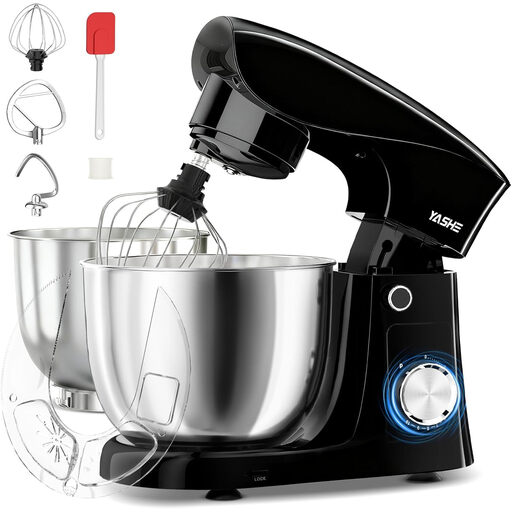
YASHE SM-2548A stand mixer
Worth considering if you’re looking for two bowls and a dough hook for different types of preparation.
The product name lists two bowls, a tilting head and a dough hook.
View at Joybuy
 No image available
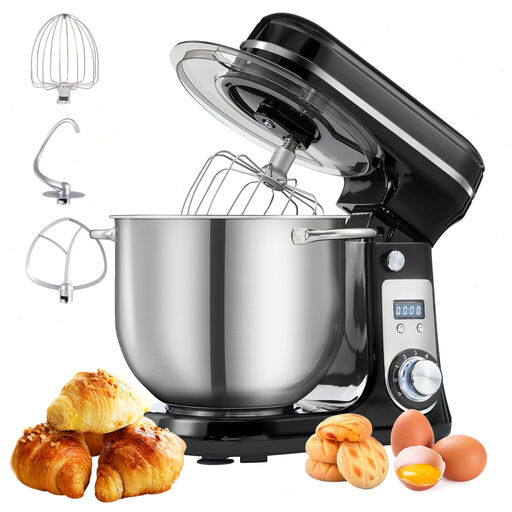
BioloMix BM601 stand mixer
Worth considering if you want to compare different speeds and a pulse setting with the mixing steps in your recipe.
The product name lists a 6-litre bowl, six speeds plus pulse, an LCD screen and a tilting head.
View at Joybuy
 No image available
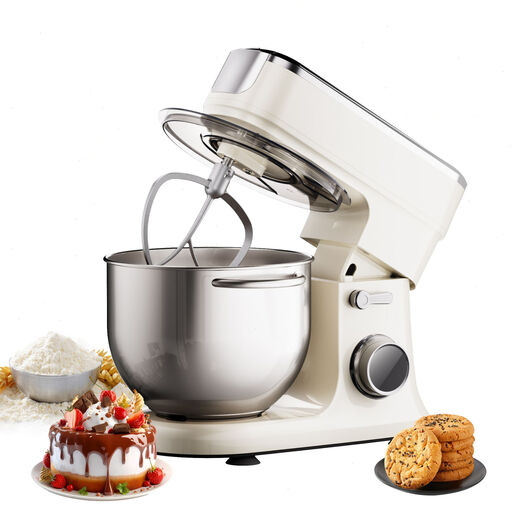
BioloMix BM606E stand mixer
Worth considering if you want to compare the listed adjustable speeds with the control your recipe requires.
The product name lists a 7-litre bowl and an OLED touchscreen.
View at Joybuy
 No image available
AUCMA stand mixer, 5 litres
Worth considering if you’re looking for a mixer listed with a mixing beater and dough hook; check that the attachment suits your recipe.
The product name lists a 5-litre bowl and 10 speeds. It also mentions a whisk and mixing beater.
View at Joybuy
Frequently asked questions
Which attachment should you use for savoury scone dough?
Follow your chosen recipe and your model’s manual. For savoury scones, KitchenAid Netherlands describes using a dough hook or flat beater and mixing briefly at a low speed so the cold butter stays crumbly.
How can you stop the dough being mixed for too long during the workshop?
Look for the texture described in the recipe rather than mixing for a fixed amount of time. In another scone recipe, KitchenAid Netherlands recommends stopping as soon as the dough just comes together and is still rough.
Can the bowl and attachments go in the dishwasher after every batch?
That depends on the exact model and component. Check the usage and cleaning instructions before washing a bowl or attachment in the dishwasher; don’t assume the same guidance applies to every part.
What guarantee and cooling-off period apply to an online purchase in the Netherlands?
For a consumer purchase, a product must do what you could reasonably expect it to do, according to the Dutch government. There is no fixed statutory two-year period in the Netherlands. ACM ConsuWijzer says online consumer purchases generally come with a cooling-off period of up to 14 days after delivery, subject to statutory exceptions. According to ACM ConsuWijzer, this consumer protection does not automatically apply when a purchase is mainly for business use.
What should you look for in product regulations for an electric stand mixer?
Check the product information and documentation for the specific model. The Netherlands Enterprise Agency explains that the applicable EU rules and CE marking depend on the product category and the relevant requirements. So don’t base your choice solely on a brand name or a passing mention in an advert.


