
Organising lots of pizzas
You want to plan the number of portions and kneading batches in advance, and are mainly looking for a suitable dough capacity per batch.


First work out how much dough you need per batch, then compare it with the dough or flour limit stated by the manufacturer for the exact model. The bowl capacity alone is not a reliable guide. A larger machine may suit bigger planned batches, while a medium-sized model could work if you divide the dough into portions. Manufacturer specifications are not an independent test of pizza dough.
You want to plan the number of portions and kneading batches in advance, and are mainly looking for a suitable dough capacity per batch.
You’ll use the machine after the school bake sale too, so you’re considering the dough hook, the model limits and whether it suits your own recipe.
You don’t want to buy a bigger machine or more accessories than you’ll use after the sale; making smaller batches may be fine for you.
Start with the amount of dough per batch and the instructions for the exact model. Then plan how many batches and cleaning breaks the sale will involve.
A good fit if: your recipe stays within the stated limit per batch and you want to plan fewer batches. Kenwood lists a dough capacity of 2.42 kg and a 6.7-litre bowl for the Chef XL KVL4110S.
Trade-off: a larger machine takes up more worktop and storage space. Its capacity doesn’t prove how every pizza dough recipe will perform when kneaded repeatedly.
A good fit if: you can divide the dough into portions. Bosch lists a maximum of 1.9 kg of yeast dough for the MUM58L20; KitchenAid states a maximum of 1 kg of flour for the Artisan 5KSM125.
Trade-off: the stated weights use different measurements and aren’t directly comparable. Multiple batches take extra planning and cleaning.
A good fit if: a roomy bowl and an included dough hook are important to you. Bourgini lists a 6.2-litre bowl and a dough hook for the Kitchen Chef Plus 6.2L.
Trade-off: bowl capacity doesn’t tell you how much heavy dough you can knead per batch. Check the manual for your recipe.
| What to consider | What should you check? | Who should pay particular attention? |
|---|---|---|
| Dough per batch | Calculate the total weight of the ingredients and compare it with the stated limit for the exact model. Keep flour weight and total dough weight separate. | If I need to make enough pizzas for the sale, I want to know how much dough the machine can handle per batch. That’s why around 36% of consumers prioritise having enough dough capacity per kneading batch. |
| Recipe and dough hook | Check which dough hook is included and consult the model manual for quantities, speed and operating time. | If I’m using my own pizza recipe, I want to follow the load limits and instructions for that machine. Around 29% of consumers prioritise recipe limits and kneading instructions. |
| Using the machine after the sale | Think about what you’ll want to make later and check which accessories come with the version you’re considering. | If I want to use the machine after the school bake sale too, I want to choose features that suit my future baking. Around 21% of consumers prioritise using the machine after the sale. |
| Cleaning between batches | Check the cleaning instructions for each bowl and attachment, and plan for clean work surfaces and safe ingredient storage. | If I’m making several batches in a row, I want to work quickly and hygienically in between. Around 14% of consumers prioritise cleaning and workflow. |
Bowl capacity in litres, yeast dough in kilograms and flour in kilograms are different measurements. A roomy bowl alone doesn’t prove that a machine can handle a larger portion of dough.
Compare the amount in your recipe with the relevant dough or flour limit for the exact model, and keep the units separate.
Consumentenbond describes a test using a light white-bread mix; that doesn’t mean every heavier dough was tested.
Use test results only for the dough and conditions that were actually assessed, and also check the model instructions for your own recipe.
Wattage doesn’t tell you the maximum amount of dough allowed for your recipe and model.
Check the stated dough or flour limit and the manufacturer’s instructions instead of trying to infer capacity from the machine’s power.
The features below relate to the specified models and product ranges; they are not an independent test of pizza dough.
The Chef XL KVL4110S may suit larger planned batches. Kenwood lists a 6.7-litre bowl and a dough capacity of 2.42 kg for this model.
The MUM58L20 may suit planned medium-sized batches. Bosch lists a 3.9-litre bowl and a maximum of 1.9 kg of yeast dough.
The Artisan 5KSM125 may suit smaller, measured portions of dough, as well as other mixing and whisking tasks.
The Kitchen Chef Plus 6.2L 22.5042.00.00 may suit you if you’re looking for a roomy bowl and basic accessories included.
This selection of Joybuy products includes stand mixers for preparing dough, including models with a specified dough hook or dough limit. Always check that the stated capacity suits your recipe.
 No image available
May suit you if you’re looking for a stand mixer for preparing dough; check the manual for the permitted amount for your recipe.
The product name specifies a 5.5-litre bowl, 11 speeds and 5 pre-set programmes.
 No image available
May suit you if you want to knead dough and can adjust the amount needed per batch to this model’s instructions.
The product information lists a 6.7-litre bowl and a dough hook. Bowl capacity isn’t the maximum dough capacity.
 No image available
May suit you if you make the dough in measured portions and follow the model limit for each batch.
The product information lists a 4-litre bowl, a maximum dough capacity of 1.4 kg and a dough hook.
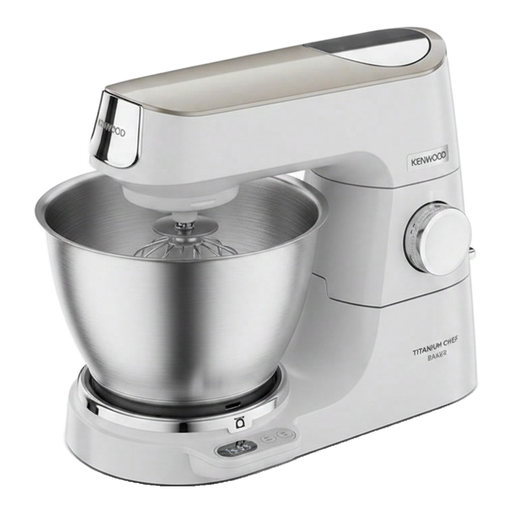 No image available
May suit you if you’re looking for a machine to prepare dough and can adjust the portion size to the model’s instructions.
The product information lists a 5-litre bowl, a dough hook and a built-in weighing scale.
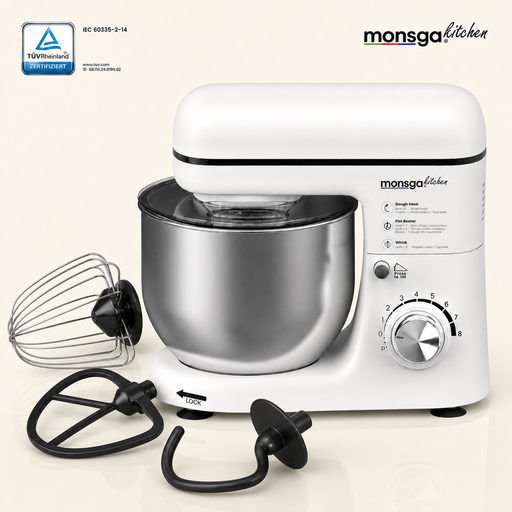 No image available
May suit you if you’re looking for a dough hook for home baking; check the quantity and usage instructions for your dough.
The product information lists a recommended bowl capacity of 5 litres and a non-stick-coated dough hook. The product name specifies 8 speeds.
Divide the ingredient quantities into batches that stay within the relevant limit for the exact model. Check the unit: Bosch lists a maximum of 1.9 kg of yeast dough for the MUM58L20, while KitchenAid specifies a maximum of 1 kg of flour for the Artisan 5KSM125. Also allow for the proving time in your chosen recipe; it doesn’t automatically apply to every recipe or model.
No. Bowl capacity isn’t the same as the permitted maximum dough portion. Compare the quantity in your recipe with the specific dough or flour limit and the model manual.
Prepare, store and sell food safely and hygienically. The NVWA sets out this requirement for sales at markets and events, including sales by private individuals. The NVWA states that anyone who prepares and sells food several times a year must have a food safety plan; discuss the practical arrangements with the school.
Make sure you know which ingredients and allergens are in each pizza on offer, and that you can give buyers accurate information. The NVWA refers to allergen information for non-prepacked foods at businesses and institutions; the Voedingscentrum also advises schools on food safety and allergen information. Agree with the school how to handle an occasional school bake sale.