What should you consider when choosing?
Choose a mixer to suit your recipe, the amount of pastry per batch and the pace of your workshop.
| What to consider |
What to look for |
Who is this important for? |
| Attachment and method |
Follow the recipe and check that the supplied flat beater or K-beater is compatible with the model. |
If I want to follow the recipe method for every tart case, I look for a suitable mixing attachment; around 36% of consumers prioritise the pastry method. |
| Pastry per batch |
Compare the quantity with the limit for the same type of pastry and the same unit—for example, grams of flour with grams of flour. |
When making several cases in one batch, I want to know how much my recipe calls for; around 29% of consumers prioritise the amount of pastry per batch. |
| Switching and weighing |
Check which bowls are included and whether the scales work in the bowl in the way you need during the workshop. |
If one group finishes as the next begins, a second bowl or weighing ingredients directly in the bowl can be useful; around 21% of consumers prioritise switching quickly. |
| Use beyond the workshop |
Check which attachments are actually included and which are optional extras. |
If you also want to use the mixer for other recipes, it’s worth comparing what’s in the box; around 14% of consumers prioritise versatility. |
Stand mixers at Joybuy
This selection of Joybuy products focuses on tart pastry and successive workshop batches. Check the attachments included with each model variant and the quantity that’s right for your recipe.
 No image available
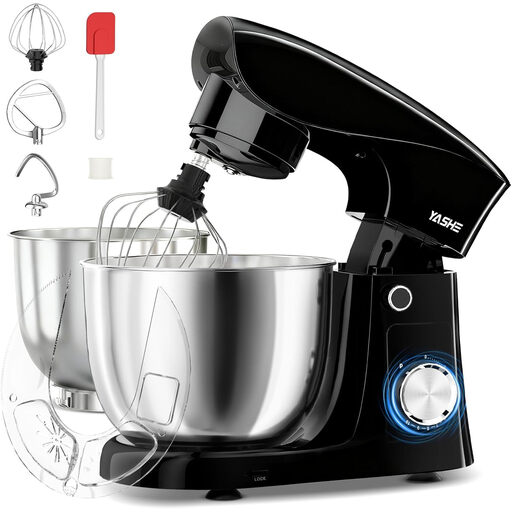
YASHE SM-2548A stand mixer with two bowls
The two bowls can be useful when preparing workshop batches one after another.
Product details list 4.5 and 5-litre bowls, a beater and a dough hook.
View at Joybuy
 No image available
AUCMA stand mixer, 5 litres
The listed mixing beater is worth noting if you’re looking for an attachment for tart pastry.
The title lists a 5-litre bowl and 10 speeds; the product details mention a pastry beater.
View at Joybuy
 No image available
Kenwood Chef XL KVL4110
This model variant may be worth considering if you’re looking for a larger bowl; make sure the amount of pastry is within the limit for your preparation.
Product details list a bowl capacity of 6.70 litres, a K-beater, whisk and dough hook.
View at Joybuy
 No image available
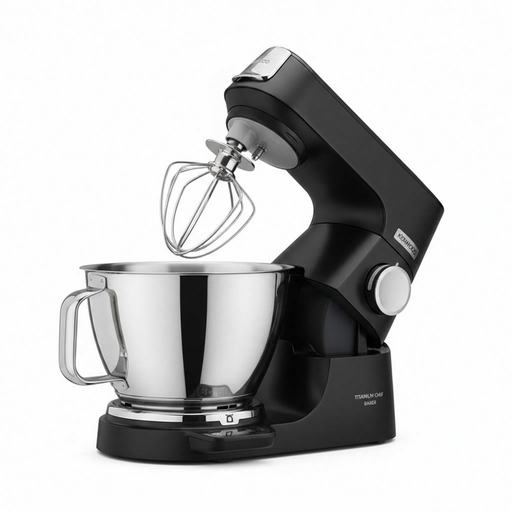
Kenwood Titanium Chef Baker KVC85
Built-in scales and an extra bowl may suit workshop sessions where you weigh ingredients and switch between mixtures.
Product details list a 5-litre bowl, a K-beater, a dough hook and an extra mixing bowl.
View at Joybuy
 No image available
Monsga SM100 stand mixer
The flat beater makes this model variant worth considering if you’re looking for a mixer for tart pastry.
Product details list a 5.0-litre bowl, a flat beater, dough hook and tilt-head design.
View at Joybuy
Frequently asked questions
Should you use the dough hook or flat beater for a pear tart case?
Follow the specific recipe and check which attachment it calls for. In its pâte sablée recipe, KitchenAid uses a flat beater and mixes until the dough starts to come together; Kenwood specifies a K-beater for shortcrust pastry. So an included dough hook isn’t automatically the right attachment for every tart pastry recipe.
How do you work out how much pastry to make per batch?
Calculate the quantity according to the recipe and compare it with a limit for the same type of pastry and ingredient basis. For shortcrust pastry made in the Chef XL, Kenwood specifies 910 g of flour; bowl capacity in litres or a maximum quantity for cake batter isn’t an equivalent measure.
What should you consider when switching and cleaning between workshop batches?
For the exact model, check how to remove and clean the bowl and attachments, and which parts are included with that variant. An extra bowl can make it easier to switch between mixtures, but it doesn’t remove the need to meet the applicable hygiene requirements.
Which food safety rules may apply to a baking workshop?
If the activity falls under food business regulations, the relevant hygiene requirements apply. The NVWA explains how to work with an HACCP food safety plan or approved hygiene code; the Dutch business portal explains NVWA registration for food businesses. If a business serves food to consumers, it must tell them about any allergens present. The rules that apply to a particular workshop depend on how it is organised.
Which product rules apply to a stand mixer in the Netherlands?
An electric mixer sold in the Netherlands must meet the applicable European product safety requirements; where those requirements call for CE marking, an EU declaration of conformity is also required. The applicable EU rules for food contact materials also apply to parts that come into contact with food. Check the information for the specific model variant.


