
Baker making several cakes
You want to make more than one cake for your coffee morning and work out the capacity you need based on the weight of batter per batch.


First, weigh the batter for your recipe and compare it with the stated cake-batter capacity for the exact model. The bowl capacity alone won’t tell you how much batter the mixer can handle. A compact model may be enough for one cake, while a larger batch could be more practical if you’re making several cakes, though it will take up more space. Also check which attachment is suitable and follow your recipe for when to add the pear.
You want to make more than one cake for your coffee morning and work out the capacity you need based on the weight of batter per batch.
You’d rather make smaller batches and weigh up the space available against the extra mixing rounds this might mean.
You want to use your mixer for other baking recipes too, so check which attachments are actually included with the version you choose.
| What to consider | What should you check? | Who should pay particular attention? |
|---|---|---|
| Batter per batch | Weigh the batter for your recipe and compare it with the cake-batter capacity for the exact model. Plan to mix more than one batch if needed. | If I’m making several cakes for a coffee morning, I want to know whether all the batter will fit in one batch. Around 36% of consumers prioritise the amount of batter per batch. |
| Suitable mixing attachment | Check whether a beater or mixing paddle for cake batter is included, and follow the mixing order in your recipe. | When I’m making pear cake, I want to use the right attachment and add the pear at the right time. Around 29% of consumers give suitable cake-batter mixing top priority. |
| Kitchen space | Compare the dimensions of the version you’re considering with your worktop and storage space. If it has a tilt-head, allow room above it too. | If I have limited worktop or storage space, I want to know whether the mixer will fit, even if that means mixing more often. Around 21% of consumers prioritise a compact set-up that fits their space. |
| Cleaning and aftercare | Read the cleaning instructions for the bowl and attachments, and check which accessories are included. Review the warranty terms alongside your statutory rights. | If I want to tidy away the mixer easily after baking and know where I stand if something goes wrong, I look at cleaning and aftercare. Around 14% of consumers make easy aftercare their top priority when choosing. |
Litres tell you the bowl’s capacity; the maximum stated amount of cake batter is a separate model specification.
Weigh the batter for your recipe and check the cake-batter limit for the full model number.
If your batter exceeds the stated limit, you may need to mix it in more than one batch.
A dough hook and a beater don’t necessarily have the same purpose. Manufacturers may recommend the beater for cake and the dough hook for yeast dough.
Check the instructions for the exact model and see which attachment comes with the mixer.
A tilt-head mixer also needs space above it so you can open the head.
Measure the space with the head open and check that you can remove the bowl.
A low space beneath a wall unit may not be usable if the head can’t open far enough.
Bosch lists a 3.8-litre bowl for the MUMS2VM00. For a different version, the MUM59M55, Bosch states a maximum cake-batter capacity of 2.7 kg.
According to Kenwood, the Chef XL KVL4100S has a 6.7-litre bowl, a cake capacity of 5 kg and a K-beater included.
KitchenAid lists a 4.7-litre bowl for the Artisan 5KSM125EMH, with a mixing paddle, whisk and dough hook.
For the SMF05PKEU, Smeg lists a 4.8-litre bowl, a flat beater and a beater with flexible edges. The stated maximum amount of prepared cake mix is 2.0 kg.
These Joybuy product picks are stand mixers for home baking. Compare the bowl size, the mixing attachment listed and the space available in your kitchen for each version.
 No image available
The product information lists a mixing beater for batter, suitable for mixing cake batter.
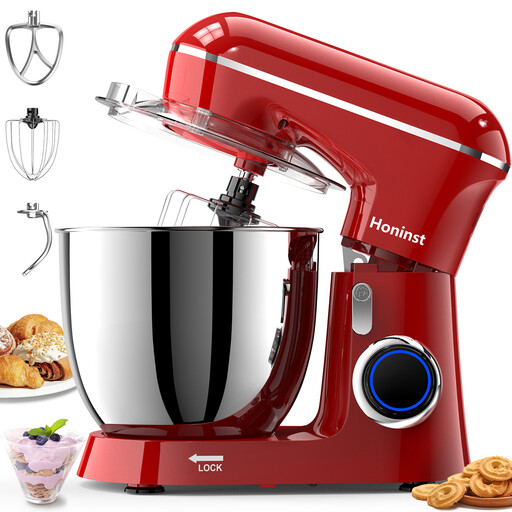
Bowl: 5 litres. 10 speeds. The title lists a dough hook, whisk and beater.
 No image available
The title lists a beater as well as a dough hook and whisk, so you can compare the included attachments with what you need for baking.
Bowl: 6.5 QT. 10 speeds. The title also lists a blender and meat grinder as features.
 No image available
The product information lists the K-Beater for batter. Check whether this version suits the amount you want to mix at a time.
Bowl: 6.7 litres. The description also lists a whisk and dough hook. Dimensions: 34,5 × 28 × 38,5 cm.
 No image available
The product description lists a K-beater for cake batter and a compact design for anyone who needs to make the most of their available space.
Bowl: 4 litres. Six speeds plus pulse. The description lists dishwasher-safe bowl accessories.
 No image available
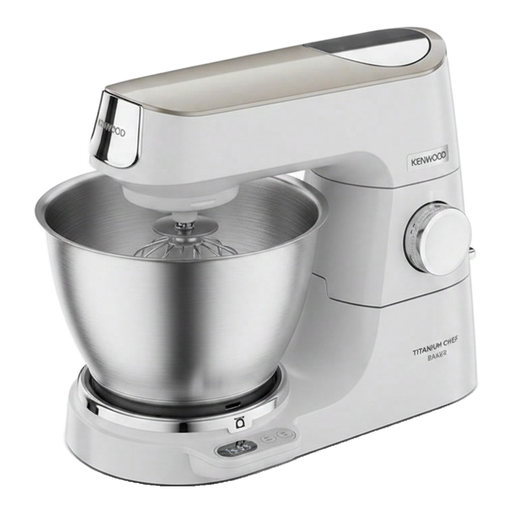
The product specifications list a K-beater for batter; the built-in scales are designed to weigh ingredients in the bowl.
Bowl: 5 litres. Variable speed and pulse. The listed attachments are a K-beater, whisk and dough hook.
No. Compare the weight of your recipe with the cake-batter limit for the exact model. Bosch lists a 3.9-litre bowl for the MUM59M55 and a separate maximum cake-batter capacity of 2.7 kg; that limit doesn’t automatically apply to another Bosch mixer.
Follow the recipe you’re using. In Koopmans’ stewed-pear cake recipe, the batter is mixed first; the drained pear is then arranged over the layers of batter in the tin. This method is specific to that recipe.
Voedingscentrum advises against eating raw cake batter because of possible bacteria in raw eggs and flour. Using a stand mixer doesn’t change this food-safety advice.
If a product is faulty, the seller must provide a solution, according to the Dutch government. There is no fixed statutory guarantee period in the Netherlands; a manufacturer’s guarantee is in addition to your statutory rights. Check the separate terms if an organisation buys the mixer for business use.
That depends on who is organising the event and how the cake is offered. The Netherlands Food and Consumer Product Safety Authority states that businesses offering food to consumers must provide allergen information. The applicable hygiene requirements also depend on the food activity, so don’t assume that business obligations apply to every private treat or volunteer.