
Making one savoury tart
Your main aim is to mix flour and butter for a single tart case. A stand mixer may not be the most practical choice if you’re unlikely to use it much afterwards.


For a single mushroom tart, a compact stand mixer is worth considering if the amount of pastry you need is within your chosen model’s capacity and you’ll use the machine again later. Choose a beater that suits your recipe. If you’re making several tart cases, compare the amount of flour per batch with the capacity specified for that particular model. The mixer won’t take care of chilling, baking or storing the tart safely.
Your main aim is to mix flour and butter for a single tart case. A stand mixer may not be the most practical choice if you’re unlikely to use it much afterwards.
You want to match the amount of flour per batch to the model’s stated capacity for baking. Bowl capacity and dough capacity aren’t the same thing.
You want a machine that fits on your worktop and in your storage space, without losing sight of how much dough you need to make.
Best for: a small workspace and a recipe batch that’s within the capacity stated for the model.
Bear in mind: a compact design doesn’t guarantee that a large batch for a school event will fit all at once.
Best for: making several tart cases, if you know how much flour you’ll use per batch. Kenwood states that the Titanium Chef Baker KVC65.001WH has a baking capacity of 1.3 kg of flour.
Bear in mind: this figure doesn’t tell you how many whole tarts your recipe will make; this model measures 39,5 × 22,5 × 31,5 cm.
Best for: regular baking, or slicing and grating ingredients. Bosch lists a patisserie set and vegetable slicer for the MUM58L20.
Bear in mind: extra attachments also mean more parts to use and clean.
Best for: a one-off, small baking task if you can make the recipe without buying a new stand mixer.
Bear in mind: mixing by hand takes effort; according to the Dutch Consumers’ Association, a food processor is mainly designed for slicing, grating and chopping.
| What to consider | What should you check? | Who does this matter most to? |
|---|---|---|
| Making pastry | Check which beater and dough hook come with the exact version. Follow the steps in your own recipe. | If I want to mix flour and butter for a tart case, I’m looking for an attachment that suits my recipe. Around 36% of consumers prioritise having the right tools for making dough. |
| Amount per batch | Work out the amount of flour in each batch of your recipe and compare it with the specification for the exact model. Don’t base it on bowl capacity in litres alone. | If I’m making several tart cases, I want to know whether my recipe will fit in one batch. Around 29% of consumers prioritise batch size. |
| Worktop and storage space | Measure the space available and leave room to use the bowl and mixer head. Check all the model’s dimensions. | If I have limited worktop or storage space, I want a machine that fits and can handle my recipe. Around 21% of consumers say space is the deciding factor. |
| Use after the event | Check which accessories are actually included and whether you’ll use them for other baking or food preparation tasks. | If I want to use the machine for other tasks after the school event, I’ll compare the features I need for those jobs. Around 14% of consumers prioritise versatile use in the future. |
Manufacturers give different types of capacity, such as bowl volume in litres, flour capacity for baking or yeast dough capacity. These figures don’t necessarily tell you how much of your recipe will fit in one go.
Work out the batch size for your recipe and compare it with the relevant specification for the exact model. A mismatch could mean extra mixing batches or a machine that’s bigger than you need.
In a KitchenAid quiche recipe, flour and butter are first mixed with the flat beater; the dough hook is used later. This is an example recipe, not a universal method for every type of pastry.
Check that the attachments come with your version, and follow the instructions for the recipe you’re using.
A mixer won’t take care of how you store the tart safely or how buyers get information about allergens. For perishable food at events, the NVWA recommends storage below 7 °C.
Before baking day, agree with the school on how the tart will be chilled and how information about the ingredients used will be made available. This needs separate planning from the mixing itself.
Kenwood states that the Go KZM35.000GY has a baking capacity of 0.5 kg of flour, while the Titanium Chef Baker KVC65.001WH has a capacity of 1.3 kg. Kenwood also says the latter has a built-in weighing function.
Bosch lists a 3.9-litre bowl, beater, whisk, dough hook and vegetable slicer for the MUM58L20. This may be useful if you want to prepare other ingredients as well as tart pastry.
KitchenAid lists a 4.7-litre bowl, beater, dough hook and wire whisk for the Artisan 5KSM125EER. A KitchenAid quiche recipe demonstrates using two different attachments at different stages.
This selection includes stand mixers for mixing and kneading dough. Check the beater supplied, the capacity and the space you have available for each version.
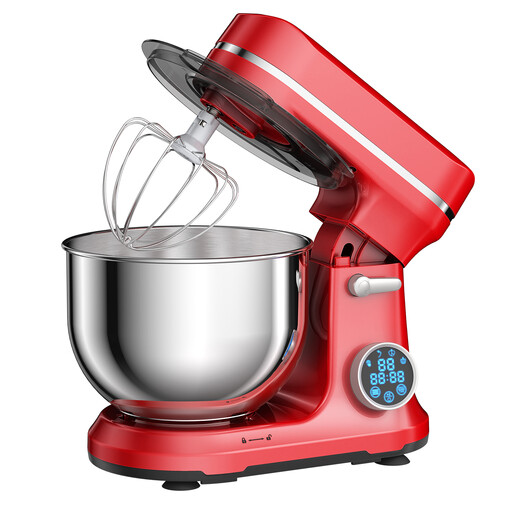 Image unavailable
The stated bowl capacity may be useful to compare with the batch size in your recipe.
The product name lists a 5-litre bowl, a 1200 W DC motor, an OLED touchscreen and 11 adjustable speeds.
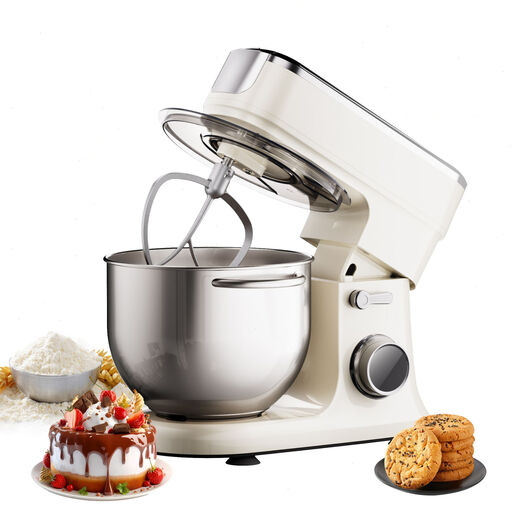 Image unavailable
The stated bowl capacity may be a useful comparison when matching your recipe batch to this version.
The product name lists a 7-litre bowl, a 1200 W DC motor and a digital OLED touchscreen. Bowl size alone doesn’t tell you how much tart pastry will fit.
 Image unavailable
The product name mentions a beater and dough hook, which you can compare with the attachments used in your recipe.
The product name lists a 5-litre bowl, 10 speeds and a 400 W motor. Check which accessories are included with this version.
 Image unavailable
The listed K-beater and dough hook suit recipes that use a beater and, if needed, a dough hook.
The product description lists a 4-litre bowl and dimensions of 33,5 × 18 × 30 cm. Check your available worktop and storage space.
 Image unavailable
The product description lists a flat beater and dough hook; compare these with the steps in your recipe.
The product name lists a 5-litre bowl and 8 speeds. The product description mentions a tilting head.
It depends on the recipe. In a KitchenAid quiche recipe, flour and butter are first mixed with the flat beater, then the dough hook is used when the water is added. Follow the method in your own recipe, and don’t mix pastry for longer than necessary.
No, this information doesn’t directly tell you how many tart cases you can make. Start with the amount of flour and dough in your own recipe, and compare it with the relevant specification for the exact model. A limit for yeast dough isn’t the same as a stated flour capacity for baking.
According to the NVWA, food sold at an event must be prepared, sold and stored safely, including when sold by individuals. The NVWA recommends storing perishable food below 7 °C and checking the temperature with a digital probe thermometer. Discuss with the school how the necessary refrigeration will be arranged.
The NVWA requires information about allergens present in unpackaged food offered for sale. Make information about the ingredients actually used available before purchase, and base your allergen list on your recipe and the ingredient packaging.
The NVWA says that the requirement for an HACCP food safety plan applies when food is prepared and sold several times a year. The same NVWA page states that the general requirements for preparing and storing food safely at events apply whether the seller is a business or an individual. Agree the arrangements for the school event with the school.