
Parent making a large amount of batter
Wants to plan the total amount needed for the school fundraiser and decide whether making the batter in several batches is more practical than using a larger bowl.


Start by deciding how much batter you want to make in each batch, then check whether the whisk or beater supplied is suitable for thin batter according to the instruction manual. A more compact mixer may suit you if you make the batter in batches. A larger bowl could save you some rounds, but takes up more space and doesn’t guarantee that a full bowl of thin batter will mix properly. Also consider how easy it is to clean and whether you’ll keep using the mixer after the school fundraiser.
Wants to plan the total amount needed for the school fundraiser and decide whether making the batter in several batches is more practical than using a larger bowl.
Wants to mix thin batter without a large appliance getting in the way during preparation or when it needs to be put away.
Plans to keep using the mixer after the school fundraiser, so pays attention to the mixing tools and bowls supplied, as well as how easy they are to clean.
First decide how much batter you need per batch. A bowl’s capacity alone doesn’t tell you how much thin batter it can safely hold.
| What to consider | What to look for when buying | Who is this important for? |
|---|---|---|
| Amount per batch | Work out the amount you need using your recipe, then check the maximum fill level in the manual for the exact model. | For a school fundraiser, I want to know in advance how much batter I can mix at a time, so I can plan the batches. Around 36% of consumers give the amount per batch top priority. |
| Tool for thin batter | Check which whisk or beater is included and what the manufacturer recommends for thin batter. | If I want to make thin batter, I check which tool is designed for it and whether the appliance comes with instructions for this use. Around 29% of consumers prioritise how well the mixer handles thin batter. |
| Cleaning between recipes | Check the cleaning instructions for the bowl and each tool, and have clean equipment ready for different recipes. | When making several recipes, I want to clean the bowl and tools thoroughly and keep ingredients separate. Around 21% of consumers make cleaning between preparations their top priority. |
| Space and use after the fundraiser | Measure the available worktop and storage space, and consider which accessories you’re likely to use later. | If I’m buying the mixer mainly for one school fundraiser, I don’t want it to take up more space than necessary, and I also think about how I’ll use it afterwards. Around 14% of consumers give cost and space top priority. |
A stated dough capacity doesn’t automatically tell you how much thin pancake batter the bowl can hold. Overfilling it could mean extra batches or wasted ingredients.
Work out the portions you need using your recipe, and check the instructions for the exact model before filling the bowl.
The Consumers’ Association (Consumentenbond) treats thin pancake batter as a separate test task. So a wattage figure or overall rating won’t necessarily tell you how suitable a mixer is for this use.
Check which tool is included and look for information specifically about thin batter.
A second bowl on its own won’t prevent cross-contact between different recipes. Clean equipment and allergen information are also important when selling food.
Keep ingredients and recipes separate, and clean the bowl, tool and any other equipment used in contact with food between preparations.
The Serie 2 MUMS2VM00 is a more compact option if you’re making the batter in batches.
The Chef XL KVL4110S is an option with a larger bowl if you want to reduce the number of batches and have enough workspace.
The Artisan 5KSM175PSECA is a mid-sized option if you’d also like to use the mixer for other baking.
This selection includes stand mixers with a mixing bowl and various mixing tools supplied or described for preparing food in batches. Bowl capacity alone doesn’t tell you how much thin pancake batter you can mix per batch.
 Image unavailable
An option to compare if you’re making batter in several batches; the bowl capacity doesn’t tell you how much thin batter it can hold per batch.
5.5 l bowl, 11 speeds, digital controls, touchscreen and stainless steel bowl. The instructions state that children must not use the machine; keep it out of their reach.
 Image unavailable
The product description lists a whisk and beater for preparations such as batter; check the instructions for your recipe.
5 l bowl, 10 speeds, pulse function, tilt head and splash guard. Includes a whisk and beater.
 Image unavailable
The larger bowl is worth comparing if you want to make fewer batches, but it doesn’t tell you how much thin batter you can safely mix at a time.
6.70 l bowl, K-beater and whisk. Dimensions: 38.50 × 28 × 34.50 cm. The instructions state that children under 8 must not use the machine; older children may only use it under close supervision and after receiving instruction.
 Image unavailable
The product information lists a whisk and beater; check which tool the manufacturer recommends for thin batter.
5.0 l bowl, 8 speeds, tilt head, whisk and beater. The accessories are listed as dishwasher-safe.
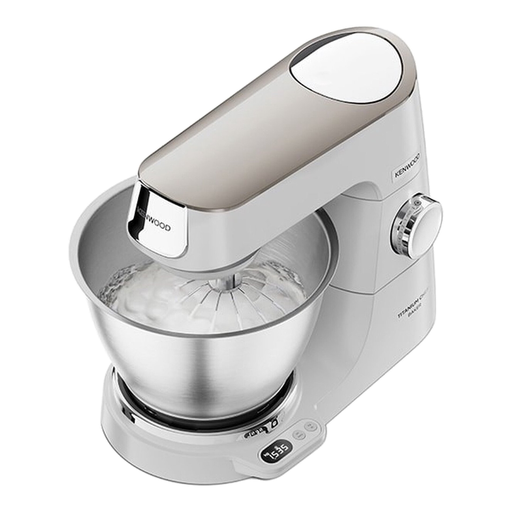 Image unavailable
The described gentle mixing function is intended for light mixtures; the product information doesn’t specifically support its suitability for thin pancake batter.
The product description lists built-in scales, digitally controlled power and a LightLift head for adding ingredients while mixing. The gentle mixing function is described for meringues and mousses. Children under 8 must not use the machine; older children may only use it under close supervision and after receiving instruction.
Not necessarily: the Consumers’ Association (Consumentenbond) recommends a stirring whisk for tasks including pancake batter, and describes a dough hook as being for thick dough. Always follow the manufacturer’s instructions for the exact model too.
Clean the bowl, tool and any other equipment used between preparations. Keep track of ingredients and allergens for each recipe; a second bowl on its own won’t prevent cross-contact.
Check which bowls and mixing tools come with the exact version, and find out how to clean or replace the parts. Consider this alongside how often you expect to use the mixer after the fundraiser.
The Netherlands Food and Consumer Product Safety Authority (NVWA) sets out requirements for the safe preparation, sale and storage of food at markets and events. According to the NVWA, a HACCP food safety plan is compulsory for anyone who prepares and sells food several times a year; this information doesn’t establish that the requirement automatically applies to a one-off school fundraiser. If the rules for non-prepacked food apply to your sale, information about allergens present must be available before purchase. Agree the specific arrangements with the school.
The Netherlands Nutrition Centre (Voedingscentrum) recommends keeping food that spoils quickly in a fridge at 4 °C. Follow the relevant storage instructions for raw batter, and don’t treat general storage advice for cooked pancakes as a shelf-life for batter.