
Workshop leader making consecutive batches
You make batter repeatedly during a session and want to plan the amount for each batch and how you’ll remove the bowl.


Start by considering how much batter you need to make in each batch and how much space you have at the workshop. For smaller batches made one after another, a compact stand mixer with a suitable whisk may be practical. For larger batches, a model-specific batter capacity is more useful than the bowl capacity alone, or a capacity figure for cake or dough. If you only make thin batter occasionally, also consider whether a balloon whisk or hand mixer would be enough.
You make batter repeatedly during a session and want to plan the amount for each batch and how you’ll remove the bowl.
You want to be able to add ingredients and put the mixer away without taking up more worktop space than necessary.
You want to clean the equipment thoroughly between preparations and, if you supply or sell food to customers, take hygiene and allergen information into account.
First, consider the amount in each batch of your recipe, then the attachment and the space available. Also factor in cleaning and how the workshop is organised.
When making pancake batter at a workshop, the main considerations are batch size, control while mixing, space and cleaning.
| What to consider | What should you check? | Who should take this into account? |
|---|---|---|
| Amount per batch | Work out the amount in your recipe and look for a capacity figure for batter for the exact model. Bowl capacity and capacity for cake or dough are not the same thing. | If you’re planning several batches for a group, you’ll want to know how much batter you can safely mix at a time. Around 36% of consumers say batch size is their top priority. |
| Attachment and control while mixing | Check which attachment comes with the exact model and follow the consistency specified in your recipe. Don’t assume every machine needs the same mixing time. | If you want to make smooth batter without assuming that a heavy dough hook is suitable, control over the mixing process matters. Around 29% of consumers give this top priority. |
| Worktop space and handling | Measure the space where the machine will stand and leave room to add ingredients and handle the bowl. | If you also need the worktop for ingredients and participants during the workshop, a set-up that’s easy to position and use could be decisive. Around 21% of consumers put available space first. |
| Cleaning and food-safe working | Follow the cleaning instructions for each part. If you prepare, process or sell food as a business, check the applicable NVWA hygiene rules. Allergen information is also relevant when selling to customers. | If you clean between recipes or supply or sell food to customers, you’ll want to include cleaning and food-safe working in your planning. Around 14% of consumers say this is their main purchasing concern. |
A bowl’s capacity doesn’t tell you how much pancake batter you can mix at once. A stated capacity for cake or dough doesn’t automatically apply to thin batter either.
Plan around the quantity in your own recipe and use only a capacity specified for batter and the exact model.
For pancake batter, the Netherlands Nutrition Centre recommends whisking it until smooth. So a stand mixer may not be necessary if you only make a small batch now and then.
First, consider whether a balloon whisk or hand mixer would suit your batch size and workshop set-up.
Accessories can vary between model ranges. A part for one mixer won’t necessarily fit another range from the same brand.
Check the full model number and the stated compatibility before ordering an extra bowl or attachment.
The Go and kMix are different ranges. Compare the features of the exact model rather than assuming they’re interchangeable.
The MUM58L20 is worth comparing if you’re considering other baking tasks and the included attachments as well as batter mixing.
The Artisan 5KSM125EER is worth comparing if you’re looking for a planetary mixer with several included attachments.
The Assistent Original AKM6230 is worth considering if you want to factor a separate manufacturer’s capacity figure for batter into your batch planning.
These Joybuy stand mixers are for anyone who wants to mix batter during a workshop. Check that the attachments and capacity of each version suit your recipe.
 No image available
An option to compare if you’re looking for a stand mixer for your workshop. Check the features and attachments of this exact version.
 No image available
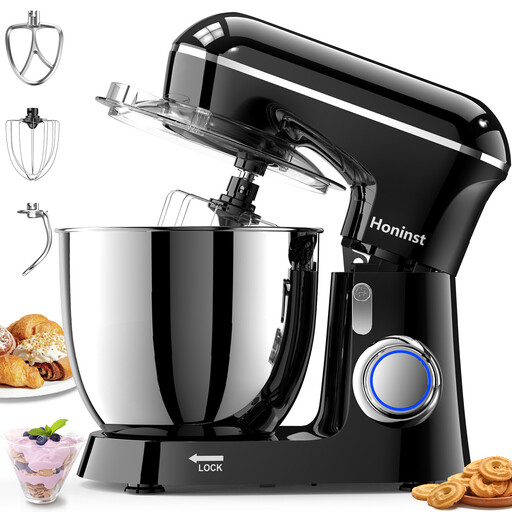
A stand mixer to compare if you want to match the controls and included attachments to your recipe.
The product name lists a 5L bowl, 10 speeds, a tilt head, and a bowl, dough hook, whisk and beater.
 No image available
Compare this version if you’re looking for a stand mixer with several listed mixing attachments. Check that the bowl size suits the amount in your recipe.
The product name lists a 6.5QT bowl, 10 speeds, a tilt head, whisk, beater and dough hook.
 No image available
An option to compare if you’re looking for a Kenwood Go. Check the attachments and specifications of this grey version before deciding whether it suits your batter recipe.
 No image available
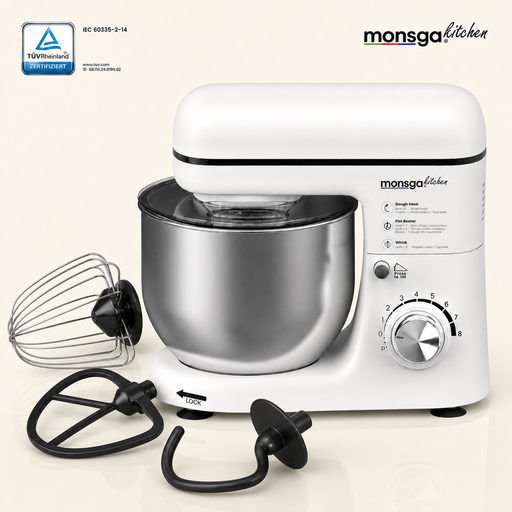
Compare this version if a choice of speeds and mixing attachments would suit your workshop recipe.
The product name lists a 5.0L bowl, 8 speeds, a whisk, dough hook, beater and splashguard. It also lists 1000W Peak Power.
Start with your recipe and the manual for the exact model. The Netherlands Nutrition Centre explains how to whisk batter until smooth. Follow the consistency you’re aiming for rather than assuming the same mixing time will work for every machine.
Yes, as long as you follow the cleaning instructions for each part. Bosch says that the separately available stainless steel mixing bowl for MUM5 models is dishwasher-safe. This doesn’t automatically apply to all attachments or other mixers.
According to the Dutch government, consumers are entitled to a product that is fit for purpose, and the seller must offer a solution if something goes wrong. The Netherlands has no fixed statutory warranty period; a manufacturer’s warranty is additional. Check the terms separately if you’re buying on behalf of a business.
The NVWA says that businesses preparing, processing or selling food must work with an HACCP food safety plan or an approved hygiene code. If you sell food to customers, you must also tell them about allergens. The requirements that apply depend on how the business operates and supplies food; a mixer doesn’t replace these obligations.