
Workshop leaders running several baking sessions
Compare the amount of batter per batch with the capacity the manufacturer states for the exact model. Bosch, Kenwood and Ankarsrum publish capacity figures for specific models.


Choose based on the amount of batter you need to make per batch, and compare it with the stated batter capacity of the exact model; bowl capacity alone won’t tell you how much cake batter you can make. Next, consider the mixing attachments supplied, how participants can add ingredients and how you’ll clean the parts between groups. If you’ll be using the mixer for workshops, also check in advance which service terms apply to your intended use.
Compare the amount of batter per batch with the capacity the manufacturer states for the exact model. Bosch, Kenwood and Ankarsrum publish capacity figures for specific models.
The way participants weigh and add ingredients can influence your choice. Bosch lists built-in scales for the MUM5X720; Kenwood lists a K-beater, splashguard and feed chute for the kMix KMX750AWH.
Check how the bowl and attachments should be cleaned, and which food safety rules apply to your activity. The NVWA outlines requirements for activities including preparing, processing and selling food.
Start with the amount of batter you need per batch. Then compare how you’ll weigh and add ingredients, and clean the mixer, and check the service terms for your intended use.
| What to consider | What to look for when buying | Who this matters to |
|---|---|---|
| Batter per batch | Compare the amount in your recipe with the batter capacity of the exact model, using the same unit. Plan extra batches if you can’t mix everything at once. | If I’m making several batches in a row, I want to know how much batter I can mix at a time. Around 36% of consumers put the amount per batch first. |
| Weighing and mixing | Check whether a dough hook or K-beater, splashguard and any scales are included with the version you’ve chosen. | When participants weigh ingredients together and add them gradually, I look at how easy it is to access the bowl and whether the right attachment is included. Around 29% of consumers prioritise mixing together. |
| Cleaning between groups | Check the cleaning instructions for the bowl and attachments, and see whether the version includes an extra bowl. | If the mixer is used again between workshop groups, I want to know how the food-contact parts should be cleaned. Around 21% of consumers put cleaning and safe use first. |
| Package and service | Check which bowls and attachments are included, and ask which warranty and repair terms apply to your workshop use. | When I use the mixer for workshops, I want to know exactly what’s included and what service is available for my type of use before I buy. Around 14% of consumers prioritise the package and service terms. |
Bowl capacity and batter capacity are different measurements. The stated bowl capacity therefore doesn’t tell you how much cake batter the model can handle per batch.
Compare the recipe quantity per batch with the batter capacity stated by the manufacturer for the exact model. Don’t convert litres to kilograms without a sound basis.
If your recipe exceeds the stated capacity, you may need to divide the batter across additional batches.
KitchenAid Netherlands lists a 4.7-litre bowl for the KitchenAid Artisan 5KSM125EMH, while the Joybuy listing reviewed states 4.8 litres.
Before buying, ask for confirmation of the full model number, bowl version and included attachments.
Check that the bowl and accessories fit your version, and whether you’ll need any additional parts for the recipes you plan to make.
A stated warranty or repair period doesn’t automatically confirm cover for every type of paid or intensive workshop use.
Before buying, ask the retailer or manufacturer about the terms for the way you intend to use the mixer.
The MUM5X720 could suit workshops where participants weigh ingredients straight into the bowl.
The kMix KMX750AWH is worth comparing if participants will be adding ingredients gradually.
The Artisan 5KSM125EMH could suit you if you want to compare the included dough hook, whisk and beater.
The Assistent Original AKM6230 is worth comparing if you’re planning to make other bakes as well as cake batter.
This selection includes stand mixers for making cakes, with different bowls, attachments and features for weighing or adding ingredients. Check the stated capacity carefully: a listed dough quantity isn’t the same as a cake batter capacity.
 No image available
The product information lists cake making as a use; check the capacity for your recipe and the amount you need per batch.
5.5-litre bowl; 11 speeds; 4.5-inch touchscreen. According to the product information, the bowl and accessories are not dishwasher-safe.
 No image available
The product information lists a mixing beater for batter and cakes; check that the capacity suits the amount you need per batch.
5-litre bowl; 10 speeds and pulse function; 400 W; tilt-head design and splashguard. The listed attachments are a dough hook, whisk and beater.
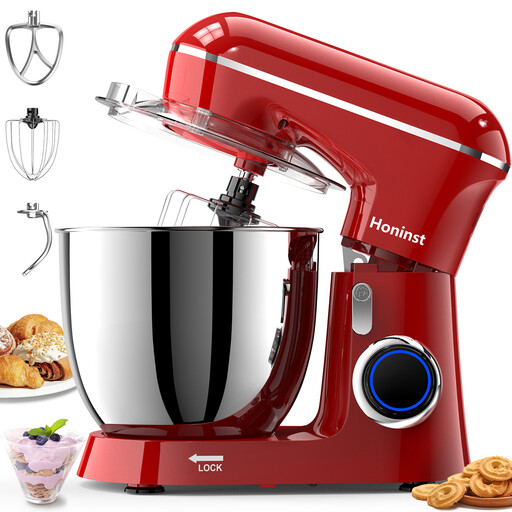 No image available
The product information lists cake making and a beater. Note the stated limitation to domestic use and normal quantities and operating times; this may not suit every type of workshop use.
10 speeds; tilt-head design and splashguard. The listed attachments are a dough hook, whisk and beater.
 No image available
The included K-beater and rotating splashguard with measuring spoon may be handy when adding ingredients gradually.
4-litre bowl; the product information states a maximum of 1.4 kg of dough, not cake batter. The bowl and accessories are described as dishwasher-safe.
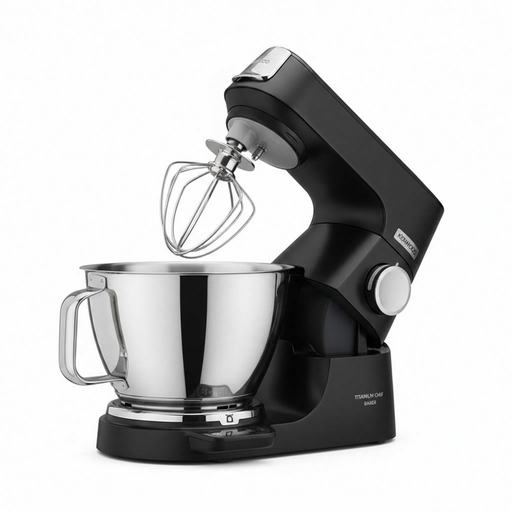 No image available
The product information mentions fruit cake mixes and built-in scales, which could be useful if participants weigh ingredients in the bowl.
5-litre bowl and an extra mixing bowl; the attachments are described as dishwasher-safe. Check the batter capacity for your recipe.
For the batch you plan to make, use the batter capacity stated by the manufacturer for the exact model. For example, Ankarsrum lists a 7-litre bowl and, separately, a batter capacity of 1.5 litres; these measurements aren’t interchangeable.
Check the manual for the right attachment and instructions on cleaning the food-contact parts. Clean those parts between groups as instructed, and don’t let participants taste raw cake batter: the Voedingscentrum warns that raw eggs and flour can contain harmful bacteria.
This depends on how the activity is organised and whether food is prepared, processed or sold as part of a catering or craft business, as described by the NVWA. The NVWA states that a HACCP food safety plan is required in these circumstances; an approved hygiene code can be used to meet this requirement. Also check what allergen information you need to provide when offering unpackaged products.