
Workshop host preparing several batches
You want to make enough mixture for participants in each mixing round. So, plan the recipe weight, number of batches and any breaks before choosing a bowl size. (Kenwood; Maxima.)


Start with the attachment: a flat beater or similar mixing attachment is more suitable than a whisk for an oat bar mixture. Next, weigh a batch of your recipe and compare it with the bowl size and any model-specific operating limits. Published capacities for cake batter or dough don’t prove how much oat bar mixture a mixer can handle. Also weigh up the extra bowl space against the room available on your worktop, as well as the time needed for cleaning and breaks.
You want to make enough mixture for participants in each mixing round. So, plan the recipe weight, number of batches and any breaks before choosing a bowl size. (Kenwood; Maxima.)
You want to combine the ingredients in a controlled way, so look for a suitable attachment included with the version you choose. (KitchenAid; Kenwood.)
You’re sharing the worktop with participants, so you’ll need space for both the mixer and removing and refitting the bowl. (Consumentenbond; Kenwood.)
| What to consider | What to look for when buying | Who is this important for? |
|---|---|---|
| Amount per batch | Weigh one batch of your recipe and compare it with the relevant limits for the exact model. Don’t work out the maximum batch size from the bowl capacity alone. | I want to know how many batches my recipe will need before the workshop starts. Around 36% of consumers put the amount per mixing round first. |
| Attachment and speed | Check whether the version includes a flat beater, beater or K-beater. Follow the manufacturer’s instructions for the starting speed. | When mixing with participants, I want a suitable attachment and control over the mixing process. Around 29% of consumers give this top priority. |
| Cleaning between batches | Check the cleaning instructions for the exact bowl and attachments, and plan how you’ll handle ingredient changes. | I want to clean carefully between batches and take changing ingredients into account. Around 21% of consumers put this at the top of their list. |
| Worktop space | Measure the available space and leave room for operating the mixer and removing and refitting the bowl. | On a shared or small worktop, the mixer needs to fit without taking away participants’ working space. Around 14% of consumers name worktop space as their main concern. |
Manufacturers specify capacities for particular types of batter or dough. These figures don’t automatically tell you how much oat bar mixture can be mixed at once.
Weigh your recipe batch and compare it only with capacity information relevant to the exact model and task. If in doubt, make smaller test batches within the limits set out in the manual.
Smaller batches may mean extra mixing rounds.
Consumentenbond describes a test that includes cake batter and light white bread dough; heavy wholemeal bread dough wasn’t tested. These test tasks aren’t the same as your oat bar recipe.
Use test information for the tasks that were actually assessed, and evaluate your own recipe separately.
For the tabletop model it assessed, Maxima specifies a weight of 17 kg and a continuous operating time of 15–30 minutes. These details may be important if you’re running workshop batches back to back.
Check the number of batches, planned breaks and permanent location against the instructions for the exact model.
Allow for breaks and space for a heavy mixer.
The models assessed offer options for different workspaces and bowl sizes.
The Artisan 5KSM125 version assessed has a 4,7 l bowl and a flat beater.
The MUM5X720 version assessed combines a bowl with weighing and timer functions.
According to the manufacturer, the tabletop model assessed is intended for home and professional kitchens.
The SMF04BLEU assessed has a 4,8 l bowl and comes with a flat beater.
These models are options to compare for mixing oat bar mixture in workshop batches. Bowl capacity alone doesn’t determine the maximum batch size; also check the included attachments and model instructions.
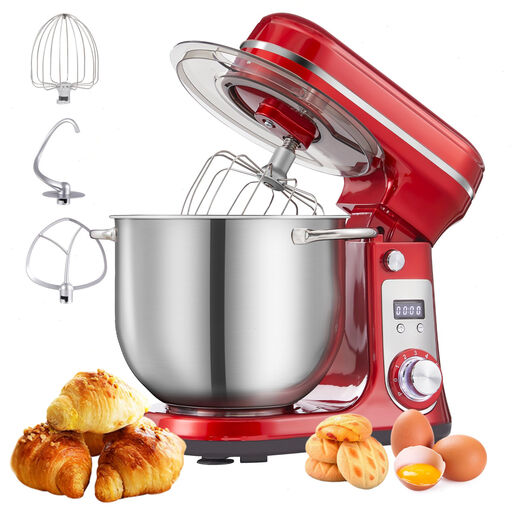 Image unavailable
An option to compare if you’re looking for a stand mixer for workshop batches; the bowl capacity isn’t a proven maximum for oat bar mixture.
The product title lists a 6 L bowl, a 1200 W motor, a tilt-head design, a timer, an LCD screen, six speeds and a pulse setting. It also lists a maximum noise level of 60 dB.
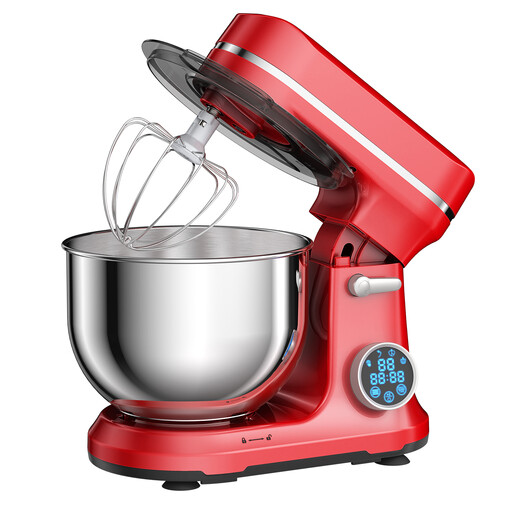 Image unavailable
Compare this version with your planned batch and check the manual for guidance on using your own recipe.
The product title lists a 5 L bowl, planetary mixing action, a 1200 W motor, an OLED touchscreen and 11 speeds. It also mentions that the bowl is dishwasher-safe.
 Image unavailable
Add this version to your comparison if you’re looking for a stand mixer for workshop batches, and check which attachments come with the version you choose.
The product title lists a 5 L bowl, ten speeds and a tilt-head design.
 Image unavailable
This Chef XL version is an option to compare if you’re looking for a stand mixer for planned workshop batches.
The product title identifies this as a silver Kenwood Chef XL KVL4110. Check the specifications and instructions for this exact version before using it with your recipe.
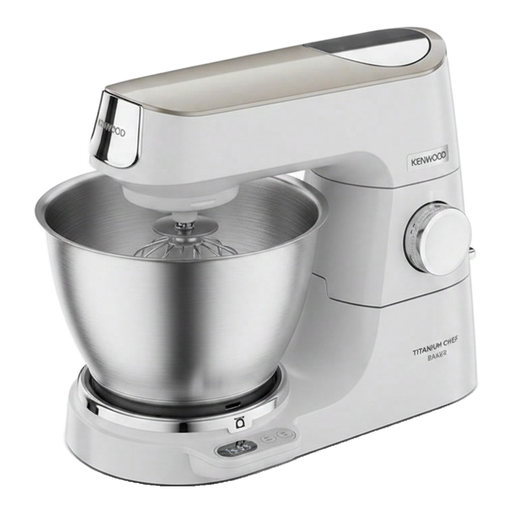 Image unavailable
Compare this version with the way you plan to run your workshop, and check which features and attachments come with the version you choose.
The product title identifies this as a white Kenwood Titanium Chef Baker KVC65.
For combining a normal to firm mixture, a flat beater or similar mixing attachment is more suitable than a whisk. KitchenAid describes the flat beater as suitable for cookie dough and normal to heavy mixtures. Try your own recipe and follow the mixer’s instructions.
No. Don’t work out the permitted batch size directly from the nominal bowl capacity. Kenwood lists separate bowl, cake and dough capacities for the Chef XL KVL4100S; these don’t provide a verified maximum for oat bar mixture.
Switch off the mixer before fitting an attachment, and follow the model’s manual for taking it apart and cleaning it. Kenwood says a K-beater shouldn’t touch the sides of the bowl; if necessary, scrape the mixture back in with a spatula. When changing ingredients, take care to avoid unintended allergen cross-contamination.
Consumer purchases are covered by the statutory guarantee: if a product is faulty, the seller must provide a solution. According to the Dutch government, there is no fixed statutory guarantee period in the Netherlands; a manufacturer’s guarantee is in addition to this. If you’re buying for a business, check which terms and conditions apply.
If you prepare, handle or sell food as part of activities described by the NVWA, you must follow an HACCP food safety plan or an applicable hygiene code, according to the NVWA. Businesses offering food to consumers must tell them about any allergens present. Check which requirements apply to your workshop based on the activities you actually carry out.