What should you look for when choosing one?
First choose the attachment for your recipe, then work out the portion size you need, and finally measure the space available for the mixer and for cleaning it.
| What to consider |
What should you check? |
Who should particularly consider this? |
| Suitable mixing attachment |
Check whether the exact model comes with a flat beater or K-beater, and follow the instructions for use. KitchenAid Netherlands describes the flat beater for normal to heavy mixing; Kenwood Netherlands lists a K-beater for the kMix model reviewed. |
If I’m making a firm oat bar mixture, I want an attachment designed for mixing. Around 33% of consumers put the right mixing attachment first. |
| Portion size |
Compare the quantity in your recipe with the limits for the exact model; a bowl capacity in litres isn’t the same as a load limit. Bosch Netherlands lists separate limits for cake batter and yeast dough for the MUM58359. |
If I’m making food for a shared lunch, I want to know whether my recipe fits within the model’s instructions. Around 27% of consumers prioritise the portion size they need. |
| Worktop and storage space |
Measure the available space and allow room to reach the bowl. Kenwood Netherlands lists dimensions of 33.5 × 18 × 30 cm for the Go KZM35.000GY; check how the dimensions are presented and allow enough operating space before you choose. |
If my worktop or cupboard has limited space, I want to know in advance whether the mixer will fit. Around 20% of consumers put available space first. |
| Cleaning |
Check the cleaning instructions for the bowl and each attachment separately. The Netherlands Nutrition Centre advises using clean equipment when preparing food; Bourgini lists dishwasher-safe accessories for the Elements Kitchen Chef 4,5L model reviewed. |
If I’m preparing food for others, I want to be able to clean the parts properly after use, following the instructions. Around 20% of consumers make easy cleaning their top priority. |
Stand mixers at Joybuy
This selection includes stand mixers for mixing, with a range of attachments and bowl sizes. Check each version to make sure the attachment and capacity listed are suitable for your recipe.
 No image available
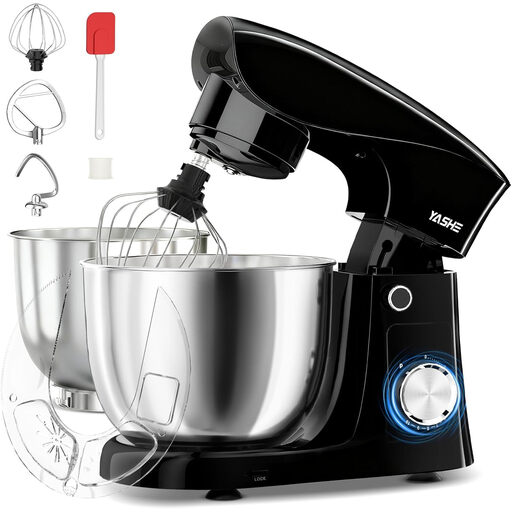
YASHE SM-2548A stand mixer
The two bowls listed may come in handy if you want to use an extra bowl while preparing food in stages; check which attachments for mixing are included for your oat bar recipe.
The product name lists two bowls, a tilt-head design and a dough hook.
View at Joybuy
 No image available
AUCMA stand mixer, 5L
This version lists a beater and multiple speeds; check the product information to make sure the attachment supplied and the permitted quantity are suitable for your mixture.
The product name lists a 5-litre bowl, 10 speeds and a tilt-head design. Bowl capacity isn’t the same as the permitted recipe load.
View at Joybuy
 No image available
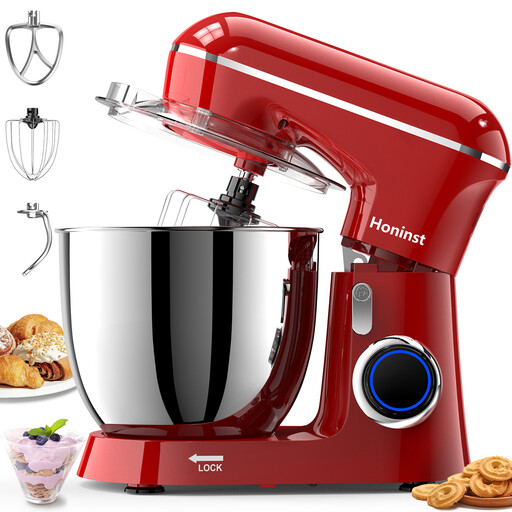
Honinst stand mixer, 6.5QT
The beater listed is worth checking if you need a mixer for mixing; make sure the model and instructions are suitable for your recipe portion.
The product name lists a 6.5 QT bowl, 10 speeds, a dough hook, whisk and beater.
View at Joybuy
 No image available
Kenwood Chef XL KVL4110, silver
The K-beater listed is a baking attachment worth checking if you’re looking for a stand mixer for mixing.
The product details list a 6.70-litre bowl and a K-beater. Check the applicable limit for your recipe.
View at Joybuy
 No image available
Kenwood Go KZM35, grey
The product details list dimensions you can compare with your worktop or storage space; also check whether the K-beater listed is suitable for the job you have in mind.
The product details list a 4-litre bowl and dimensions of 33.5 × 18 × 30 cm.
View at Joybuy
Frequently asked questions
Should I use a whisk or a beater for oat bars?
Start by checking your recipe and the manual for your model. KitchenAid Netherlands describes the flat beater for normal to heavy mixing and cookie dough; Kenwood Netherlands lists a K-beater for the kMix model reviewed. This makes a mixing attachment worth considering, but it isn’t a test using your recipe.
How can I prepare food hygienically for a shared lunch?
Use clean equipment and avoid contact between raw and cooked food. Ask guests about any relevant allergies, and check the ingredients and possible sources of cross-contamination; a mixer can’t do this for you. Store fillings or bars that spoil quickly according to suitable storage advice: the Netherlands Nutrition Centre advises keeping these products at 4 °C and not leaving them unrefrigerated for more than two hours.
Can the bowl and all the attachments go in the dishwasher?
This varies by model and part. Bourgini lists dishwasher-safe accessories for the Elements Kitchen Chef 4,5L model reviewed; for any other exact model, check the manual and clean the parts according to the instructions before using them for guests again.
Who should I contact if a mixer bought in the Netherlands develops a fault?
According to the Dutch government, if a product is faulty, you should contact the seller. The Netherlands has no fixed statutory warranty period; what you can expect from a product depends on factors including the product itself, its price and the information provided. A manufacturer’s warranty or an extended warranty you’ve bought is in addition to your statutory rights.
Do Dutch allergen labelling rules apply to a privately prepared lunch?
The NVWA rules mentioned for precautionary allergen warnings on labels apply to food produced, packaged or sold commercially; those rules don’t mean that a privately prepared lunch is automatically covered. Tell guests with allergies which ingredients you’ve used and prevent cross-contamination. If you’re selling or supplying food commercially, you’ll need to assess which regulations apply to your situation.


