
Baker making larger batches
Making several batches for a coffee morning and wants to match the amount of batter per batch to the machine’s capacity. Kenwood and Bosch publish separate bowl-capacity and batter-capacity figures for each model.


A stand mixer is worth considering if you regularly make larger batches or use the machine for other baking tasks too. If you’re only making muffin batter, mixing with a spatula gives you more control: mix briefly, just until the dry ingredients are moistened. When comparing mixers, check that the capacity suits your recipe and that the included beater is suitable.
Making several batches for a coffee morning and wants to match the amount of batter per batch to the machine’s capacity. Kenwood and Bosch publish separate bowl-capacity and batter-capacity figures for each model.
Wants to mix the ingredients briefly and stop as soon as the dry ingredients are moistened. The American Heart Association and Quaker Oats both highlight gentle mixing as important when making muffin batter.
May want to use the machine for other batters, whisking or dough as well, and takes accessories and storage space into account. The Consumentenbond distinguishes stand mixers for baking from food processors, which can be used for tasks such as slicing, grating and chopping.
When: If you regularly make larger batches or want to use the machine for other baking tasks too.
Trade-off: A larger machine takes up space, and you’ll need to keep a close eye on the mixing when making muffin batter.
When: If muffins are your only baking project, or you only make them occasionally, and you want to control how briefly you mix.
Trade-off: You’ll be mixing by hand; larger quantities may need to be divided between several bowls or batches.
| What to consider | What to look for when buying | Who is this important to? |
|---|---|---|
| Control over the batter texture | Check that a suitable beater is included and that you can mix briefly and gently. | I want to avoid mixing muffin batter for longer than necessary and be able to fold in additions gently. Consumers who prioritise texture make up around 36% of consumers in this usage group. |
| Amount per batch | Compare the total weight of your recipe per batch with the capacity specified for the exact model; bowl capacity in litres is not the same as batter capacity. | When making several batches, I want to know how much of my recipe can be mixed at once. Around 29% of consumers prioritise the amount of batter per batch. |
| Cleaning and storage | Check which bowls and accessories are included, which parts are available separately and how they can be cleaned. | If I’m making several batches in a row, cleaning the parts and finding somewhere to store the machine both matter. These practical considerations are important to around 21% of consumers. |
| Use beyond a coffee morning | Consider which other recipes and accessories you actually need before choosing a more fully equipped model. | I want to use the mixer for other recipes too, so its extra features need to suit my baking habits. Around 14% of consumers put versatility at the top of their list of buying concerns. |
The American Heart Association advises against overmixing muffin batter; a few small lumps aren’t a reason to keep mixing.
Stop as soon as the dry ingredients are just moistened. If needed, gently fold fruit or nuts into the batter.
Manufacturers sometimes also give a separate capacity for things such as cake batter. This figure doesn’t guarantee the yield for every muffin recipe.
Compare the amount in your recipe per batch with the instructions and capacity specified for the exact model.
If your recipe exceeds the stated capacity, you may need to plan for several mixing batches.
A blender or meat grinder won’t change the need to mix muffin batter briefly.
Take into account the other recipes you make regularly, and check which accessories are actually included with the model.
Accessories you don’t use still take up storage space.
The Bosch MUM58210 is worth comparing if you’re looking for a 3.9-litre bowl and a patisserie set. Bosch lists a capacity of up to 2.7 kg of cake batter for this model.
According to Kenwood, the kMix KMX750ABK has a 5-litre bowl, a K-beater and a splashguard. Kenwood lists a cake capacity of 2.72 kg for this model.
According to KitchenAid, the Artisan 5KSM175PSEAC has a 4.7-litre bowl, a second 3-litre bowl and, among other accessories, a flat beater.
The Series 7000 HR7962/21 is worth comparing if you want to use the blender and meat grinder that Philips says are included, as well as mixing. Philips lists a 5.5-litre bowl and eight speed settings.
According to Ankarsrum, the Assistent Original 6230 has a 7-litre stainless steel bowl and a separate 3.5-litre mixing bowl with beaters.
This selection includes stand mixers to compare by bowl capacity, controls and suitability for a range of kitchen tasks. For the model you’re considering, check which batter accessories are included and what capacity applies to your recipe.
 No image available
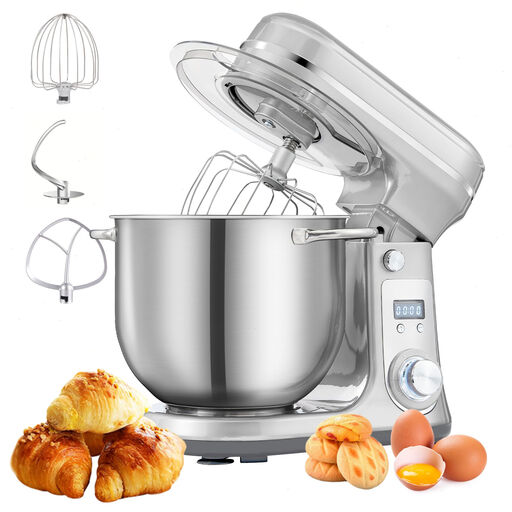
The stated bowl capacity can be a useful comparison point when making larger batches; check the batter capacity and which beater is included for your recipe.
Bowl: 5.5 litres. 11 speeds.
 No image available
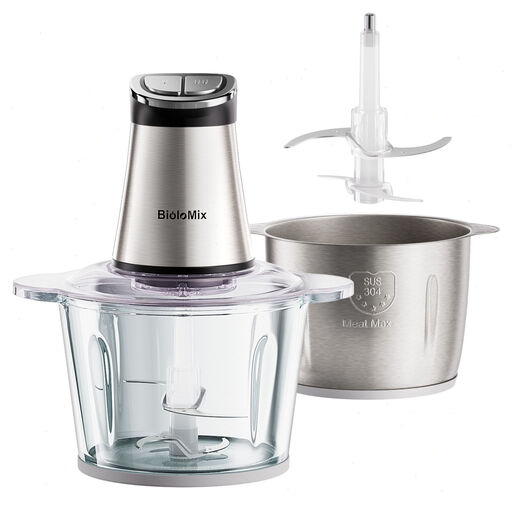
Compare the stated bowl capacity with the amount of batter per batch, and check that the included beater is suitable for your muffin recipe.
Bowl: 6 litres. Power: 1200 W. 6 speeds and a pulse setting.
 No image available
The stated bowl capacity gives you a starting point for deciding whether your batch will fit; check the instructions for the quantity and batter accessory.
Bowl: 3 litres. Power: 300 W. 2 speeds.
 No image available
The product name lists several kitchen functions; check which batter accessories are included with this version and what capacity applies to your recipe.
The product name lists a stand mixer, food processor, meat grinder, blender, juicer and chopper.
 No image available
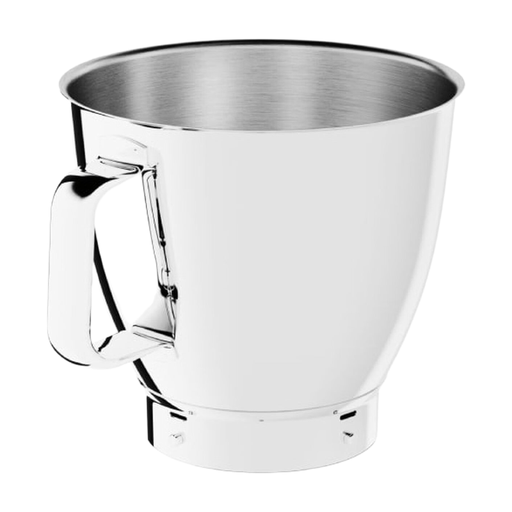
Compare the bowl capacity with your batch, and check which accessories are included and suitable for muffin batter.
Stainless steel bowl: 4.3 litres. Power: 700 W.
No. Mix the wet and dry ingredients until the dry mixture is just moistened; according to the baking instructions from the American Heart Association and Quaker Oats, a few small lumps aren’t a reason to keep mixing for a long time.
Use the beater or mixing attachment intended for batters with your model, rather than automatically using the dough hook. Quaker Oats explains that fruit and nuts can be mixed in with the dry ingredients or gently folded into the batter at the end.
The Voedingscentrum advises against tasting raw batter to reduce the risk of foodborne illness. It also recommends washing your hands before and after handling raw dough.
According to the Dutch government, you’re entitled to a product that works as it should in the Netherlands; there’s no fixed statutory warranty period that applies to all products. Any additional manufacturer’s or seller’s warranty is separate.
For anyone selling or supplying unpackaged muffins, the NVWA outlines ways to inform customers about the allergens they contain. Whether this also applies to a specific event that may be free and held just once depends on the organiser and how the muffins are supplied; don’t infer a general exemption or permit requirement from this information.