
Vandaag of morgen in huis

Kwaliteit gegarandeerd

Welkomstaanbiedingen ontgrendelen: GRATIS bezorging | Tot 80% korting | Gratis 30 dagen JoyPlus-proefperiode
Download de app
A stand mixer with a mixing bowl can take much of the effort out of making bread, cakes, pizza, biscuits and whipped cream. However, the difference between a useful kitchen mixer and an appliance that mainly takes up space is not determined solely by wattage or the number of speed settings. The bowl capacity, accessories, maximum dough load and ease of cleaning all determine whether a mixer is right for your kitchen.
Higher wattage sounds appealing, but it does not tell you everything about the actual kneading power. The motor design, transmission and permitted operating time also play a role. A mixer for dough needs to deliver sufficient torque, particularly at low speed. So, as well as checking the power rating, look at the maximum dough quantity and the instructions for continuous use.
Some product descriptions list peak power and rated power interchangeably. For example, the Monsga SM100 is described as having 1000 W peak power and 600 W rated power. This is useful information to consider when comparing models.
A 5- or 6-litre bowl provides plenty of space, but the usable capacity may be lower. A full bowl is not always suitable for heavy yeasted dough. Check the recommended quantity of flour, batter or dough instead. For example, the Kenwood Go has a 4-litre bowl and a stated capacity of up to 1.4 kg of dough, including 800 grams of flour.
For a family, a stand mixer with a 5- to 7-litre stainless-steel bowl can be practical. For a smaller kitchen or occasional baking, a more compact model may be more convenient.
A whisk, beater and dough hook are the essentials for most recipes. Check whether these attachments are included as standard and whether they are dishwasher-safe. With some models, metal attachments may only be washed by hand to reduce wear or oxidation.
Also look for a splash guard, a tilting head and a bowl with a handle. These may not be spectacular features, but they make everyday use easier.
A stand mixer with a stainless-steel bowl is generally easy to clean and able to withstand regular use. As well as the capacity, consider the appliance’s dimensions. A machine that is almost 40 cm tall may not fit beneath every kitchen cupboard.
A capacity of around 4 litres is suitable for smaller quantities and limited workspace. Models ranging from 5.5 to 7 litres are more appealing for families, bread dough or preparing several recipes in succession.
An electric mixer with 6 to 10 speed settings gives you control when gently mixing, whisking and kneading. A pulse setting can be useful for short, powerful intervals, but it cannot replace a suitable dough hook.
With planetary mixing technology, the attachment moves around the bowl while the bowl or attachment makes a rotating mixing movement. Manufacturers often describe this as a way of distributing ingredients more evenly. According to the product descriptions from Bosch and Honinst, their models use a 3D or multidimensional planetary mixing system. Consider this a technical feature, not a guarantee of a particular baking result.
Non-slip feet or suction cups help keep the stand mixer in place on the worktop. A tilting head makes it easier to change attachments. Also check whether the appliance has overheating protection or a safety lock.
Noise claims vary between products. Honinst lists less than 60 dB for one model, while Aucma states approximately 68 to 75 dB. Your actual experience will also depend on the speed, worktop surface and type of dough. When working with heavy yeasted dough, use the machine according to the instructions and allow the motor to cool when recommended.

Why it suits this profile: This compact model has a 3.8-litre bowl and comes with a whisk, beater and dough hook. That makes it suitable for smaller households and beginner home bakers.
The stated capacity is more informative than a marketing claim about motor power alone: according to the product information, it can handle up to 1.7 kg of dough and 2.4 kg of batter.
3D planetary mixing movement, non-slip feet and attachments that are described as dishwasher-safe.
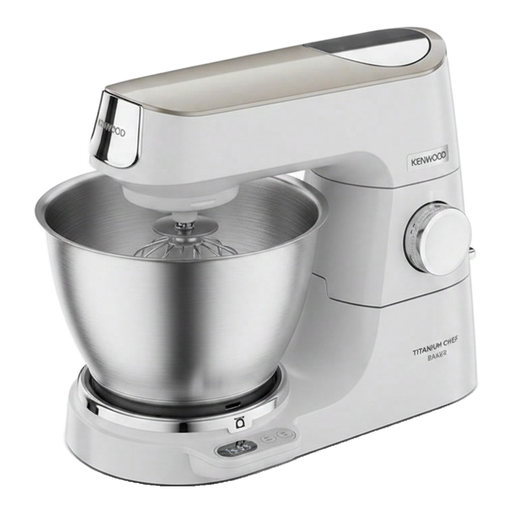
Why it suits this profile: The 5-litre stainless-steel bowl, 1200 W power, built-in scales and variable speed are ideal for users who bake frequently and precisely.
The built-in scales reduce the number of separate kitchen tools needed and allow you to measure ingredients directly into the bowl.
Variable speed with pulse function, stainless-steel bowl, whisk, dough hook and K-beater.
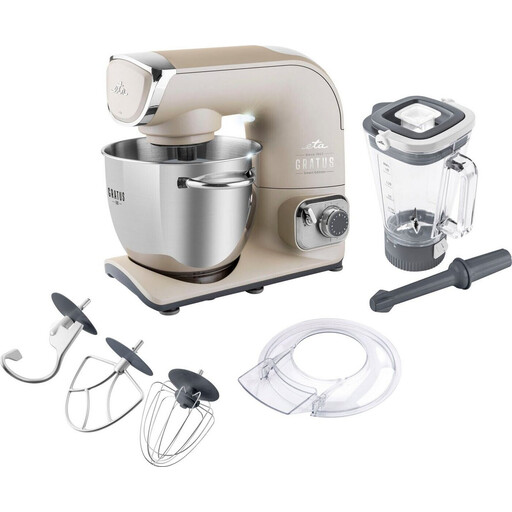
Why it suits this profile: This model combines planetary mixing with a 5.5-litre bowl, a stated maximum dough capacity of 2.5 kg and a 1.5-litre blender jug.
The product information lists not only 1500 W, but also a specific dough capacity, safety lock and thermal protection.
Metal housing, continuous speed control, pulse function and an additional blending function.
We have put together a complete, up-to-date list of products that fully meet these strict selection criteria and the applicable European safety regulations.
For one or two people, around 3.5 to 4 litres is often sufficient. Families and regular bread bakers should consider 5 to 7 litres. Always check the maximum dough capacity, as this is usually lower than the bowl’s total capacity.
Yes, provided the model has a dough hook, suitable low-speed settings and a stated dough capacity. Do not automatically use the highest setting for heavy yeasted dough. Follow the maximum quantities and maximum operating time specified in the instructions. Some models, such as the Honinst 6.5QT, state that heavy dough should not be processed for more than around 10 minutes at a time and must then be allowed to cool.
Consumption depends on the power rating and operating time. A 1200 W machine theoretically uses a maximum of 1.2 kWh in one hour, but in practice a mixer usually runs for less time and not continuously at full power. Running costs therefore depend mainly on baking time, speed and how often the mixer is used.
